Staves of Service: The Sacred Work of Making
“And thou shalt make staves for the altar, staves of shittim wood, and overlay them with brass.” — Exodus 27:6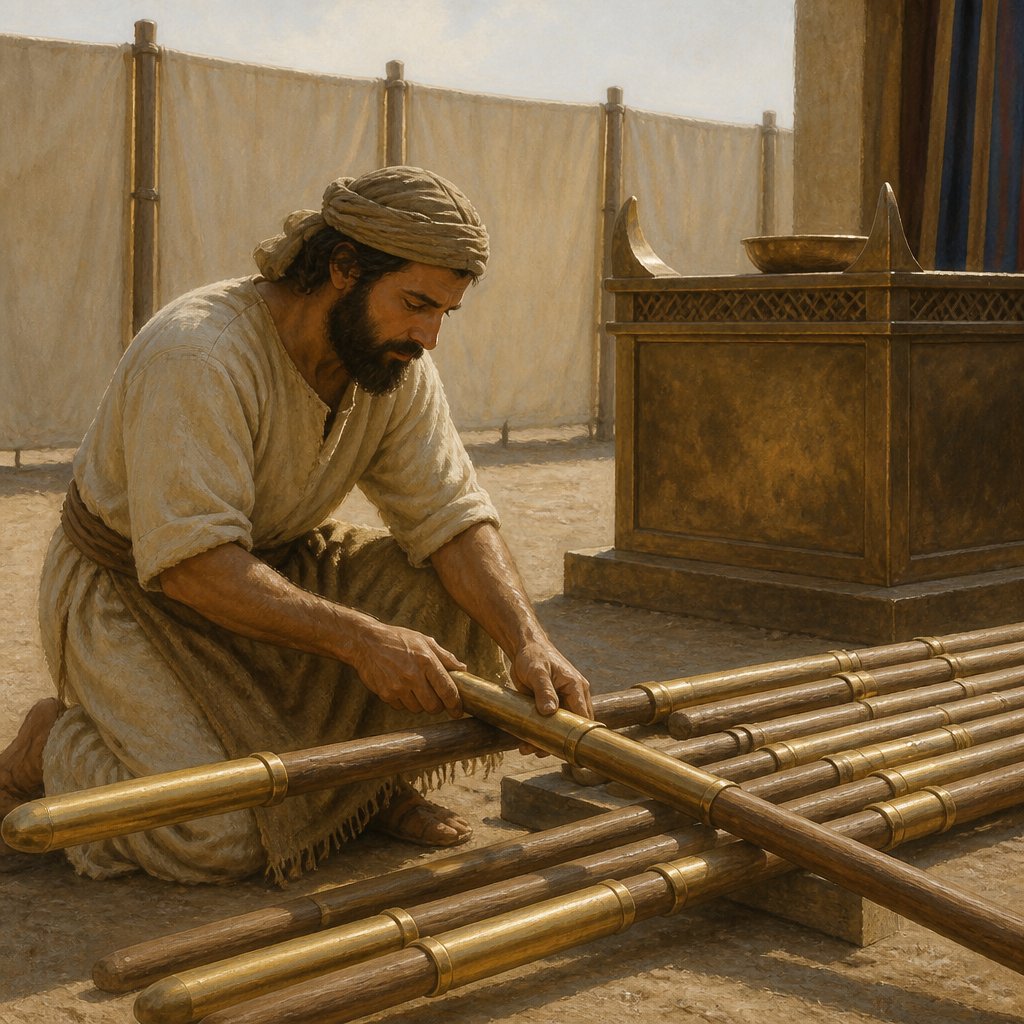
In Exodus 27:6, we find a seemingly simple command from God to Moses: "And thou shalt make staves for the altar, staves of shittim wood, and overlay them with brass." This verse is part of the detailed instructions given by God for the construction of the Tabernacle, a place of worship for the Israelites as they journeyed through the wilderness. At first glance, the command to create staves seems like mere construction guidance, but upon deeper reflection, it reveals profound truths about service, commitment, and God’s presence among His people.
The staves, or poles, were to be made of shittim wood, a durable and resilient material that signifies strength and stability. In biblical symbolism, wood often represents humanity and its frailties, while brass, as a strong metal resistant to corrosion, represents divinity and eternal strength. By overlaying the wooden staves with brass, we see a juxtaposition of human effort and divine empowerment. This teaches us that while we are called to do the work, it is ultimately God’s strength that enables us to serve Him effectively.
In a world that constantly pushes us toward self-sufficiency and independence, this reminder is critical. The making of the staves calls us to acknowledge that while we must use what is available to us (symbolized by the shittim wood), we must also seek to have our efforts sanctified and strengthened by God’s grace (symbolized by the brass overlay). Just as the wooden staves were essential for transporting the altar, we are called to carry and transport the message of Christ to the world.
The physical act of creating the staves is also a call to intentionality in our walk with God. Each pole crafted with purpose reflects the devotion of those who built the Tabernacle. They were not merely constructing a tent; they were forming a dwelling place for the Almighty. In our lives, how often do we take on tasks or responsibilities without the same dedication? Are we carving out time to create ‘staves’ in our spiritual journey—acts of worship, service, and surrender that keep us grounded in His presence?
Moreover, it is essential to note that the staves also enabled the priests to move the altar from one location to another. This mobility speaks to the adaptability required in our spiritual lives. Sometimes we are called to change, to move from one season of life to another, and those 'staves' serve as a reminder that God goes with us. He equips us for the journey and empowers us to carry His message wherever we go. Just as the altar needed the staves to keep it mobile, we too must be flexible in our faith walk, ready to follow where God leads.
Reflecting on these staves also encourages us to contemplate the altars we build in our lives. What are the altars we construct for worship? Are they firmly established in the Word of God, surrounded by acts of service, prayer, and community? Like the altar in the Tabernacle, our altars should be places where sacrifices are made, where our hearts are laid bare before the Lord. The construction of the staves signifies our readiness to support and uphold these sacred places of encounter with God.
In closing, Exodus 27:6 serves as a beautiful reminder of how God intricately weaves physical objects into spiritual practices. The staves crafted of shittim wood and plated with brass represent our collaboration with God in service. As we seek to build our lives, may we remember that every act of service, every gesture of love and sacrifice, is an altar that brings us closer to His presence. Let us weave together our humanity and His divinity, constructing a life that honors God’s calling and reflects His glory to the world.
Get our apps


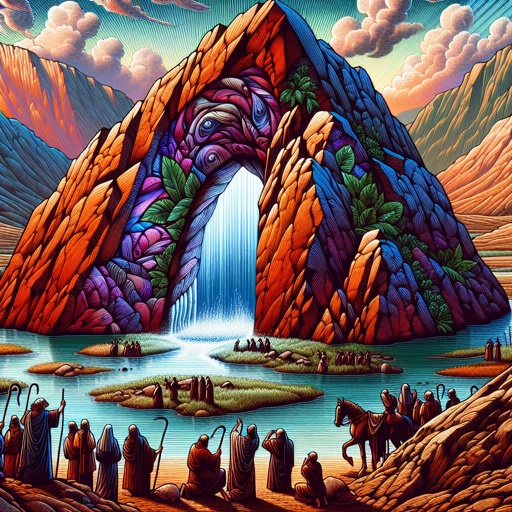
Artwork for Exodus 27:6
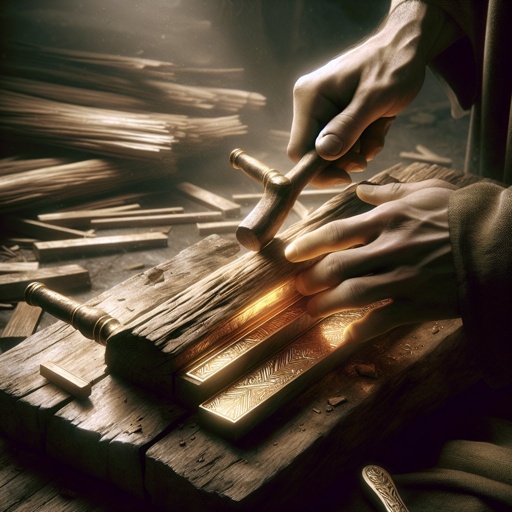
Exodus 27:6 - "And thou shalt make staves for the altar, staves of shittim wood, and overlay them with brass."
"And thou shalt make staves for the altar, staves of shittim wood, and overlay them with brass." - Exodus 27:6

Exodus 6:27 - "These are they which spake to Pharaoh king of Egypt, to bring out the children of Israel from Egypt: these are that Moses and Aaron."

Exodus 27:20

Exodus 27:20

Exodus 27:20
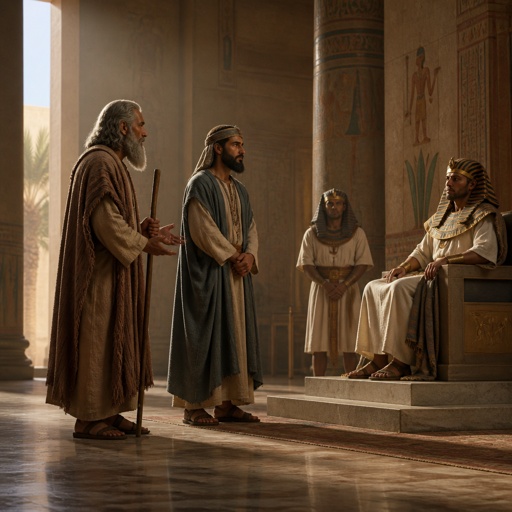
"These are they which spake to Pharaoh king of Egypt, to bring out the children of Israel from Egypt: these are that Moses and Aaron." - Exodus 6:27

Exodus 27:19-20

Exodus 27:1-8

Exodus 23:27-28

exodus 27:3 forks

Exodus 27:19-21

Exodus 27:20 the lamp is made of brass

Exodus 36:27 - "And for the sides of the tabernacle westward he made six boards."

Exodus 35:27 - "And the rulers brought onyx stones, and stones to be set, for the ephod, and for the breastplate;"

Exodus 27:13 - "And the breadth of the court on the east side eastward shall be fifty cubits."

Exodus 40:27 - "And he burnt sweet incense thereon; as the LORD commanded Moses."

Exodus 30:27 - "And the table and all his vessels, and the candlestick and his vessels, and the altar of incense,"

Exodus 25:27 - "Over against the border shall the rings be for places of the staves to bear the table."

Job 27:6

luke 6: 27

Exodus 10:27 - "¶ But the LORD hardened Pharaoh's heart, and he would not let them go."

Exodus 39:27 - "¶ And they made coats of fine linen of woven work for Aaron, and for his sons,"

Exodus 27:15 - "And on the other side shall be hangings fifteen cubits: their pillars three, and their sockets three."

Exodus 27:7 - "And the staves shall be put into the rings, and the staves shall be upon the two sides of the altar, to bear it."

Exodus 27:14 - "The hangings of one side of the gate shall be fifteen cubits: their pillars three, and their sockets three."

Exodus 16:27 - "¶ And it came to pass, that there went out some of the people on the seventh day for to gather, and they found none."

Luke 6: 27-38
Exodus 17:6

Exodus 17:6