Bearing the Iniquity: A Call to Holy Remembrance
“And it shall be upon Aaron’s forehead, that Aaron may bear the iniquity of the holy things, which the children of Israel shall hallow in all their holy gifts; and it shall be always upon his forehead, that they may be accepted before the LORD.” — Exodus 28:38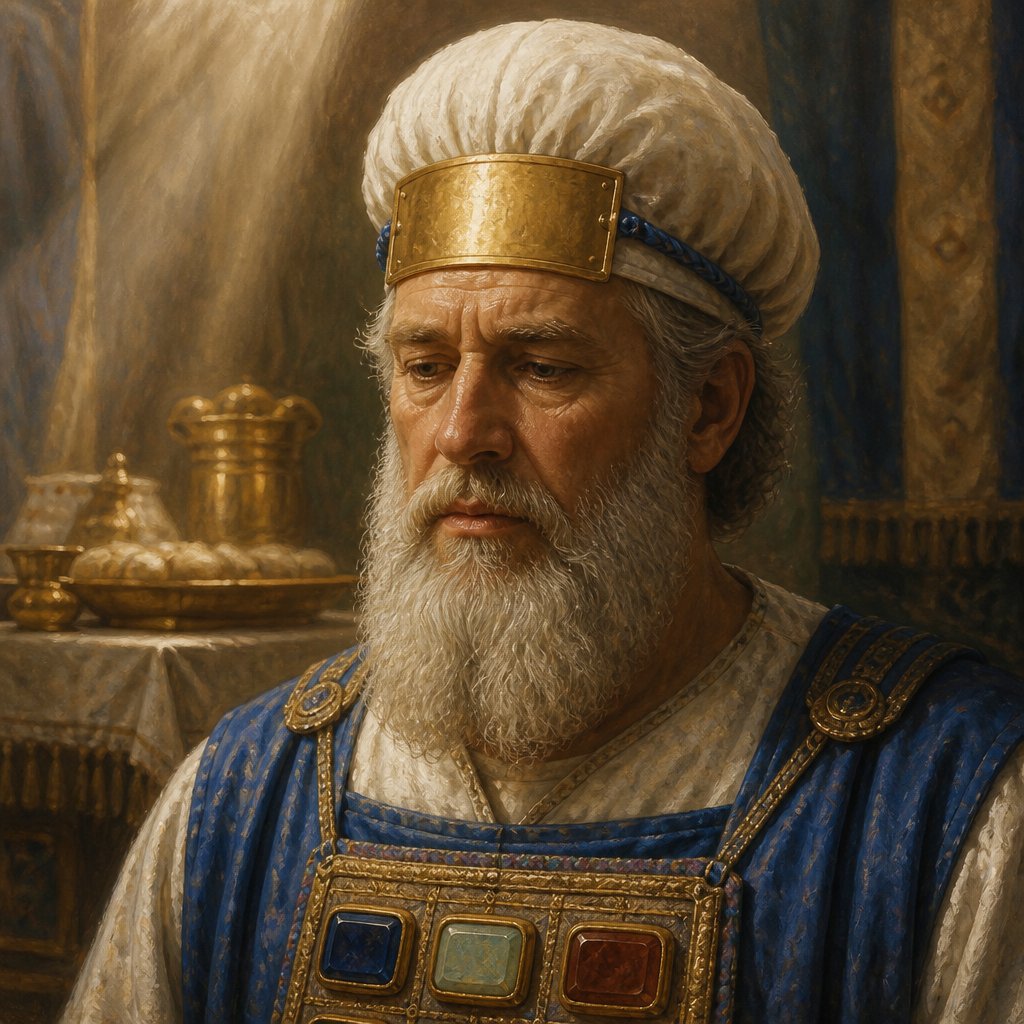
In Exodus 28:38, we encounter a profound symbol of divine responsibility: "And it shall be upon Aaron's forehead, that Aaron may bear the iniquity of the holy things, which the children of Israel shall hallow in all their holy gifts; and it shall be always upon his forehead, that they may be accepted before the LORD." This command concerning the high priest Aaron reveals layers of meaning that resonate deeply with our spiritual walk today.
The context of this verse is critical. Aaron, as the high priest, was appointed to lead the people of Israel in worship and mediation between them and God. His priestly garments, detailed throughout Exodus, are not simply items of clothing; they are instruments of grace and accountability. The gold plate inscribed with the words "Holiness to the LORD" placed upon Aaron’s forehead signifies a constant awareness of holiness—a reminder that the sacredness of the service is not just a ceremonial duty, but a profound honor and responsibility.
The phrase "bear the iniquity of the holy things" is intriguing. In its essence, it denotes the priest’s role in acknowledging the imperfections and transgressions associated with the people of Israel's worship. Here, Aaron is not merely a facilitator, but a vicarious bearer of the spiritual burdens and the failures found in their attempts to offer holy gifts to God. This reflects a larger biblical theme: the recognition that even our best attempts at holiness are tainted by our human fallibility. In the same way, we too must confront the reality of our shortcomings.
For us today, this scripture challenges us to consider how we approach our worship and service to God. How often do we come before the Lord bearing burdens of iniquity—those aspects of ourselves that strain our relationship with Him? Like Aaron, we are called to carry our own responsibilities and burdens, yet we also stand in the priestly tradition of intercession. Jesus, in the New Testament, assumes the ultimate role of High Priest, bearing our sin and failing on the cross. In Hebrews 4:15, we learn that Jesus can empathize with our weaknesses and that we can approach the throne of grace only through Him. Therefore, Aaron’s forehead plate becomes an echo of the grace we experience through Christ.
Moreover, the phrase "that they may be accepted before the LORD" brings our attentions towards the focus of acceptance in worship. Acceptance requires sincerity and truth. When we offer our lives—our prayers, our service, our gifts—we must do so from a heart that seeks to honor God in all purity. The holy gifts offered by the children of Israel were to be hallowed; they were to come with reverence and respect. Our sacrifices today must reflect similar attitudes. Are our offerings to God sincere? Do we strive to keep our hearts aligned with His purposes, or do we offer our gifts without true devotion?
As we meditate on Exodus 28:38, we can also consider the practice of remembrance. Just as Aaron bore the iniquity of the holy things on his forehead, we too should carry the awareness of our need for God's grace in every aspect of our lives. This is not a burdensome task, but a liberating one. Remembrance leads to repentance, which leads to restoration. It prompts us to reflect on our motivations, our worship practices, and the state of our relationship with God.
Lastly, let us be encouraged by the promise of acceptance. Just like the Israelites who sought to be assured of their offerings being accepted by the Lord through Aaron's priestly actions, we can find peace knowing our acceptance before God is rooted in Christ's finished work. He has borne our iniquities, and through Him, we are crowned with the robe of righteousness, symbolically seated upon our hearts and not just our foreheads.
In closing, the call to bear the iniquity of our holy gifts compels us to walk humbly before God, seeking to live lives of purpose and holiness, mindful of our role as ambassadors of Christ, both to celebrate His grace and to encourage others in their journey back to Him. May we continually seek what it means to live under the Lord's acceptance, defined not by our faults, but by His unending love and grace.
Get our apps


Artwork for Exodus 28:38

Exodus 28:38 - "And it shall be upon Aaron's forehead, that Aaron may bear the iniquity of the holy things, which the children of Israel shall hallow in all their holy gifts; and it shall be always upon his forehead, that they may be accepted before the LORD."
"And it shall be upon Aaron's forehead, that Aaron may bear the iniquity of the holy things, which the children of Israel shall hallow in all their holy gifts; and it shall be always upon his forehead, that they may be accepted before the LORD." - Exodus 28:38

Exodus 38:28 - "And of the thousand seven hundred seventy and five shekels he made hooks for the pillars, and overlaid their chapiters, and filleted them."
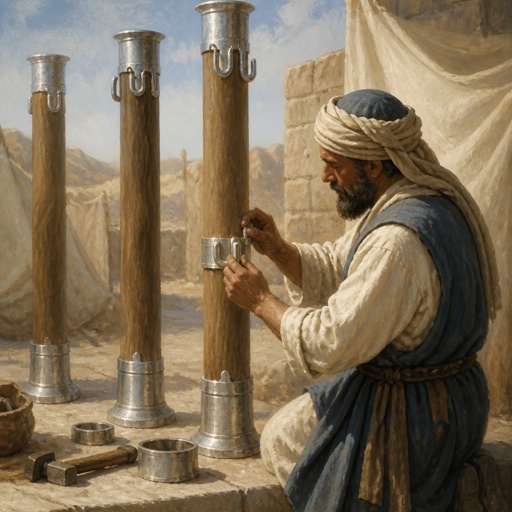
"And of the thousand seven hundred seventy and five shekels he made hooks for the pillars, and overlaid their chapiters, and filleted them." - Exodus 38:28

Exodus 40.17-38

Exodus 38:13 - "And for the east side eastward fifty cubits."

Job 38:28 - "Hath the rain a father? or who hath begotten the drops of dew?"

Exodus 25:38 - "And the tongs thereof, and the snuffdishes thereof, shall be of pure gold."

The Plague on the Firstborn - Exodus 12:29-38

The Plague on the Firstborn - Exodus 12:29-38

The Plague on the Firstborn - Exodus 12:29-38

Exodus 38:6 - "And he made the staves of shittim wood, and overlaid them with brass."

Exodus 38:20 - "And all the pins of the tabernacle, and of the court round about, were of brass."

Exodus 38:29 - "And the brass of the offering was seventy talents, and two thousand and four hundred shekels."

Exodus 38:16 - "All the hangings of the court round about were of fine twined linen."

Exodus 39:38 - "And the golden altar, and the anointing oil, and the sweet incense, and the hanging for the tabernacle door,"

Exodus 22:28

Exodus 28:4

Exodus 23:28

Exodus 22:28

Exodus 32:28

Exodus 22:28

Exodus 22:28

exodus 28 ephod

Exodus 22:28

Exodus 28:4

Exodus 28:4

Exodus 22:28

Exodus 28:4

Exodus 22:28