The Holiness of Atonement: A Deeper Understanding of Exodus 29:33
“And they shall eat those things wherewith the atonement was made, to consecrate and to sanctify them: but a stranger shall not eat thereof, because they are holy.” — Exodus 29:33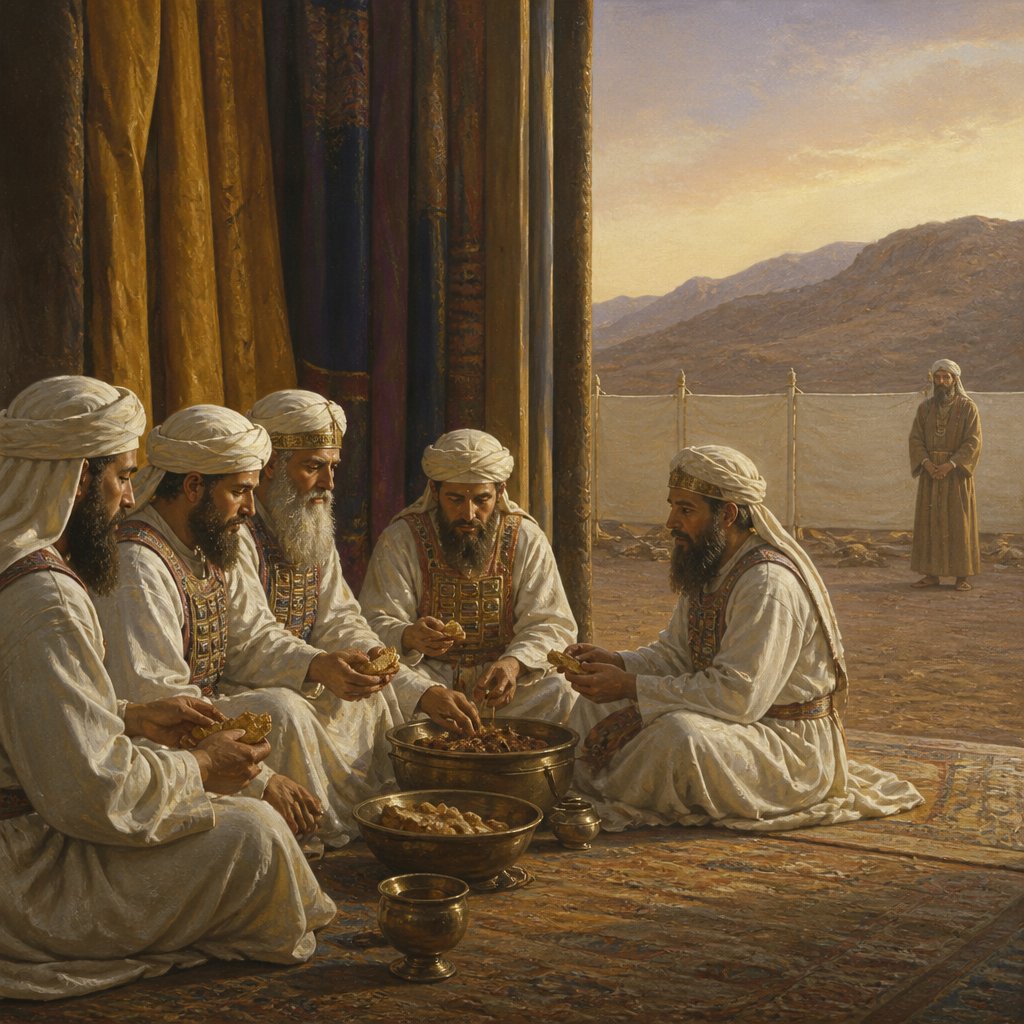
In the intricate tapestry of the Old Testament sacrificial system, Exodus 29:33 stands as a sacred reminder of the divine order and holiness surrounding the atonement for sin. The verse states, "And they shall eat those things wherewith the atonement was made, to consecrate and to sanctify them: but a stranger shall not eat thereof, because they are holy" (KJV). Today, we take a moment to ponder the profound implications of these words on our spiritual journey and our understanding of holiness.
To fully appreciate this passage, we must first understand its context. Exodus 29 outlines the consecration of Aaron and his sons as priests, setting them apart from the rest of the Israelites. God’s call to holiness and the establishment of rituals indicate that access to the sacred is not open to everyone indiscriminately. The sacrifices made for atonement were not only acts of obedience and worship; they symbolized a deep, mutual relationship between God and His chosen people. Herein lies a foundational truth of our faith: those who are in covenant with God are called to a life of sanctification, set apart for His purposes.
When the scripture refers to those who partake of the atonement, it signifies not just the physical act of eating but also the spiritual feast resulting from participating in the divine covenant. The eating of the sacrifices by Aaron and his sons represented their role as mediators between God and the people of Israel. They consumed what was offered in the presence of God, signifying their acceptance and belonging to Him. They were being consecrated—declared holy and set apart for sacred service—not just for their benefit, but for the purpose of leading others into the presence of God.
The phrase "but a stranger shall not eat thereof" carries significant weight. It indicates that there exists a boundary around holiness. In the biblical understanding, a "stranger" signifies those outside the covenant relationship with God. This serves as a profound reminder that we cannot approach God casually or without reverence. Holiness demands respect, and as believers in Christ, we must recognize that our acceptance into this sacred relationship came through the ultimate sacrifice of Jesus—the Lamb of God—who fulfilled all that the Old Testament sacrificial system foreshadowed.
In Romans 12:1, Paul urges us to present our bodies as a living sacrifice, holy and acceptable to God. This echoes the themes of holiness and sanctification found in Exodus 29:33. Our lives must reflect the sanctity of the atonement we have received through Christ. The Holiness of God demands that we strive to live in a manner worthy of the calling we have received. Just as the priests consumed the sacrifices to sustain them spiritually, we are called to feast on Christ, the Bread of Life, nurturing our souls not just for ourselves, but for a world longing for hope.
Furthermore, we must also consider the implications of holiness in our community. As believers, we are to demonstrate the fruits of our salvation in our interactions with others. Our lives should manifest the love, grace, and mercy of God, inviting others into the consecrated life we are privileged to experience. It is a sobering realization that while we are called to holiness, we also carry the responsibility of revealing the character of God to a world filled with strife and secularism.
In conclusion, Exodus 29:33 invites us to examine our own relationship with God. Have we entered into this sacred covenant with reverence? Are we mindful of the privilege of partaking in His holiness? As we contemplate the meaning of our atonement and consecration, may we remember the seriousness of holiness, the joy of being set apart, and the call to lead others into His presence. Let us embrace our role as priests in this world, living out the holiness that Christ has imparted to us through His grace.
Get our apps


Artwork for Exodus 29:33

Exodus 29:33 - "And they shall eat those things wherewith the atonement was made, to consecrate and to sanctify them: but a stranger shall not eat thereof, because they are holy."
"And they shall eat those things wherewith the atonement was made, to consecrate and to sanctify them: but a stranger shall not eat thereof, because they are holy." - Exodus 29:33

Exodus 12:33

Numbers 33:29 - "And they went from Mithcah, and pitched in Hashmonah."

Exodus 26:31-33

Job 33:29 - "Lo, all these things worketh God oftentimes with man,"

2 Chronicles 29:33 - "And the consecrated things were six hundred oxen and three thousand sheep."

Exodus 29:29 - "¶ And the holy garments of Aaron shall be his sons' after him, to be anointed therein, and to be consecrated in them."

Exodus 33:6 - "And the children of Israel stripped themselves of their ornaments by the mount Horeb."

Exodus 23:28-29

Numbers 29:33 - "And their meat offering and their drink offerings for the bullocks, for the rams, and for the lambs, shall be according to their number, after the manner:"

"And they went from Mithcah, and pitched in Hashmonah." - Numbers 33:29

Exodus 33:18 - "And he said, I beseech thee, shew me thy glory."

Exodus 13:17-14:29

Exodus 29:45 - "¶ And I will dwell among the children of Israel, and will be their God."

Exodus 33:21 - "And the LORD said, Behold, there is a place by me, and thou shalt stand upon a rock:"

Exodus 33:14 - "And he said, My presence shall go with thee, and I will give thee rest."

Exodus 34:33 - "And till Moses had done speaking with them, he put a vail on his face."

Exodus 35:33 - "And in the cutting of stones, to set them, and in carving of wood, to make any manner of cunning work."

Exodus 36:33 - "And he made the middle bar to shoot through the boards from the one end to the other."

The Plague of Darkness - Exodus 10:21-29

The Plague of Darkness - Exodus 10:21-29

The Plague of Darkness - Exodus 10:21-29

The Plague of Darkness - Exodus 10:21-29

The Plague of Darkness - Exodus 10:21-29

The Plague of Darkness - Exodus 10:21-29

The Plague on the Firstborn - Exodus 12:29-38

The Plague of Darkness - Exodus 10:21-29

The Plague on the Firstborn - Exodus 12:29-38

The Plague on the Firstborn - Exodus 12:29-38