The Seven Days of Consecration: Understanding Our Call to Holiness
“And thus shalt thou do unto Aaron, and to his sons, according to all things which I have commanded thee: seven days shalt thou consecrate them.” — Exodus 29:35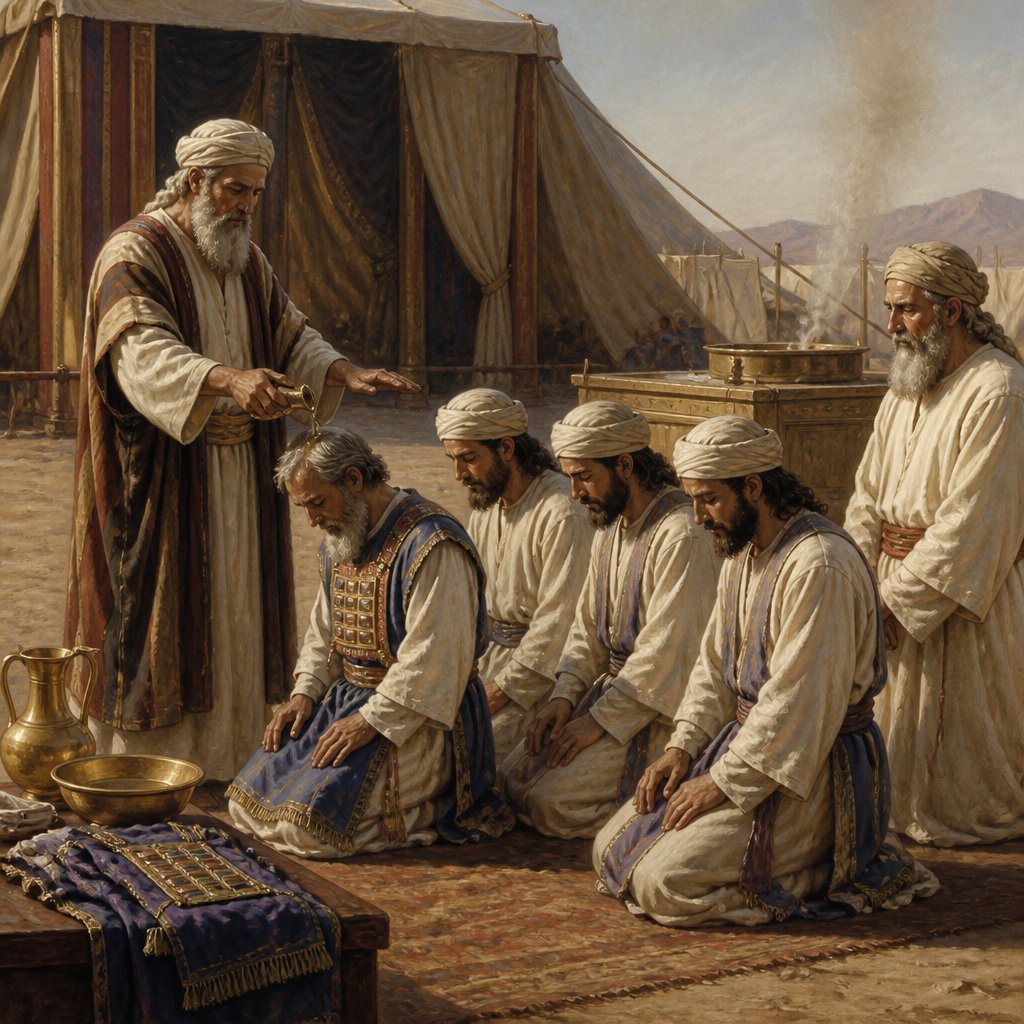
As we delve into Exodus 29:35, where the Lord commands Moses regarding the consecration of Aaron and his sons—"And thus shalt thou do unto Aaron, and to his sons, according to all things which I have commanded thee: seven days shalt thou consecrate them"—we are drawn into a rich tapestry of meaning that extends far beyond the ceremonial requirements of the Old Testament. This command is a symbolic and practical representation of holiness in the life of a believer, and it invites us to reflect on our own journey of faith.
The act of consecration, in biblical terms, means to make something holy or set it apart for divine purposes. In the context of Aaron and his sons, the priests, we see that they were not only being set apart for their roles in the sanctuary but were also undergoing a profound transformation into vessels of God’s service. The ritual of consecration lasted for seven days—a timeframe deeply rooted in biblical symbolism.
In scripture, the number seven often signifies completeness and perfection. Just as God created the world in six days and rested on the seventh, the seven days of consecration symbolize the thorough preparation needed for those who will stand before God on behalf of the people. It is a reminder that entering into God's presence requires us to be wholly devoted, our lives aligned with His will and purposes.
In our modern Christian walk, we are all called to a similar process of consecration. 1 Peter 2:9 tells us, "But ye are a chosen generation, a royal priesthood, a holy nation, a peculiar people; that ye should shew forth the praises of him who hath called you out of darkness into his marvelous light." Just as Aaron and his sons were set apart, we too are called to be set apart—not for an earthly priesthood, but for a life that reflects the glory of God in a world marred by sin and darkness.
Consider the implications of the seven-day consecration. It was not a quick ritual; it required time, dedication, and obedience. Each day would have involved ceremonial washings, anointings with oil, sacrifices, and meticulous obedience to God's commands. These acts were not mere formalities; they represented an inward change that had to take place. This principle still holds true in our spiritual lives—we must engage in continual growth, allowing God to refine us through His Word, prayer, worship, and community.
Further, during these seven days, the priests would have been immersed in the presence of God through their preparations. They would have learned to recognize His holiness, His grace, and His expectations. This sacred time allowed them to grapple with their identity as intercessors for the people of Israel. Likewise, our times of consecration invite us to deepen our understanding of our identity in Christ, moving from mere spectators of the faith to active participants empowered by the Holy Spirit.
As we invest our lives in being consecrated, we must also remember the unity of purpose that comes with being part of a royal priesthood. The consecration of Aaron and his sons also speaks to us about our interconnectedness in the body of Christ. We are called to support and uplift one another in our mutual journey toward holiness, aiding each other's understanding and experience of God.
In our own lives, what does it look like to live out a daily consecration? It may mean surrendering our time, our desires, and our ambitions to God, setting aside moments in our busy days to pray, meditate on Scripture, and serve others. It challenges us to evaluate the activities we engage in and the company we keep, aligning our lives with the holiness of God, just as Aaron and his sons were called to do.
Ultimately, Exodus 29:35 reminds us of the sacred call to holiness that is upon our lives. As we consider the weight of God’s commandments to the priests, we must recognize that we are repositories of His grace and truth, prepared not for temporary roles but for eternity. Let us embrace the process of consecration wholeheartedly, knowing that through obedience, we reflect His love and holiness to a world in need.
Get our apps


Artwork for Exodus 29:35

Exodus 29:35 - "And thus shalt thou do unto Aaron, and to his sons, according to all things which I have commanded thee: seven days shalt thou consecrate them."
"And thus shalt thou do unto Aaron, and to his sons, according to all things which I have commanded thee: seven days shalt thou consecrate them." - Exodus 29:35

Exodus 35:29 - "The children of Israel brought a willing offering unto the LORD, every man and woman, whose heart made them willing to bring for all manner of work, which the LORD had commanded to be made by the hand of Moses."

Genesis 29:16-35

Exodus 32.15-35

Exodus 35:18 - "The pins of the tabernacle, and the pins of the court, and their cords,"

Exodus 39:35 - "The ark of the testimony, and the staves thereof, and the mercy seat,"

Exodus 35:9 - "And onyx stones, and stones to be set for the ephod, and for the breastplate."

Exodus 35:6 - "And blue, and purple, and scarlet, and fine linen, and goats' hair,"

Exodus 35:32 - "And to devise curious works, to work in gold, and in silver, and in brass,"

Exodus 35:8 - "And oil for the light, and spices for anointing oil, and for the sweet incense,"

Exodus 35:12 - "The ark, and the staves thereof, with the mercy seat, and the vail of the covering,"

The Plague of Hail - Exodus 9:13-35

The Plague of Hail - Exodus 9:13-35

Exodus 35:13 - "The table, and his staves, and all his vessels, and the shewbread,"

Exodus 35:28 - "And spice, and oil for the light, and for the anointing oil, and for the sweet incense."

Exodus 35:27 - "And the rulers brought onyx stones, and stones to be set, for the ephod, and for the breastplate;"

Exodus 35:7 - "And rams' skins dyed red, and badgers' skins, and shittim wood,"

The Plague of Hail - Exodus 9:13-35

The Plague of Hail - Exodus 9:13-35

Exodus 35:20 - "¶ And all the congregation of the children of Israel departed from the presence of Moses."

Exodus 35:17 - "The hangings of the court, his pillars, and their sockets, and the hanging for the door of the court,"

Exodus 29:29 - "¶ And the holy garments of Aaron shall be his sons' after him, to be anointed therein, and to be consecrated in them."

Exodus 32:35 - "And the LORD plagued the people, because they made the calf, which Aaron made."

Exodus 35:14 - "The candlestick also for the light, and his furniture, and his lamps, with the oil for the light,"

Numbers 35:29 - "So these things shall be for a statute of judgment unto you throughout your generations in all your dwellings."

Numbers 29:35 - "¶ On the eighth day ye shall have a solemn assembly: ye shall do no servile work therein:"

Exodus 23:28-29

Exodus 35:3 - "Ye shall kindle no fire throughout your habitations upon the sabbath day."

Exodus 35:26 - "And all the women whose heart stirred them up in wisdom spun goats' hair."