Seeking the Good Shepherd: Lessons from Exodus 2:20
"And he said unto his daughters, And where is he? why is it that ye have left the man? call him, that he may eat bread." - Exodus 2:20
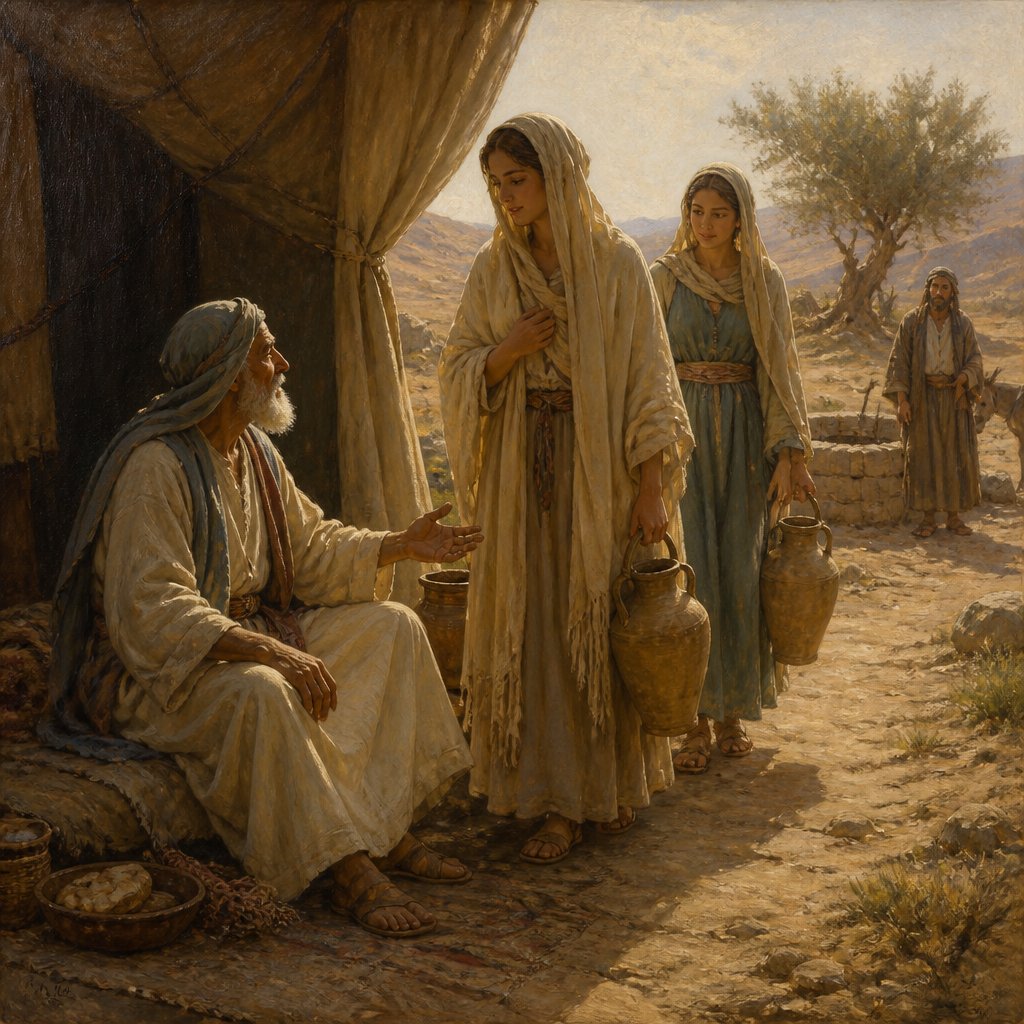
In the book of Exodus, we encounter an extraordinary story of God’s providence before the great liberation of Israel from Egypt. Exodus 2:20 presents a poignant moment with rich implications for our spiritual understanding, a simple yet profound question asked by Reuel, Jethro, the priest of Midian, concerning Moses’ presence at the well:
"And he said unto his daughters, And where is he? why is it that ye have left the man? call him, that he may eat bread."
This verse articulates a critical moment where Jethro is not merely inquiring about Moses’ absence; he is unveiling principles of hospitality, community, and foresight that apply deeply to our everyday lives and our walk with God.
**1. The Call for Recognition**
The question, "Where is he?" indicates a recognition of presence and significance. In the broader biblical narrative, Moses is a man chosen by God to lead His people out of bondage. Jethro's inquiry serves to remind us that every person we encounter holds potential in God's plan. Are we, like Jethro, sensitive to the people around us whom God may be preparing for significant tasks? Do we recognize the “Moses” in our lives, those who may need support or nourishment? As believers, our responsibility extends beyond our immediate circles to the greater community of faith and the world around us. It prompts us to seek out and acknowledge others, understanding that each person is potentially a vessel of God’s purpose.
**2. The Importance of Invitation**
Jethro’s next line, "call him, that he may eat bread," is an invitation—an invitation to belonging, to care, and to nourishment. Bread, in biblical terms, symbolizes sustenance and fellowship. It signifies more than just food; it embodies communion and relationship. In Christ, we see this perfectly fulfilled as He becomes the Bread of Life (John 6:35). Just as Jethro invited Moses to share bread, Jesus invites us to partake of Him and enter into communion with one another.
This raises the question: How often are we inviting others to share in our lives? How often do we create space at our tables, not just for family but for the ‘Moses’ in our communities—those who carry the weight of the world on their shoulders, those in need of hope? Inviting others to our tables is a powerful act of love that can have profound impacts on their lives.
**3. A Picture of Leadership**
Jethro's query also points to the qualities of a good leader. He is concerned not only about the welfare of his daughters but also about the well-being of the man who has come to help them. In leadership, it is crucial to show care and proactive responsiveness to the needs and contributions of others. We are reminded that God calls us to be shepherds, ensuring that we do not overlook the individuals or leaders in our lives needing encouragement or recognition.
**Reflecting on Our Own Lives**
As we meditate on Exodus 2:20, we are compelled to consider how we respond to the individuals around us. Are we aiming to create spaces for nourishment and community? Do we take the time to recognize the significance of those God has placed in our paths? The Christian life is not merely about personal gain, but about fostering an environment where all can flourish, just as Jethro sought to support Moses and his daughters.
**Conclusion: Our Daily Invitation**
In conclusion, Exodus 2:20 invites us not only to seek out our ‘Moses’ but also to offer them the bread of companionship and care. Let us strive to reflect Christ through our interactions, extending invitations of kindness and hospitality, ensuring that we are conduits of God’s love. May we, like Jethro, continually ask where those who lead or serve are and extend an invitation to join us at our table, for in doing so, we are participating in God’s grand narrative of redemption and grace.
Want to reflect more on Exodus 2:20?
Continue your spiritual journey with Bible Chat — an AI-powered tool for exploring God's Word through conversation. Ask questions, discover connections, and deepen your understanding.
Get Our Apps


Exodus 2:20 Artwork

Exodus 2:20 - "And he said unto his daughters, And where is he? why is it that ye have left the man? call him, that he may eat bread."
"And he said unto his daughters, And where is he? why is it that ye have left the man? call him, that he may eat bread." - Exodus 2:20

Exodus 20:2

Exodus 20:2 - "I am the LORD thy God, which have brought thee out of the land of Egypt, out of the house of bondage."

Exodus 23:20

Exodus 27:20

Exodus 27:20

Exodus 27:20

Exodus 20:14

Exodus 20:13 - "Thou shalt not kill."

Exodus 20:15 - "Thou shalt not steal."

Exodus 27:19-20

Exodus 19:16-20

Exodus 20:14 - "Thou shalt not commit adultery."

Exodus 20:1 - "And God spake all these words, saying,"

Exodus 20:8 - "Remember the sabbath day, to keep it holy."

Exodus 20:20 - "And Moses said unto the people, Fear not: for God is come to prove you, and that his fear may be before your faces, that ye sin not."

Exodus 20:3 - "Thou shalt have no other gods before me."

The Plague of Locusts - Exodus 10:1-20

The Plague of Locusts - Exodus 10:1-20

The Plague of Flies - Exodus 8:20-32

The Plague of Locusts - Exodus 10:1-20

The Plague of Locusts - Exodus 10:1-20

The Plague of Locusts - Exodus 10:1-20

The Plague of Flies - Exodus 8:20-32.

The Plague of Locusts - Exodus 10:1-20

The Plague of Flies - Exodus 8:20-32

The Plague of Locusts - Exodus 10:1-20

The Plague of Locusts - Exodus 10:1-20

Exodus 27:20 the lamp is made of brass