Sacred Distinction: Understanding the Holiness of God’s Anointing
“Upon man’s flesh shall it not be poured, neither shall ye make any other like it, after the composition of it: it is holy, and it shall be holy unto you.” — Exodus 30:32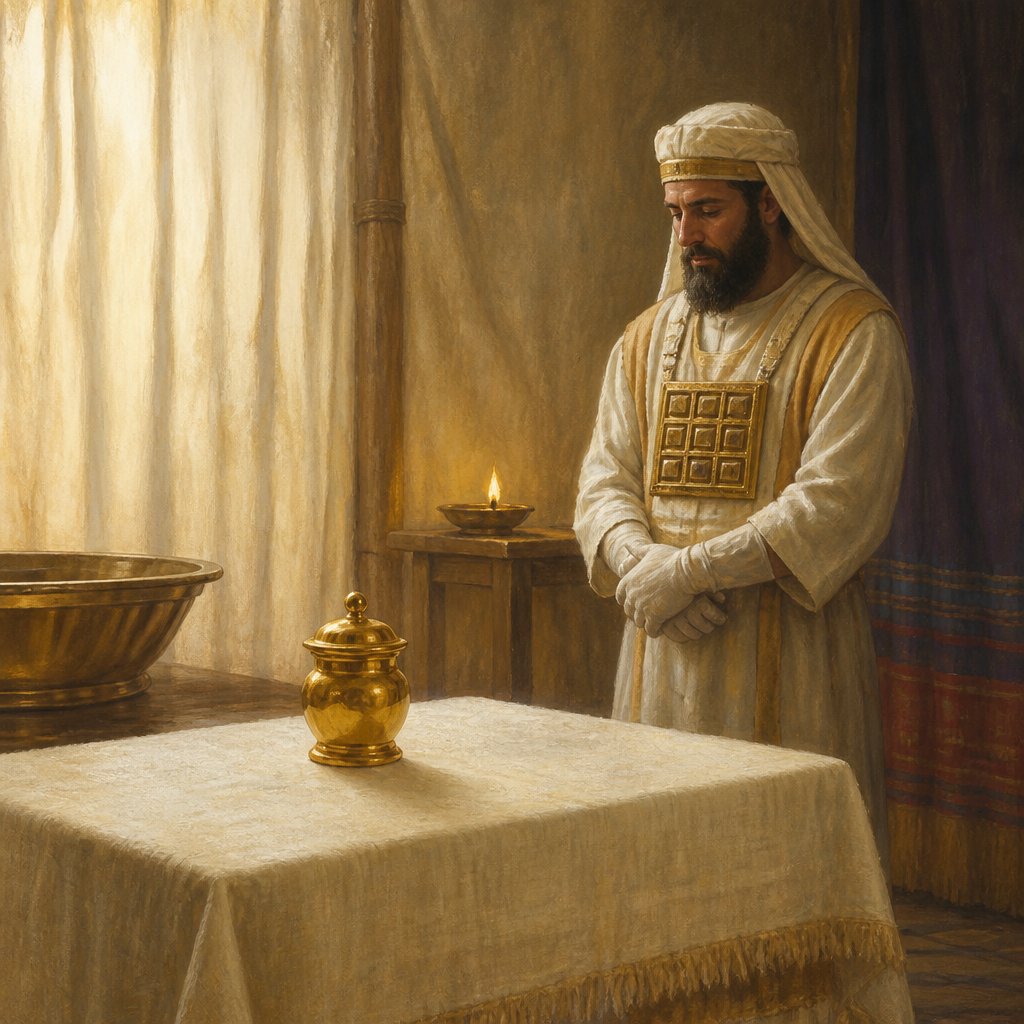
In the heart of the Old Testament, amidst the complex laws and rituals that governed the Israelites, we find a profound verse nestled in Exodus 30:32: "Upon man's flesh shall it not be poured, neither shall ye make any other like it, after the composition of it: it is holy, and it shall be holy unto you." This verse serves not only as a guideline for worship practices concerning the holy anointing oil but also as a gateway into understanding the nature of holiness and its direct implications for our lives.
To truly appreciate the depth of this passage, we must first analyze the context in which it was given. God was delivering specific instructions to Moses for the consecration of the priests and the tabernacle, a place set apart for His presence. The anointing oil, composed of precious ingredients, was not to be treated lightly. It symbolized God's divine presence and blessing; it conveyed a sacred purpose and a distinct fragrance meant to reflect the character of God Himself.
The commandment that the anointing oil should not be poured on man's flesh emphasizes that there is a divine separation between the sacred and the common. This act of restraint speaks volumes about God’s holiness. He desires to set apart that which belongs to Him, just as He calls us to be a chosen people, a royal priesthood. It’s a reminder that holiness is not found in a casual approach to God's commands or in a disregard for His divine distinctions. Every person participating in worship must understand the sacred nature of that which is holy.
In our contemporary understanding, we must embrace this concept of holiness as both a privilege and a responsibility. The Holy Spirit anoints our lives not for personal gain or self-glorification but for God's glory and the service of others. When we receive God's anointing, we are marked by Him. Acts 1:8 reminds us that "But ye shall receive power, after that the Holy Ghost is come upon you: and ye shall be witnesses unto me…" We are filled with the purpose of spreading the good news, impacting the world around us, and reflecting Christ’s character.
The second part of this verse—"neither shall ye make any other like it, after the composition of it"—arrests us to consider the genuine nature of the anointing. In an age where imitation runs rampant, the directive against creating a counterfeit to the holy anointing oil challenges us. It warns against the temptation to manufacture spiritual experiences or to seek substitutes for genuine anointing. How often do we chase after trends, programs, or mere emotional experiences rather than pursuing the authentic power found in a profound relationship with God? The call here is to maintain the integrity of what is holy and resist the pull of the secular.
The consecrated oil was holy; by using it, the priests were acknowledging not merely its function but its representation of God's presence. Likewise, we, too, are called to recognize that holiness calls for reverence. Romans 12:1 implores us to present our bodies as a living sacrifice, holy and acceptable unto God, which is our reasonable service. Our entire being must align with the standards of God’s holiness. This is a generous encouragement to live distinctly; to reflect the character of Christ in our conduct, speech, and decisions.
Ultimately, Exodus 30:32 beckons us to embrace and uphold the holiness of God in our lives. The essence of this scripture is an invitation to elevate our understanding of God’s presence, to regard it with the utmost respect and seriousness. As we deepen our relationship with God, let us remember the weight of His holiness and strive to embody it as His representatives in a world that desperately needs His light. Let each day be a commitment to live in a manner worthy of the calling we have received, acknowledging that it is indeed a holy calling tucked within the sacred truths of scripture.
Get our apps


Artwork for Exodus 30:32

Exodus 30:32 - "Upon man's flesh shall it not be poured, neither shall ye make any other like it, after the composition of it: it is holy, and it shall be holy unto you."
"Upon man's flesh shall it not be poured, neither shall ye make any other like it, after the composition of it: it is holy, and it shall be holy unto you." - Exodus 30:32

Exodus 32:30 - "¶ And it came to pass on the morrow, that Moses said unto the people, Ye have sinned a great sin: and now I will go up unto the LORD; peradventure I shall make an atonement for your sin."

Exodus 32:28

Exodus 32:31-32 So Moses returned to the LORD and said, “Oh, what a great sin these people have committed! They have made gods of gold for themselves. / Yet now, if You would only forgive their sin.... But if not, please blot me out of the book that You have written.” Exodus 32:31-32

Exodus 26:30

Exodus 28:30-43

Exodus 28:15-30

Exodus 30:30 - "And thou shalt anoint Aaron and his sons, and consecrate them, that they may minister unto me in the priest's office."

Exodus 32:32 - "Yet now, if thou wilt forgive their sin--; and if not, blot me, I pray thee, out of thy book which thou hast written."

Exodus 23:32 - "Thou shalt make no covenant with them, nor with their gods."

Exodus 35:32 - "And to devise curious works, to work in gold, and in silver, and in brass,"

Numbers 32:30 - "But if they will not pass over with you armed, they shall have possessions among you in the land of Canaan."

Exodus 16:30 - "So the people rested on the seventh day."

Exodus 9:32 - "But the wheat and the rie were not smitten: for they were not grown up."

The Plague of Flies - Exodus 8:20-32

Exodus 30:17 - "¶ And the LORD spake unto Moses, saying,"

Exodus 30:11 - "¶ And the LORD spake unto Moses, saying,"

The Plague of Flies - Exodus 8:20-32.

The Plague of Flies - Exodus 8:20-32

Exodus 30:22 - "¶ Moreover the LORD spake unto Moses, saying,"

Exodus 32:35 - "And the LORD plagued the people, because they made the calf, which Aaron made."

Exodus 8:30 - "And Moses went out from Pharaoh, and intreated the LORD."

Genesis 32:30 - "And Jacob called the name of the place Peniel: for I have seen God face to face, and my life is preserved."

Exodus 32:16 - "And the tables were the work of God, and the writing was the writing of God, graven upon the tables."

Exodus 32:14 - "And the LORD repented of the evil which he thought to do unto his people."

Exodus 30:26 - "And thou shalt anoint the tabernacle of the congregation therewith, and the ark of the testimony,"

Exodus 30:19 - "For Aaron and his sons shall wash their hands and their feet thereat:"

Exodus 32:9 - "And the LORD said unto Moses, I have seen this people, and, behold, it is a stiffnecked people:"

Exodus 30:27 - "And the table and all his vessels, and the candlestick and his vessels, and the altar of incense,"