Nakedness, Shame, and Restoration: A Reflection on Exodus 32:25
“And when Moses saw that the people were naked; ( for Aaron had made them naked unto their shame among their enemies:)” — Exodus 32:25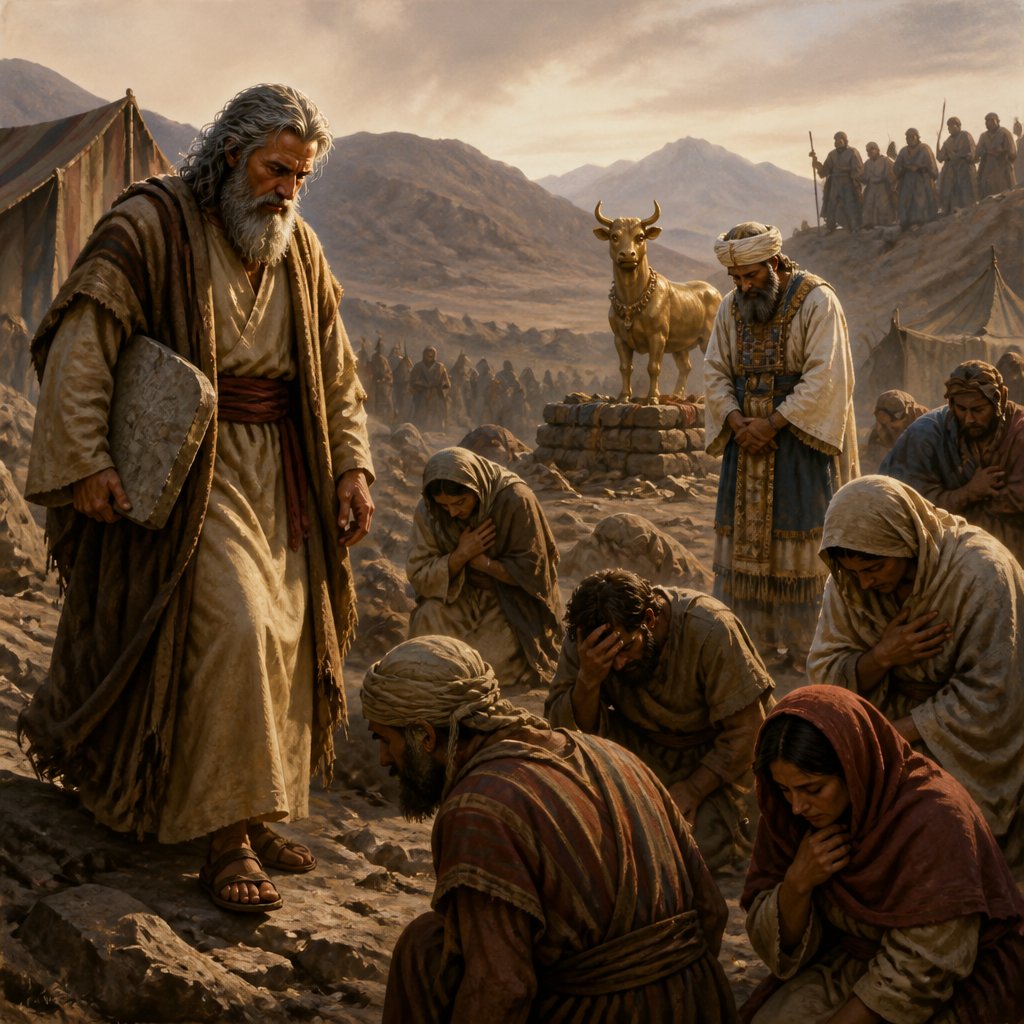
In Exodus 32:25, we encounter a poignant yet troubling scene in the wilderness, where Moses, upon returning from Mount Sinai, witnesses the chaos among the Israelites: "And when Moses saw that the people were naked; (for Aaron had made them naked unto their shame among their enemies:)" The weight of this moment extends far beyond physical nakedness; it encapsulates spiritual vulnerability, disobedience, and the desperate need for restoration.
To fully grasp the significance of this passage, we must consider the context in which it occurs. The Israelites, newly liberated from slavery in Egypt, are now wandering in the desert, awaiting Moses' return to guide them into the Promised Land. In Moses' absence, the people become restless and afraid, leading them to turn to idol worship. They demand that Aaron create an image to worship, and he obliges by crafting a golden calf. This act of rebellion starkly contrasts the covenantal relationship they had just established with God.
The term "naked" in this verse carries multi-dimensional meanings. On one hand, it refers to their physical state—shamelessly parading their idolatrous worship. But on a deeper level, it symbolizes their spiritual nakedness: a state of vulnerability and exposure, devoid of protection and shame before God and their enemies. They were stripped of their dignity as God’s chosen people, exposing themselves not only to the ridicule of their enemies but, more tragically, to God's righteous judgment.
The phrase "unto their shame among their enemies" serves as a stark reminder of how our actions reflect not only on ourselves but also on our faith community as a whole. The Israelites, through their disobedience and idol worship, made themselves targets of scorn and mockery. Their enemies witnessed their state of shame and, in essence, the failure of their God in protecting His people. This teaches us a critical lesson about the public nature of our faith; how we conduct ourselves as believers has ramifications that extend beyond our personal lives.
As we sit with this scripture, we must engage in introspection: Are there areas of our lives where we, too, find ourselves spiritually naked before the Lord? Are we participating in behaviors that strip us of our dignity as children of God, making us vulnerable to shame and ridicule? Just as the Israelites turned to a false god out of fear and doubt, we may also be tempted to seek solace in worldly desires when our faith feels unsteady.
Yet, even in their state of nakedness and shame, there is a glimmer of hope. Throughout the scriptures, we see a God who desires to restore those who have strayed. The very nature of God is one of grace and mercy. Despite the rebellion demonstrated by the Israelites, God still yearns for reconciliation. This moment is a prelude to the profound redemptive work of Christ, who would ultimately provide a way for us to be clothed in righteousness and restored to our rightful status as children of the Most High.
Therefore, as we contemplate the implications of Exodus 32:25, let us look at our own lives with honesty. Where might we be exposed, vulnerable, or walking in disobedience? Let us bring these areas before God, asking Him to restore us and cover our nakedness with His grace. In doing so, we may find not only healing of our wounds but also a renewed sense of purpose and identity in Christ.
In our journey of faith, we are called to be reflections of God's glory, a testimony of His mercy, and agents of His restoration. Rather than wallowing in shame, let us rise up, clothed in humility and grace, to embody the love and truth of the Gospel, dispelling the darkness with the light of Christ within us.
Get our apps


Artwork for Exodus 32:25

Exodus 32:25 - "¶ And when Moses saw that the people were naked; (for Aaron had made them naked unto their shame among their enemies:)"
"¶ And when Moses saw that the people were naked; (for Aaron had made them naked unto their shame among their enemies:)" - Exodus 32:25

Exodus 25:32 - "And six branches shall come out of the sides of it; three branches of the candlestick out of the one side, and three branches of the candlestick out of the other side:"

Genesis 25-32

Exodus 32:28

Romans 11:25-32

Exodus 32:31-32 So Moses returned to the LORD and said, “Oh, what a great sin these people have committed! They have made gods of gold for themselves. / Yet now, if You would only forgive their sin.... But if not, please blot me out of the book that You have written.” Exodus 32:31-32
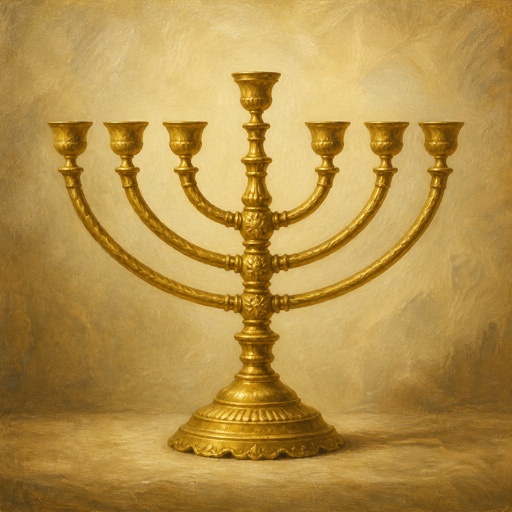
"And six branches shall come out of the sides of it; three branches of the candlestick out of the one side, and three branches of the candlestick out of the other side:" - Exodus 25:32

Exodus 25:16

Exodus 25:31

Exodus 32:32 - "Yet now, if thou wilt forgive their sin--; and if not, blot me, I pray thee, out of thy book which thou hast written."

Exodus 25:8

Exodus 25:16

Exodus 25:16

Exodus 23:32 - "Thou shalt make no covenant with them, nor with their gods."

Exodus 35:32 - "And to devise curious works, to work in gold, and in silver, and in brass,"

Exodus 9:32 - "But the wheat and the rie were not smitten: for they were not grown up."

The Plague of Flies - Exodus 8:20-32

The Plague of Flies - Exodus 8:20-32.

The Plague of Flies - Exodus 8:20-32

Exodus 25:10-22

Exodus 32:35 - "And the LORD plagued the people, because they made the calf, which Aaron made."

Exodus 32:16 - "And the tables were the work of God, and the writing was the writing of God, graven upon the tables."

Leviticus 25:32 - "Notwithstanding the cities of the Levites, and the houses of the cities of their possession, may the Levites redeem at any time."

Exodus 32:14 - "And the LORD repented of the evil which he thought to do unto his people."

Exodus 25:1 - "And the LORD spake unto Moses, saying,"

Exodus 32:9 - "And the LORD said unto Moses, I have seen this people, and, behold, it is a stiffnecked people:"

Exodus 25:7 - "Onyx stones, and stones to be set in the ephod, and in the breastplate."

Exodus 21:25 - "Burning for burning, wound for wound, stripe for stripe."

Exodus 29:32 - "And Aaron and his sons shall eat the flesh of the ram, and the bread that is in the basket, by the door of the tabernacle of the congregation."