Setting Apart: The Sacred Call to Anoint
“And thou shalt take the anointing oil, and anoint the tabernacle, and all that is therein, and shalt hallow it, and all the vessels thereof: and it shall be holy.” — Exodus 40:9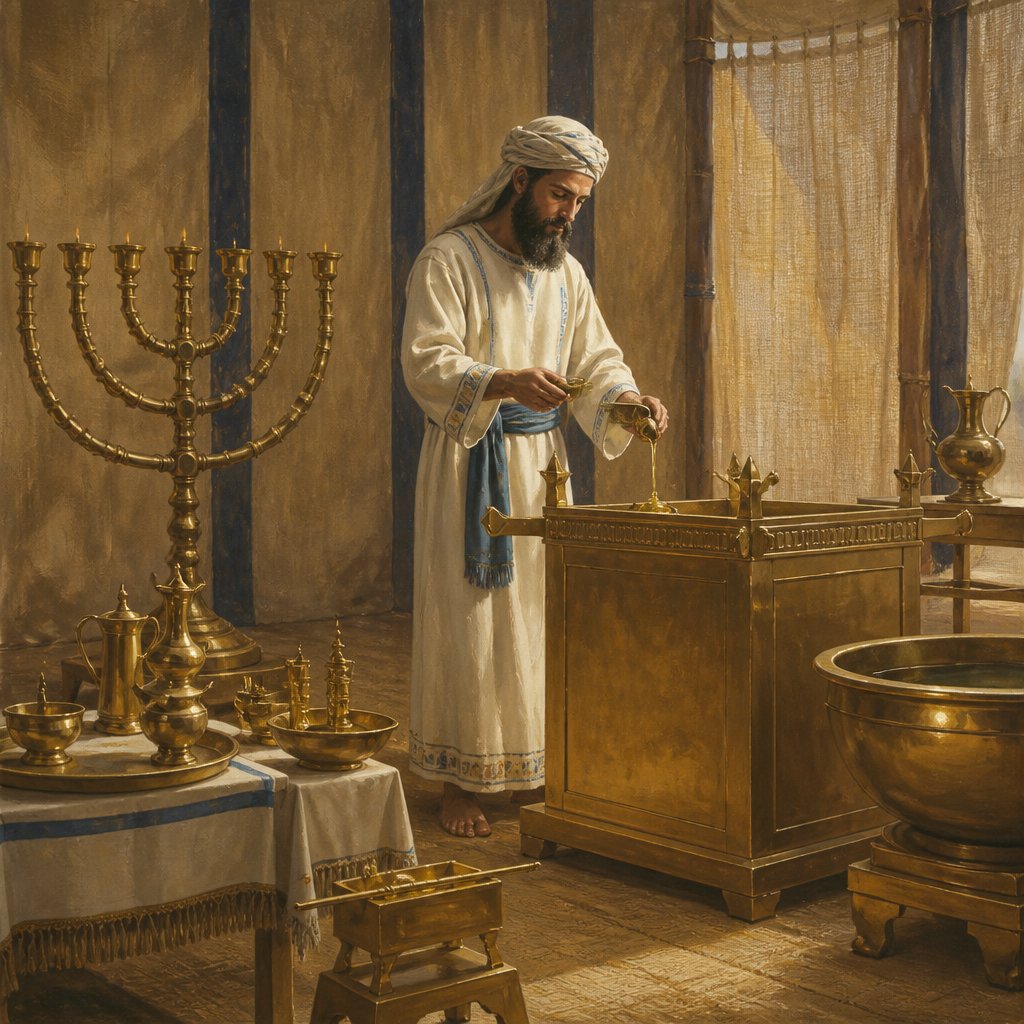
Exodus 40:9 states: "And thou shalt take the anointing oil, and anoint the tabernacle, and all that is therein, and shalt hallow it, and all the vessels thereof: and it shall be holy." This verse marks a significant moment in the life of the Israelites as they completed the construction of the Tabernacle, a dwelling place for God among His people. The anointing oil signifies more than just a physical act; it conveys a spiritual reality that resonates deeply with us today.
The instruction to take the anointing oil and anoint the tabernacle and all that is therein illustrates God’s desire for His presence to dwell among His people within a set-apart, holy space. When we consider the significance of anointing, we realize that it symbolizes empowerment, purpose, and sacredness. In biblical times, anointing with oil was a practice often reserved for kings, priests, and prophets—the individuals chosen by God to lead and serve His people. By anointing the tabernacle, God was not just establishing a place of worship but was also setting apart a means through which He would interact with His people.
The act of anointing brings to light the concept of holiness. The term “hallow” means to make holy or to sanctify. When something is sanctified, it is dedicated to God and is thus recognized as having a unique purpose separate from the ordinary. The tabernacle, its furnishings, and everything within it were to be treated with reverence, as they were designated for divine use. This notion invites us to reflect on our lives—what we consider sacred and how we set apart moments, places, and even ourselves for the Lord's purposes.
In a world that often blurs the line between sacred and secular, we can easily forget that everything we have, including our lives, belongs to God. Just as He commanded the Israelites to anoint the tabernacle, we too are called to be vessels of His presence in our own lives. When we receive Jesus, we are anointed with the Holy Spirit—God's presence dwelling in us. Therefore, our bodies become temples of the Holy Spirit (1 Cor. 6:19). We carry the profound responsibility and privilege of living out our calling as bearers of His light in a world that desperately needs it.
To hallow our day-to-day experiences, we must reflect on how we approach the aspects of our lives. Are we treating our time, our relationships, our work—our very selves—as sacred? Each moment is an opportunity to acknowledge God’s sovereignty. Anointing our daily routines with prayer and gratitude can transform the mundane into moments of divine interaction. For instance, when we go to work, we can do so acknowledging that our work is not just a means to a paycheck but a vocation where we can express God's love and grace.
Additionally, as we consider how we anoint and hallow our environment, we should remember that the sanctification process involves not only us but also the spaces we create for others. We can cultivate atmospheres of peace, love, and joy in our homes and communities, allowing others to encounter the holy nature of God through our actions and words. Our lives, then, become reflections of the anointed, holy space that God intended the tabernacle to be—a place of meeting and relationship.
Finally, we must not overlook the profound truth that our anointing is not an end in itself; rather, it is a means to fulfill God’s purpose on earth. The anointing oil was not just for the Tabernacle; it was for everything associated with it. As we immerse ourselves in the presence of God and invite His anointing in our lives, may we be reminded that we are called to share this presence with others, making His name known and bringing His kingdom to fruition in our world.
In conclusion, Exodus 40:9 reminds us of the sacred call to anoint and to hallow, both in our own lives and in the lives of those around us. Through this process of setting apart, we engage in a continuous act of worship, inviting God into every aspect of our existence and allowing His holiness to shine through us. Let this be our prayer: that every corner of our lives becomes a reflection of the holiness of God as we embark on our journey to sanctify everything we touch.
Get our apps


Artwork for Exodus 40:9

Exodus 40:9

Exodus 40:9 - "And thou shalt take the anointing oil, and anoint the tabernacle, and all that is therein, and shalt hallow it, and all the vessels thereof: and it shall be holy."
"And thou shalt take the anointing oil, and anoint the tabernacle, and all that is therein, and shalt hallow it, and all the vessels thereof: and it shall be holy." - Exodus 40:9

Exodus 40: 34

Exodus 40:1 - "And the LORD spake unto Moses, saying,"

Exodus 40:28 - "¶ And he set up the hanging at the door of the tabernacle."

Exodus 25:31-40 This is an oil lampstand.

Exodus 40:11 - "And thou shalt anoint the laver and his foot, and sanctify it."

Exodus 40:25 - "And he lighted the lamps before the LORD; as the LORD commanded Moses."

Exodus 40:26 - "¶ And he put the golden altar in the tent of the congregation before the vail:"

Exodus 40:34 - "¶ Then a cloud covered the tent of the congregation, and the glory of the LORD filled the tabernacle."

Exodus 40:31 - "And Moses and Aaron and his sons washed their hands and their feet thereat:"

Exodus 40:14 - "And thou shalt bring his sons, and clothe them with coats:"

Exodus 40:27 - "And he burnt sweet incense thereon; as the LORD commanded Moses."

Exodus 40:3 - "And thou shalt put therein the ark of the testimony, and cover the ark with the vail."

Exodus 40:37 - "But if the cloud were not taken up, then they journeyed not till the day that it was taken up."

Exodus 25:40 - "And look that thou make them after their pattern, which was shewed thee in the mount."

Exodus 40:24 - "¶ And he put the candlestick in the tent of the congregation, over against the table, on the side of the tabernacle southward."

Exodus 40:16 - "Thus did Moses: according to all that the LORD commanded him, so did he."

Exodus 40:30 - "¶ And he set the laver between the tent of the congregation and the altar, and put water there, to wash withal."

Exodus 40:22 - "¶ And he put the table in the tent of the congregation, upon the side of the tabernacle northward, without the vail."

Exodus 40:6 - "And thou shalt set the altar of the burnt offering before the door of the tabernacle of the tent of the congregation."

Exodus 12:40 - "¶ Now the sojourning of the children of Israel, who dwelt in Egypt, was four hundred and thirty years."

Mark 9:40 - "For he that is not against us is on our part."

Exodus 40:23 - "And he set the bread in order upon it before the LORD; as the LORD had commanded Moses."

Exodus 40:2 - "On the first day of the first month shalt thou set up the tabernacle of the tent of the congregation."
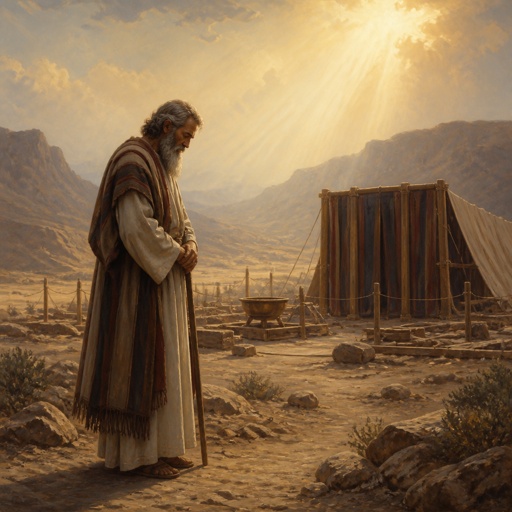
"And the LORD spake unto Moses, saying," - Exodus 40:1

Exodus 40:17 - "¶ And it came to pass in the first month in the second year, on the first day of the month, that the tabernacle was reared up."

Exodus 40:8 - "And thou shalt set up the court round about, and hang up the hanging at the court gate."

Exodus 40:7 - "And thou shalt set the laver between the tent of the congregation and the altar, and shalt put water therein."