Returning with Purpose: The Call of Moses
"And Moses took his wife and his sons, and set them upon an ass, and he returned to the land of Egypt: and Moses took the rod of God in his hand." - Exodus 4:20
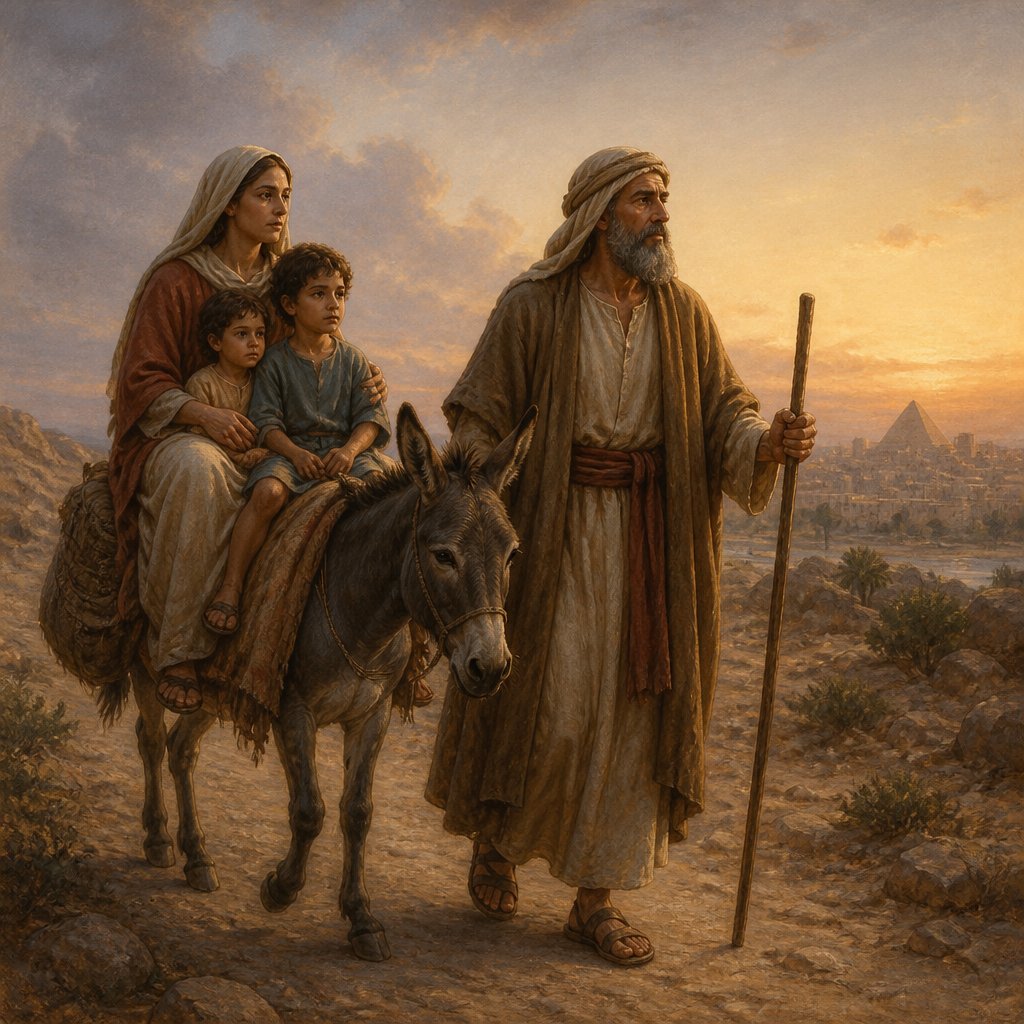
The verse Exodus 4:20 states, "And Moses took his wife and his sons, and set them upon an ass, and he returned to the land of Egypt: and Moses took the rod of God in his hand." This passage captures a pivotal moment in Moses' life as he prepares to embark on a mission that would not only alter the course of his life but also the destiny of an entire nation.
To understand the gravity of this moment, we must first reflect on the journey that led Moses to this point. Raised in Pharaoh's palace, Moses was a man of two worlds—he was both Hebrew by birth and Egyptian by upbringing. After fleeing into the wilderness, Moses spent decades in Midian, tending sheep and building a family. Yet, God’s call was relentless. In Exodus 3, God revealed Himself to Moses through the burning bush, commissioning him to return to Egypt and lead the Israelites out of bondage.
The very act of taking his wife and sons with him is significant. This was not merely a personal journey for Moses; it was a family mission. God’s call often extends beyond the individual and touches the entire family unit. Moses was not just carrying the weight of his own destiny; he was also leading his family into a new and uncertain future. We see an important lesson here: when we heed God’s call, it affects not just our lives but also the lives of those we love. This partnership of faith within a family can provide strength and support, reinforcing the importance of unity in our spiritual journeys.
As Moses mounts the ass, with his family in tow, he sets out not only with a mission but with the prophetic authority embodied in the rod he carries—the rod of God. This rod is more than just a tool; it is the symbol of God's power and presence. It represents the miraculous signs and wonders that Moses would perform in God’s name. It is a reminder that the journey is divinely ordained and that Moses would not be alone. God would be with him, empowering him for the task ahead.
In our own lives, we may not carry a physical rod or be called to such a monumental task as Moses, but we too carry symbols of God’s authority and presence. The Word of God, prayer, and the Holy Spirit equip us for our journeys. When we face daunting challenges, whether they are personal trials or calls to serve others, we must remember the tools and resources God has provided to us. Like Moses, we are called to embrace the power that comes from God and use it in our own lives.
The return to Egypt is laden with tension. Moses was going back to the place of his past failures and the land that held his people in bondage. It is easy to be hesitant when returning to places connected with pain or regret. Yet, in returning, there lies a redemptive aspect. God doesn’t just bring us back to confront our past; He equips us to face our fears and tackle injustices. Each of us has our own Egypt's to confront, whether they are negatively charged memories, toxic relationships, or barriers to faith. God calls us to step into these situations armed with confidence in His guidance.
Moreover, Moses’ journey calls us to reflect on our sense of purpose. Are we willing to step out in faith, equipped with what God has provided? Are we prepared to face the challenges in our paths while trusting in God’s plans? This account of Moses teaches us about obedience, reliance on God, and the transitions that often define our lives.
In conclusion, as we meditate on Exodus 4:20, let us be inspired by Moses' willingness to obey God's call. May we embrace our family dynamics in pursuing God’s mission, equip ourselves with His Word, and confront our own Egypts with courage and faith. Each step we take in response to God's calling has the potential to lead to significant change—not only in our lives but in the lives of those around us.
Want to reflect more on Exodus 4:20?
Continue your spiritual journey with Bible Chat — an AI-powered tool for exploring God's Word through conversation. Ask questions, discover connections, and deepen your understanding.
Get Our Apps


Exodus 4:20 Artwork

Exodus 4:20 - "And Moses took his wife and his sons, and set them upon an ass, and he returned to the land of Egypt: and Moses took the rod of God in his hand."
"And Moses took his wife and his sons, and set them upon an ass, and he returned to the land of Egypt: and Moses took the rod of God in his hand." - Exodus 4:20

Exodus 20:4 - "Thou shalt not make unto thee any graven image, or any likeness of any thing that is in heaven above, or that is in the earth beneath, or that is in the water under the earth:"

Exodus 23:20

Exodus 20:2

Exodus 27:20

Exodus 27:20

Exodus 27:20

Exodus 20:14

Exodus 20:15 - "Thou shalt not steal."

Exodus 20:13 - "Thou shalt not kill."

Exodus 27:19-20

Exodus 19:16-20

Exodus 20:14 - "Thou shalt not commit adultery."

Exodus 20:1 - "And God spake all these words, saying,"

Exodus 20:8 - "Remember the sabbath day, to keep it holy."

Exodus 20:20 - "And Moses said unto the people, Fear not: for God is come to prove you, and that his fear may be before your faces, that ye sin not."

Exodus 20:3 - "Thou shalt have no other gods before me."

The Plague of Locusts - Exodus 10:1-20

The Plague of Locusts - Exodus 10:1-20

The Plague of Flies - Exodus 8:20-32

The Plague of Locusts - Exodus 10:1-20

The Plague of Locusts - Exodus 10:1-20

The Plague of Locusts - Exodus 10:1-20

The Plague of Flies - Exodus 8:20-32.

The Plague of Locusts - Exodus 10:1-20

The Plague of Flies - Exodus 8:20-32

The Plague of Locusts - Exodus 10:1-20

The Plague of Locusts - Exodus 10:1-20

Exodus 27:20 the lamp is made of brass