The Cry of a Leader: Trusting God in Troubling Times
“And Moses returned unto the LORD, and said, Lord, wherefore hast thou so evil entreated this people? why is it that thou hast sent me?” — Exodus 5:22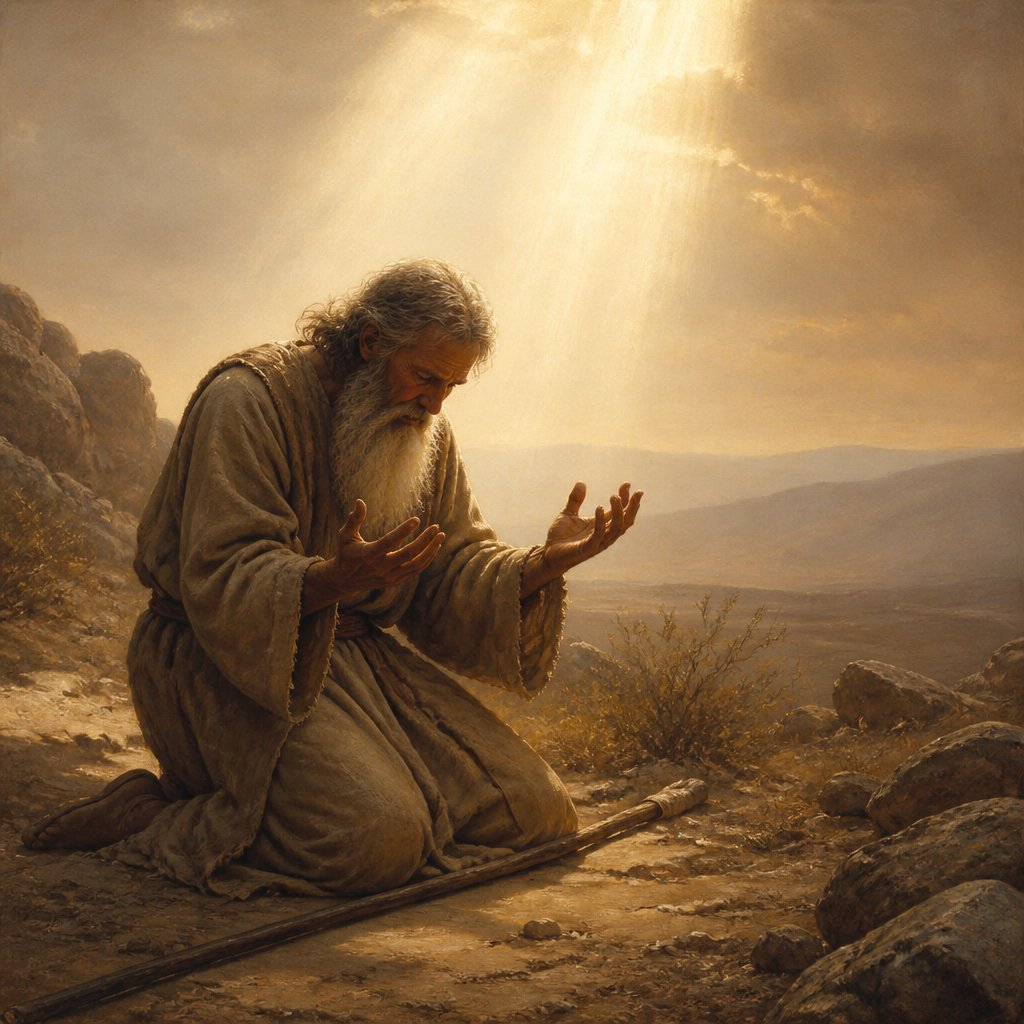
When we think about the life of Moses, we often envision a leader of great faith, a man who communicated directly with God and delivered the Israelites from Egyptian slavery. However, before Moses could embrace this monumental calling, he faced a heart-wrenching moment of doubt and confusion, beautifully captured in Exodus 5:22: "And Moses returned unto the LORD, and said, Lord, wherefore hast thou so evil entreated this people? why is it that thou hast sent me?" This profound question reveals the deeply human struggle of leading others through difficult circumstances, and it invites us to explore the depths of our own faith in the face of adversity.
Moses had just confronted Pharaoh, delivering God's command to 'let my people go.' Instead of heeding this divine order, Pharaoh responded with increased oppression for the Israelites, which resulted in even more suffering. The very people Moses was called to save now questioned his leadership. In that moment, Moses was engulfed in a storm of anxiety. How could God allow such suffering? Why would He send Moses into a situation that only worsens?
This pivotal moment in Moses' journey serves as a mirror reflecting our own encounters with doubt when faced with trials. It is natural to feel overwhelmed when we embark on a path that leads not toward immediate relief but rather deeper challenges and trials. In our lives, God often calls us to significant tasks, to step out in faith, only to encounter resistance, confusion, and sometimes, the very opposite of what we expect. The question Moses posed is one many of us have silently asked in our own moments of crisis: "Lord, why have you placed me here?"
Moses’ words emphasize his disappointment and confusion regarding God’s plan. His question encapsulates the internal conflict between the call to lead and the outcome of his actions. In our own lives, this demonstrates how leadership and faith can sometimes feel burdensome, especially when we perceive the struggles of those we care for.
Moses recognized the disparity between God’s promise of deliverance and the harsh reality faced by the Israelites. In our daily lives, moments of doubt like these invite us to return to prayerful contemplation, much like Moses did. When faced with challenges that seem insurmountable, we are prompted to return to God—to lay bare our hearts, voice our frustrations, and seek understanding. Moses shows us that it is valid to approach God with our perplexities. God welcomes our honest conversations, even when they are fraught with fear, confusion, or grief.
It's critical to understand that God’s ways often transcend our immediate understanding. In His divine wisdom, He sees the bigger picture, crafting His plan through time and circumstance in ways that we may not perceive. While it may seem that God has dealt harshly with us or those we care about, we must remember that He is always at work, even in the suffering and trials. Romans 8:28 reminds us, "And we know that all things work together for good to them that love God, to them who are the called according to his purpose." This verse serves as a balm in turbulent times, assuring us that God’s plans are always aimed toward a purpose far greater than our current context.
Ultimately, Moses' cry for help does not stand alone; it becomes a catalyst for a more significant revelation of God’s power. In subsequent chapters of Exodus, we see how God responds—how He strengthens Moses, demonstrates His authority over Pharaoh, and leads the Israelites toward liberation. It reminds us that even amidst our struggles and our doubts, God is preparing a way forward.
In conclusion, we must carve out moments where we can express our worries to the Lord, to lay our burdens at His feet freely. Let us remember that our doubts do not diminish our faith but can, instead, enhance our dependence on God. Like Moses, let us return to God whenever we feel overwhelmed, trusting in His timing and His infinite wisdom as He continues to guide our steps.
Get our apps


Artwork for Exodus 5:22

Exodus 5:22 - "And Moses returned unto the LORD, and said, Lord, wherefore hast thou so evil entreated this people? why is it that thou hast sent me?"

"And Moses returned unto the LORD, and said, Lord, wherefore hast thou so evil entreated this people? why is it that thou hast sent me?" - Exodus 5:22

Exodus 22:5

Exodus 22:5

Exodus 22:5

Exodus 22:5 - "¶ If a man shall cause a field or vineyard to be eaten, and shall put in his beast, and shall feed in another man's field; of the best of his own field, and of the best of his own vineyard, shall he make restitution."

Exodus 22:22 - "¶ Ye shall not afflict any widow, or fatherless child."

Exodus 22:28

Exodus 15:22

Exodus 22:28

Exodus 22:28

Exodus 22:28

Exodus 22:28

Exodus 22:28

Exodus 22:28

Exodus 22:28

Exodus 22:28

Exodus 22:28

Exodus 22:28

Exodus 22:28

Exodus 22:28

Exodus 22:28

Exodus 25:10-22

Exodus 6:22 - "And the sons of Uzziel; Mishael, and Elzaphan, and Zithri."

Exodus 22:18 - "¶ Thou shalt not suffer a witch to live."

Exodus 30:22 - "¶ Moreover the LORD spake unto Moses, saying,"

Exodus 15:5

Exodus 22:19 - "¶ Whosoever lieth with a beast shall surely be put to death."

"¶ Ye shall not afflict any widow, or fatherless child." - Exodus 22:22

Exodus 39:22 - "¶ And he made the robe of the ephod of woven work, all of blue."