Covenant and Promise: A Journey of Faith
"And I have also established my covenant with them, to give them the land of Canaan, the land of their pilgrimage, wherein they were strangers." - Exodus 6:4
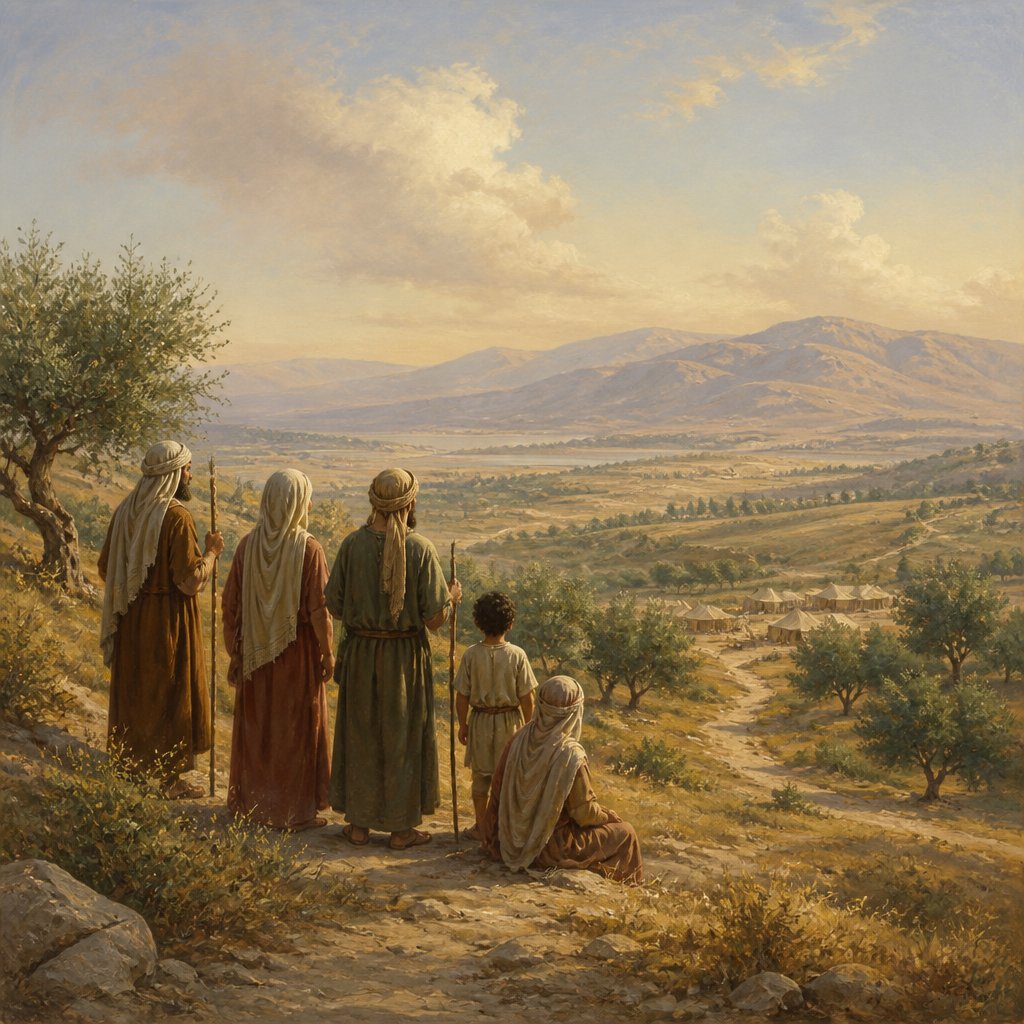
As we dive into Exodus 6:4, which states, "And I have also established my covenant with them, to give them the land of Canaan, the land of their pilgrimage, wherein they were strangers," we are confronted with the essence of God’s faithfulness and the enduring nature of His promises.
In this verse, the Lord is reminding His people of the covenant established with their ancestors — a holy promise to give them the land of Canaan. This land is significant; it represents not just a geographic location, but also a divine purpose. The Hebrew people were wanderers, strangers in a foreign land, living lives marked by sojourning and searching for belonging. In this context, the promise of Canaan takes on a deeper meaning as it embodies a place of rest, abundance, and fulfillment.
The term "covenant" itself is a central theme throughout the Scripture. It is a binding agreement that signifies a relationship based on mutual commitment. God, in His mercy, chooses to engage with humanity, establishing an arrangement whereby He commits Himself faithfully to His people. For the Israelites, this specific promise was rooted in their history, traced back to Abraham, Isaac, and Jacob. They were to inherit the land not due to their righteousness, but entirely because of God's grace and unwavering fidelity.
In understanding this passage, it’s essential to reflect on the nature of God’s promise. God reassures us that even when we feel like strangers — whether in our circumstances, relationships, or spiritually — He sees us. The Israelites were in Egypt, distant from their homeland, but often felt isolated and marginalized. Similarly, in our lives, we may experience seasons of alienation, be it through trials, transitions, or even as we navigate a world that can sometimes feel indifferent to our struggles.
Yet amidst this, God speaks. He declares His will to give them Canaan — the promised land. The journey to this promise was fraught with challenges; it was not immediate, nor was it easy. It involved perseverance, fighting battles, and, at times, enduring hardships. This gives us crucial insight: receiving God’s promises often requires us to trust Him during our own pilgrimages through life.
Consider the nature of your own personal pilgrimages. Are there areas where you feel like a stranger – to yourself, your surroundings, or even in your faith? Perhaps you stand between where you are currently and where God has promised you will be. In these spaces of tension and waiting, God’s faithfulness remains unshaken. He invites us to anchor our hope in His promises, just as He did for the children of Israel.
Furthermore, the mention of Canaan being a 'land of pilgrimage' reminds us that our existence is transient, while the promise of God is eternal. The Land of Canaan was not just an end point; it was a destination that formed part of a greater journey. In the New Testament context, we understand that as believers, we too are on a pilgrimage — our true homeland is eternal, found in Christ.
As we meditate on Exodus 6:4, let us be encouraged that God has established His covenant with us through Jesus Christ. The promise of new life and eternal peace transcends our earthly wanderings; it assures us that we are never alone in our journey. We are recipients of a greater inheritance than land — we are heirs of God’s eternal Kingdom.
Our response to such a promise should be one of worship, gratitude, and trust. Let us lay down our burdens, our feelings of estrangement, and embrace the identity that God bestows upon us as His beloved. As we navigate through trials and tribulations, may we always hold firm to His words, grounded in the knowledge that God’s promises are true and everlasting — for He is the God who establishes and fulfills His covenant.
Want to reflect more on Exodus 6:4?
Continue your spiritual journey with Bible Chat — an AI-powered tool for exploring God's Word through conversation. Ask questions, discover connections, and deepen your understanding.
Get Our Apps


Exodus 6:4 Artwork

Exodus 6:4 - "And I have also established my covenant with them, to give them the land of Canaan, the land of their pilgrimage, wherein they were strangers."
"And I have also established my covenant with them, to give them the land of Canaan, the land of their pilgrimage, wherein they were strangers." - Exodus 6:4

Exodus 4:6 - "¶ And the LORD said furthermore unto him, Put now thine hand into thy bosom. And he put his hand into his bosom: and when he took it out, behold, his hand was leprous as snow."
Exodus 17:6

Exodus 17:6

Exodus 17:6

Exodus 17:6

Exodus 23:4

Exodus 28:4

Exodus 28:4

Exodus 28:4

Exodus 28:4

Exodus 24:4

Exodus 23:4

Exodus 6:21 - "¶ And the sons of Izhar; Korah, and Nepheg, and Zichri."

Exodus 6:22 - "And the sons of Uzziel; Mishael, and Elzaphan, and Zithri."

Exodus 6:10 - "And the LORD spake unto Moses, saying,"

Exodus 4:1-5

Exodus 1:4 - "Dan, and Naphtali, Gad, and Asher."

Exodus 6:17 - "The sons of Gershon; Libni, and Shimi, according to their families."

Exodus 35:6 - "And blue, and purple, and scarlet, and fine linen, and goats' hair,"

Exodus 25:6 - "Oil for the light, spices for anointing oil, and for sweet incense,"

Exodus 1:6 - "And Joseph died, and all his brethren, and all that generation."

Exodus 33:6 - "And the children of Israel stripped themselves of their ornaments by the mount Horeb."

Exodus 6:24 - "And the sons of Korah; Assir, and Elkanah, and Abiasaph: these are the families of the Korhites."

Ephesians 4:4-6

Ephesians 4:4-6

Exodus 38:6 - "And he made the staves of shittim wood, and overlaid them with brass."

Exodus 23:6 - "Thou shalt not wrest the judgment of thy poor in his cause."

Ephesians 4:4-6