A Voice of Faith in the Face of Doubt
“And Moses spake before the LORD, saying, Behold, the children of Israel have not hearkened unto me; how then shall Pharaoh hear me, who am of uncircumcised lips?” — Exodus 6:12
Exodus 6:12 presents us with a profound moment of vulnerability in the life of Moses: “And Moses spake before the LORD, saying, Behold, the children of Israel have not hearkened unto me; how then shall Pharaoh hear me, who am of uncircumcised lips?” This statement encapsulates both fear and humility. It reveals the heart of a leader grappling with the weight of his calling and the daunting challenges that lie ahead.
Moses’ journey began not as a confident public speaker but as a shepherd in the wilderness who felt inadequate to fulfill God’s mission. When God called him from the burning bush, He did so with a promise of deliverance for His people but also with the expectation that Moses would act as the mouthpiece of that deliverance. Yet, here we see Moses expressing his uncertainty. His words, “who am of uncircumcised lips,” reflect a deep sense of unworthiness and lack of eloquence. To him, the very notion of speaking to Pharaoh—the most powerful ruler of that time—was unfathomable, especially if the Israelites were not willing to listen to him.
Moses’ reluctance reveals a significant principle of faith: **God often calls those who feel unqualified.** He does not seek out the most eloquent or powerful but instead chooses those with obedient hearts willing to yield to His will. The fact that Moses felt he was not up to the task is essential. It underscores the idea that leadership in God’s kingdom isn't about our capabilities but about His power working through our weaknesses.
This theme of humility can be seen throughout Scripture. Paul, in his letters, often speaks of his weaknesses to highlight the sufficiency of God's grace (2 Corinthians 12:9). Likewise, God reassures Moses that it is not his ability that matters; rather, it is His presence and power that will lead and motivate others.
Moses’ concern also reveals something deeply human. He is worried not only about his own inadequacies but also about the reception of his message. The Israelites had endured years of suffering and oppression, and Moses feared they would not listen to him, a man whom they saw as having been raised in royalty but who left them in slavery for years. Moses is deeply aware of the challenge ahead. How can a hesitant preacher deliver news of liberation to a stubborn ruler? What kind of convincing case could he possibly present?
However, in moments of fear and doubt, we are reminded of God’s encouragement. In the verses following Moses’ complaint, God reassures him, commanding him to speak to the Israelites about their impending deliverance (Exodus 6:13). God’s promises are steadfast, and His plans will not be thwarted by our inadequacies or fears. He calls us not because we are capable but rather, because He is capable of equipping us for the task.
As we reflect on this passage, we can apply it to our lives today. There may be areas where we feel incapacitated or called to do things that instill fear within us, whether it's sharing our faith, stepping into a leadership role, or confronting difficult situations. Like Moses, we may feel that we carry the burden of uncircumcised lips—imperfect, unpolished, or unworthy to communicate God’s truth.
**Let us remember that it is in our weakness that His strength is magnified.** Instead of succumbing to doubts, we should bring these concerns to God, recognizing that He has already equipped us with the tools necessary for our call. The key is to remain obedient and faithful to His leading.
In those moments of questioning ourselves, let us recall the truth that God sees beyond our fears and feelings of inadequacy. He calls, He equips, and He empowers. May we stand firm in our God-given responsibilities while trusting in His sovereignty, just as Moses ultimately did.
Get our apps


Artwork for Exodus 6:12

Exodus 6:12 - "And Moses spake before the LORD, saying, Behold, the children of Israel have not hearkened unto me; how then shall Pharaoh hear me, who am of uncircumcised lips?"
![Exodus 6:12 KJVAAE
[12] And Moses spake before the Lord, saying, Behold, the children of Israel have not hearkened unto me; how then shall Pharaoh hear me,](https://media.bible.art/ba659b6c-b89d-4b46-974b-8bddd98fe898-thumbnail.jpg)
Exodus 6:12 KJVAAE [12] And Moses spake before the Lord, saying, Behold, the children of Israel have not hearkened unto me; how then shall Pharaoh hear me,

"And Moses spake before the LORD, saying, Behold, the children of Israel have not hearkened unto me; how then shall Pharaoh hear me, who am of uncircumcised lips?" - Exodus 6:12

Exodus 12:6 - "And ye shall keep it up until the fourteenth day of the same month: and the whole assembly of the congregation of Israel shall kill it in the evening."

Exodus 12:12

Deuteronomy 6:12 - "Then beware lest thou forget the LORD, which brought thee forth out of the land of Egypt, from the house of bondage."

Exodus 3:12

Exodus 3:12

Exodus 3:12

Exodus 3:12

Exodus 3:12

Exodus 12:33

Exodus 12:7

Exodus 10:12
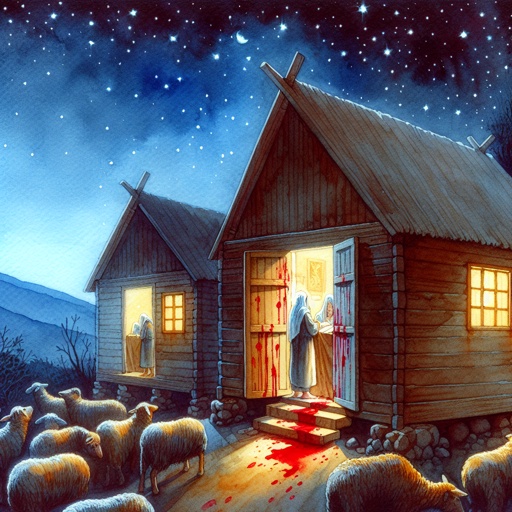
Exodus 12:13

Exodus 10:12

Exodus 3:12

Exodus 10:12

Exodus 3:12

Exodus 12:7

Exodus 17:6

Exodus 17:6

Exodus 17:6

Exodus 17:6

Exodus 12:1-19

"And ye shall keep it up until the fourteenth day of the same month: and the whole assembly of the congregation of Israel shall kill it in the evening." - Exodus 12:6

Exodus 39:12 - "And the third row, a ligure, an agate, and an amethyst."

Exodus 31:12 - "¶ And the LORD spake unto Moses, saying,"

Exodus 12:47 - "All the congregation of Israel shall keep it."

Exodus 12:45 - "A foreigner and an hired servant shall not eat thereof."