The Cry of Intercession: Lessons from the Plague of Frogs
"And Moses and Aaron went out from Pharaoh: and Moses cried unto the LORD because of the frogs which he had brought against Pharaoh." - Exodus 8:12
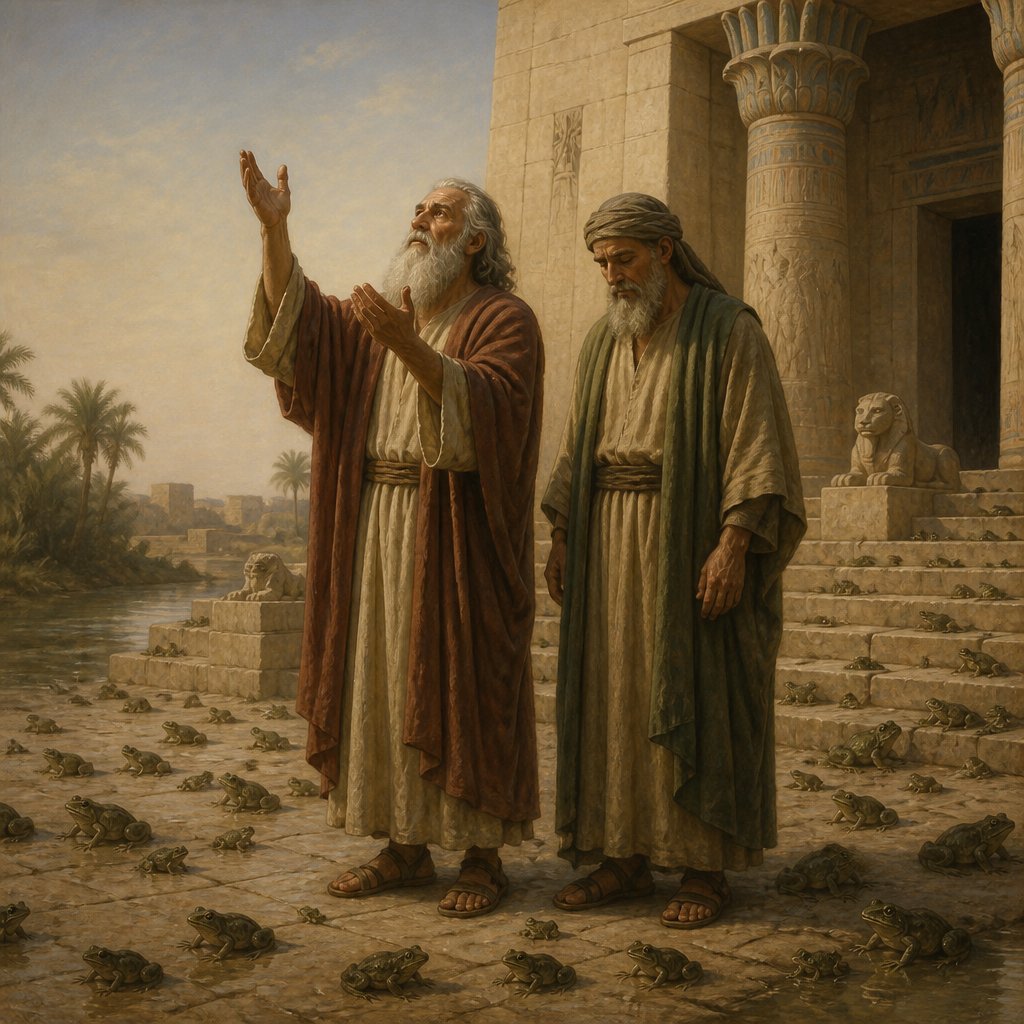
In Exodus 8:12, we encounter a poignant moment of desperation and divine dialogue: “And Moses and Aaron went out from Pharaoh: and Moses cried unto the LORD because of the frogs which he had brought against Pharaoh.” This vivid scene encapsulates the dual themes of divine authority and human intercession, offering invaluable lessons for our spiritual lives today.
**Understanding the Context**
To fully appreciate the significance of this verse, it is important to understand the backdrop of the events taking place. The Egyptians were under the oppressive rule of Pharaoh, who was resistant to letting the Israelites go despite the plagues that had begun to unfold. The frogs, as one of the ten plagues, were not just a natural disaster but a manifestation of God’s power to humble the pride of Pharaoh and reveal His sovereignty.
In this moment, we see Moses and Aaron emerging from an audience with the king, their hearts heavy with the burden of God’s message and the plight of their people. As they exit the palace, the noise of countless frogs fills the air—a cacophony that signifies both judgment and the need for urgent intervention. In response to this chaos, Moses turns to God. His cry was not just a simple plea; it was a deep and heartfelt intercession for Pharaoh and for the people who were suffering under the weight of sin and rebellion.
**The Nature of Intercessory Prayer**
Moses’ cry to the Lord highlights the nature of intercessory prayer, which involves standing in the gap for others. It is a selfless act of love, seeking God's mercy and intervention in situations that seem utterly hopeless. Just as Moses interceded for Pharaoh, we too are called to pray for those who do not know the Lord, as well as for those in authority, asking God to soften hearts and break chains of oppression.
Intercessory prayer requires humility. Moses could have grown frustrated with Pharaoh’s obstinacy, yet he chose to cry out to God instead of retaliating. This teaches us that in our frustrations, we must turn to prayer rather than allow bitterness to take root in our hearts. It is through fervent prayer that we invite God’s power into our circumstances, igniting change that our words and actions may not accomplish on their own.
**The Call to Humility and Authenticity**
When Moses cried out to the Lord, he exhibited a raw and authentic relationship with God, one that demonstrated both fervor and reverence. True prayer comes from a place of desire for God’s will and an acknowledgement of His authority over every situation. Moses did not present a rehearsed or formulaic prayer; he came in raw honesty about the situation, reflecting genuine concern for the suffering around him.
This passage challenges us to evaluate the state of our own prayers. Are we approaching God with authenticity about our struggles and the struggles of those we love? Are we crying out for mercy in the manner Moses did?
**Confronting Our Own Pharaohs**
In a broader sense, the frogs can be seen as the various trials and tribulations in our lives that seem overwhelming and pervasive. Just as the frogs plagued Egypt, we may encounter stress, anxiety, sin, or conflicts that invade our peace. How do we respond? Do we harden our hearts like Pharaoh, serving our discomfort without seeking deliverance? Or do we take the example of Moses and cry unto the Lord, inviting Him into our desperate moments?
**Conclusion**
Exodus 8:12 prompts us to reflect deeply on the power and necessity of intercessory prayer. Just as Moses cried out to the God who delivers, may we find strength and solace in interceding for ourselves and for others amidst the challenges we face. Let our cries be filled with both urgency and trust, believing wholeheartedly that our God hears and responds to the genuine pleas of His people. Spiritual deliverance is often just a cry away.
Want to reflect more on Exodus 8:12?
Continue your spiritual journey with Bible Chat — an AI-powered tool for exploring God's Word through conversation. Ask questions, discover connections, and deepen your understanding.
Get Our Apps


Exodus 8:12 Artwork

Exodus 8:12 - "And Moses and Aaron went out from Pharaoh: and Moses cried unto the LORD because of the frogs which he had brought against Pharaoh."
"And Moses and Aaron went out from Pharaoh: and Moses cried unto the LORD because of the frogs which he had brought against Pharaoh." - Exodus 8:12

The Plague of Boils - Exodus 9:8-12

The Plague of Boils - Exodus 9:8-12

The Plague of Boils - Exodus 9:8-12

The Plague of Boils - Exodus 9:8-12

The Plague of Boils - Exodus 9:8-12

The Plague of Boils - Exodus 9:8-12.

The Plague of Boils - Exodus 9:8-12

The Plague of Boils - Exodus 9:8-12

Exodus 12:8 - "And they shall eat the flesh in that night, roast with fire, and unleavened bread; and with bitter herbs they shall eat it."

Exodus 12:12
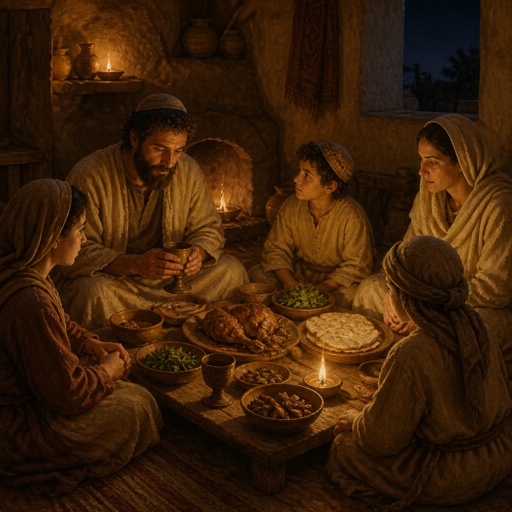
"And they shall eat the flesh in that night, roast with fire, and unleavened bread; and with bitter herbs they shall eat it." - Exodus 12:8

Exodus 3:12

Exodus 3:12

Exodus 3:12

Exodus 3:12

Exodus 3:12

Exodus 12:33

Exodus 12:7

Exodus 10:12
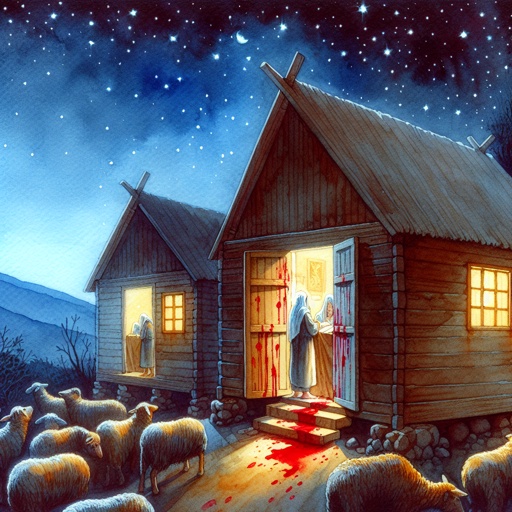
Exodus 12:13

Exodus 10:12

Exodus 3:12

Exodus 10:12

Exodus 3:12

Exodus 12:7

Exodus 25:8

Exodus 12:1-19

Exodus 27:1-8