Frogs of Affliction: The Cry for Deliverance
"Then Pharaoh called for Moses and Aaron, and said, Intreat the LORD, that he may take away the frogs from me, and from my people; and I will let the people go, that they may do sacrifice unto the LORD." - Exodus 8:8
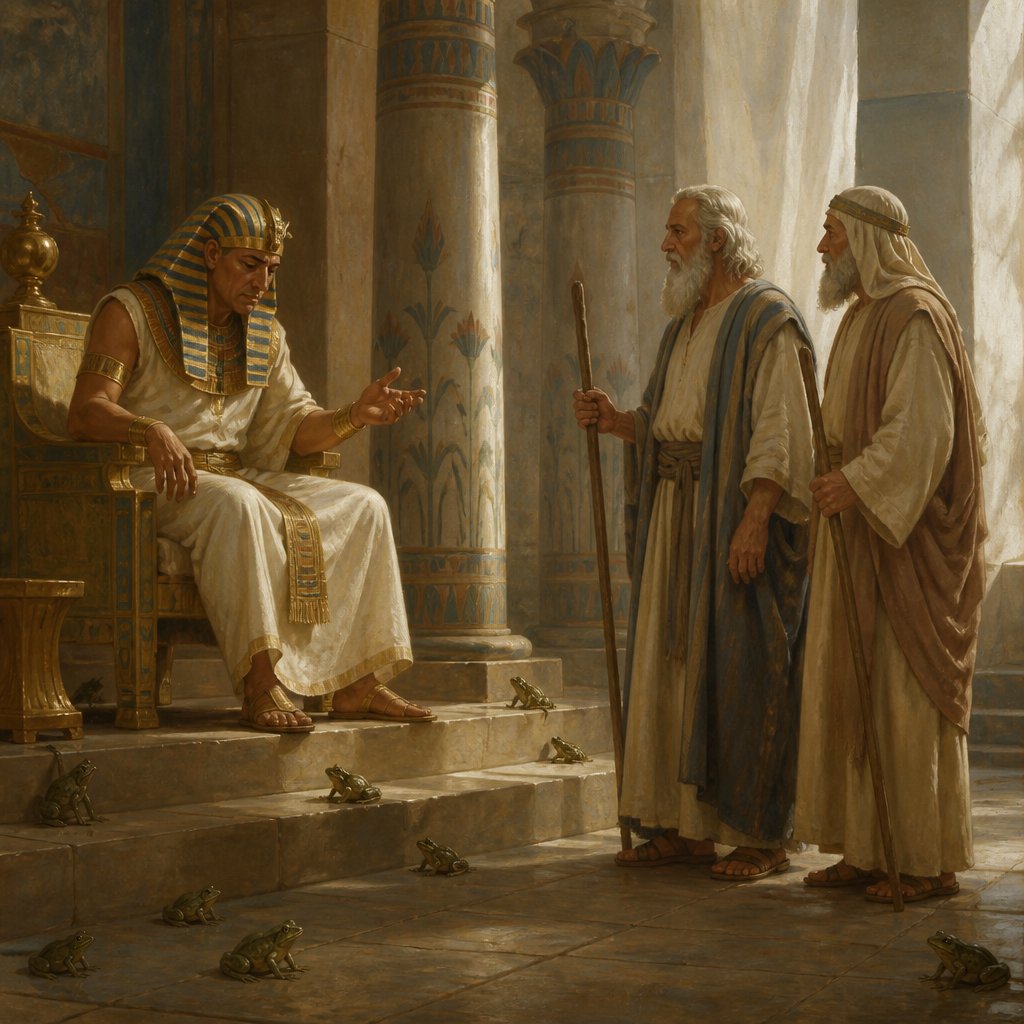
In Exodus 8:8, we are presented with a powerful moment in the narrative of the Exodus. The verse states, "Then Pharaoh called for Moses and Aaron, and said, Intreat the LORD, that he may take away the frogs from me, and from my people; and I will let the people go, that they may do sacrifice unto the LORD." Here, we witness Pharaoh, the king of Egypt, in a state of desperation as he calls upon Moses and Aaron to petition the Lord for relief from the plague of frogs that had invaded his land.
This plea from Pharaoh raises pivotal questions about the nature of our afflictions and our responses to them. Frogs, while they might seem harmless, were an emblem of chaos and disorder. They filled every crevice of the Egyptians’ lives, from their homes to their beds, disrupting the very essence of daily living. This was not just a minor inconvenience—it was a supernatural disruption that highlighted the power of God in contrast to Pharaoh's perceived sovereignty. The frogs were not solely a punishment; they were a sign of a deeper spiritual reality at work.
In our lives today, we may find ourselves plagued by 'frogs'—issues, troubles, and sins that invade our peace and joy. Just like Pharaoh, we may often seek temporary relief rather than genuine repentance. Pharaoh's first response was to call for Moses, indicating that he recognized the power of God but still clung to the illusion of control. In our trials, we may cry out to God, asking Him to alleviate our burdens, yet fail to surrender fully to His will and authority.
Pharaoh’s statement, "I will let the people go, that they may do sacrifice unto the LORD," reveals his conditional willingness to obey. It's a reflection of how we sometimes bargain with God. We desire relief from our struggles, yet often our promises to God are only half-hearted. We intend to worship and serve Him, but only once our current misery has passed. This is a common thread throughout Scripture—humans often seek God during crises but neglect to maintain a relationship of worship and service afterward.
As we ponder this passage, let us ask ourselves: What frogs are in our lives? What burdens have invaded our peace? When we experience discomfort, do we turn to God for relief, or do we genuinely desire to change our ways and worship Him wholeheartedly? In the face of trials, do we humbly approach God, or do we merely seek Him to fix our problems?
The narrative continues, revealing that Pharaoh's pleas were insincere as soon as the frogs were gone. In our relationship with God, we must strive for sincerity. We may call out to God for deliverance—but does our heart genuinely desire to live a life of obedience that glorifies Him? God desires more than just our cries for help; He desires our commitment and devotion.
Moreover, we can learn from the persistence and boldness of Moses and Aaron. They did not shy away from speaking God’s truth to Pharaoh, even in the face of his authority. This acts as a reminder that we too must be steadfast in proclaiming God’s truth, regardless of the circumstances we face.
In conclusion, let Exodus 8:8 be a mirror to our souls. Are we allowing Jesus to liberate us from our personal 'frogs'? Are we seeking Him not only for relief but in all aspects of our lives? As we reflect on this verse, may we resolve to approach God not with a heart of negotiation, but with one of true surrender, desiring both freedom from our afflictions and a deeper relationship with Him. Let this be our prayer: to turn our cries for help into lives of worship that honor our Creator, even amidst trials.
Want to reflect more on Exodus 8:8?
Continue your spiritual journey with Bible Chat — an AI-powered tool for exploring God's Word through conversation. Ask questions, discover connections, and deepen your understanding.
Get Our Apps


Exodus 8:8 Artwork

Exodus 8:8 - "¶ Then Pharaoh called for Moses and Aaron, and said, Intreat the LORD, that he may take away the frogs from me, and from my people; and I will let the people go, that they may do sacrifice unto the LORD."
"¶ Then Pharaoh called for Moses and Aaron, and said, Intreat the LORD, that he may take away the frogs from me, and from my people; and I will let the people go, that they may do sacrifice unto the LORD." - Exodus 8:8

Exodus 25:8

Exodus 8:1-15

Exodus 27:1-8

Exodus 17:8 - "¶ Then came Amalek, and fought with Israel in Rephidim."

Exodus 20:8 - "Remember the sabbath day, to keep it holy."

Exodus 7:8 - "¶ And the LORD spake unto Moses and unto Aaron, saying,"

Exodus 8:14 - "And they gathered them together upon heaps: and the land stank."

Exodus 35:8 - "And oil for the light, and spices for anointing oil, and for the sweet incense,"

Exodus 8:30 - "And Moses went out from Pharaoh, and intreated the LORD."

The Plague of Frogs - Exodus 8:1-15

The Plague of Frogs - Exodus 8:1-15

The Plague of Boils - Exodus 9:8-12

The Plague of Boils - Exodus 9:8-12

The Plague of Gnats - Exodus 8:16-19

Exodus Chapter 7 Verses 8-10

The Plague of Frogs - Exodus 8:1-15

The Plague of Flies - Exodus 8:20-32.

The Plague of Flies - Exodus 8:20-32

The Plague of Frogs - Exodus 8:1-15

The Plague of Boils - Exodus 9:8-12

The Plague of Frogs - Exodus 8:1-15

The Plague of Boils - Exodus 9:8-12

The Plague of Flies - Exodus 8:20-32

The Plague of Boils - Exodus 9:8-12

The Plague of Boils - Exodus 9:8-12.

The Plague of Boils - Exodus 9:8-12

The Plague of Boils - Exodus 9:8-12

Exodus 34:8 - "And Moses made haste, and bowed his head toward the earth, and worshipped."