The God Who Delivers: A Prophetic Promise
“And he said, To morrow. And he said, Be it according to thy word: that thou mayest know that there is none like unto the LORD our God.” — Exodus 8:10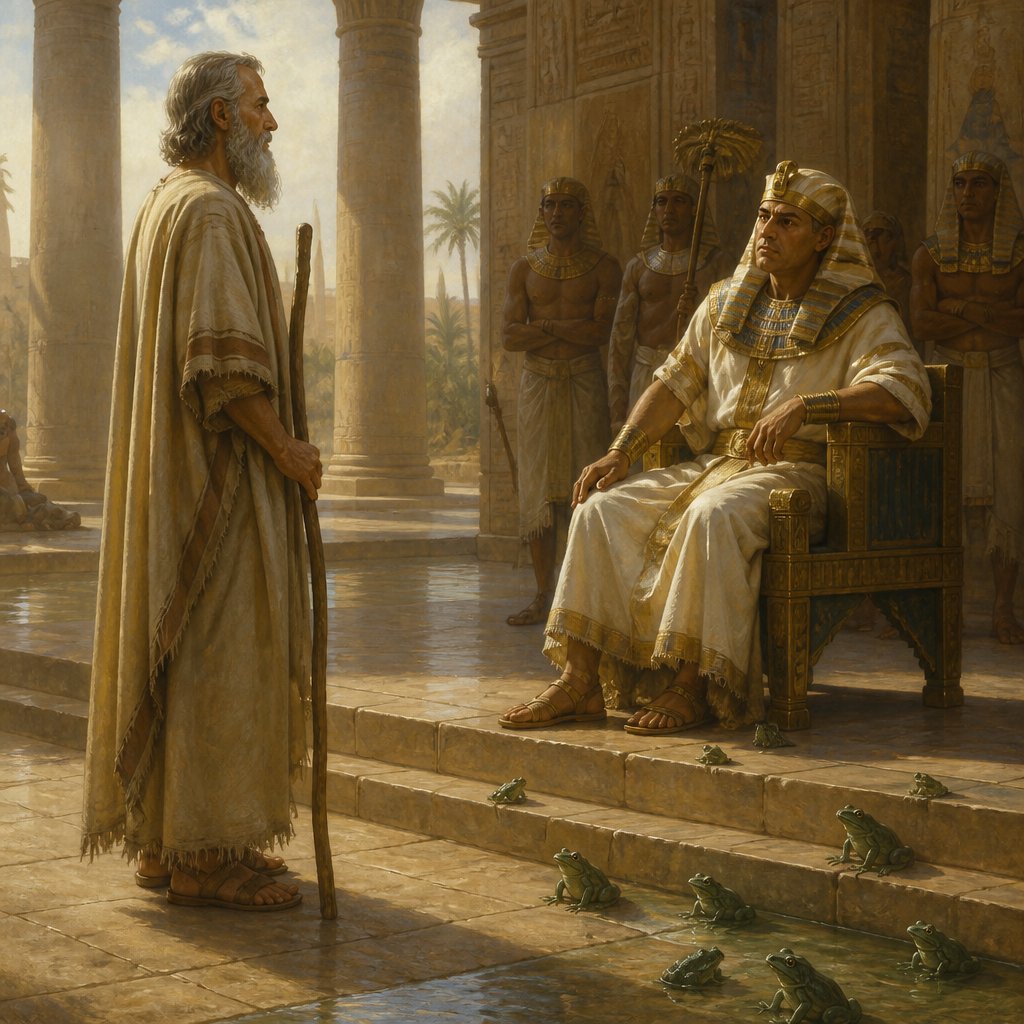
Exodus 8:10 states, "And he said, To morrow. And he said, Be it according to thy word: that thou mayest know that there is none like unto the LORD our God." This verse emerges from a critical moment in the narrative of Israel’s Exodus journey, a time when God was demonstrating His power and sovereignty through the plagues inflicted upon Egypt. Understanding this context not only enriches our comprehension but also offers profound insights into the nature of God and His promises.
At this point in the story, Moses is confronting Pharaoh with God’s command to let His people go. The plague of frogs has already been unleashed, overwhelming the land. In an act of desperation, Pharaoh calls for Moses and Aaron, asking them to entreat the LORD to remove the frogs. We witness an incredible exchange where Moses prophesies the timing of God's deliverance: "To morrow"—not immediately but on the following day. This prophetic word had significant implications.
In our contemporary lives, we often seek immediate relief from our troubles and circumstances. We desire instant answers to prayers and quick resolutions to our struggles. However, God’s timing does not always align with our own. In this instance, God specifies a time-frame: the next day. How often are we called to trust in God’s plan even when His timeline does not correspond with our eagerness for change? Just as Pharaoh was given a timeframe to witness God’s power, we too may find ourselves in situations where our faith is tested as we await His deliverance.
The phrase, "Be it according to thy word," uttered by Pharaoh, reflects a recognition of the authority and power that accompanies Moses’ prophetic declarations. Yet, it also points to a deeper truth—Pharaoh, despite acknowledging the might of the God of Israel, was still resistant to fully surrender and obey. His acknowledgment is a stark reminder that recognizing God's power does not necessarily equate to submission.
We often find ourselves in a similar state, acknowledging God's supremacy while simultaneously wrestling with our unwillingness to obey. The pressure of our circumstances can tempt us to act in disbelief, leading us away from the very promises we seek. However, God's purpose persists. He desires to show us that there is none like Him. His uniqueness is characterized by His ability to deliver and transform. This recognition is not merely for Pharaoh or the Egyptians, but for every heart that chooses to call Him Lord.
As we meditate on this verse, we must ask ourselves if we are ready to embrace God’s word and timing. Are we humble enough to acknowledge that His plans may be beyond our understanding? In the face of trials, our true character and faith are often revealed. Do we trust that God's delay is not His denial? It is in these moments that we must remember the assurance found in God’s character—a God who keeps His promises and always works for our good.
The conclusion of the verse, "that thou mayest know that there is none like unto the LORD our God," summons us to a place of worship and recognition of God’s uniqueness. In our worship, we are reminded of His sovereignty over all creation and His relentless love for His people. He is a God who knows our struggles and is intimately involved in our deliverance.
As we reflect on Exodus 8:10, let us embrace the promise of tomorrow’s deliverance with steadfast faith. Let us pray for hearts that wait expectantly for God’s timing and that our lives may reflect the truth that there is none like our God—an all-powerful, all-knowing, and ever-present help in times of trouble. In the gaps of waiting, let us hold fast to our faith, recognizing His authority and preparing our hearts for the transformative works He has in store.
Get our apps


Artwork for Exodus 8:10

Exodus 8:10 - "And he said, To morrow. And he said, Be it according to thy word: that thou mayest know that there is none like unto the LORD our God."
"And he said, To morrow. And he said, Be it according to thy word: that thou mayest know that there is none like unto the LORD our God." - Exodus 8:10

Exodus Chapter 7 Verses 8-10

Exodus 10:8 - "And Moses and Aaron were brought again unto Pharaoh: and he said unto them, Go, serve the LORD your God: but who are they that shall go?"

Exodus 7:10

Exodus 7:10

Exodus 25:8

Exodus 10:12
Exodus 17:10

Exodus 10:12

Exodus 10:12

Exodus 25:10-22

Exodus 27:1-8

Exodus 8:1-15

Exodus 17:8 - "¶ Then came Amalek, and fought with Israel in Rephidim."

Exodus 20:8 - "Remember the sabbath day, to keep it holy."

Exodus 6:10 - "And the LORD spake unto Moses, saying,"

Exodus 7:8 - "¶ And the LORD spake unto Moses and unto Aaron, saying,"

Exodus 8:14 - "And they gathered them together upon heaps: and the land stank."

Exodus 35:8 - "And oil for the light, and spices for anointing oil, and for the sweet incense,"

Exodus 8:30 - "And Moses went out from Pharaoh, and intreated the LORD."

Exodus 10:18 - "And he went out from Pharaoh, and intreated the LORD."

The Plague of Locusts - Exodus 10:1-20

The Plague of Darkness - Exodus 10:21-29

The Plague of Locusts - Exodus 10:1-20

The Plague of Darkness - Exodus 10:21-29

The Plague of Darkness - Exodus 10:21-29

The Plague of Darkness - Exodus 10:21-29

The Plague of Darkness - Exodus 10:21-29

The Plague of Frogs - Exodus 8:1-15