The Promises of Dust and Boils: A Lesson from Exodus 9:9
“And it shall become small dust in all the land of Egypt, and shall be a boil breaking forth with blains upon man, and upon beast, throughout all the land of Egypt.” — Exodus 9:9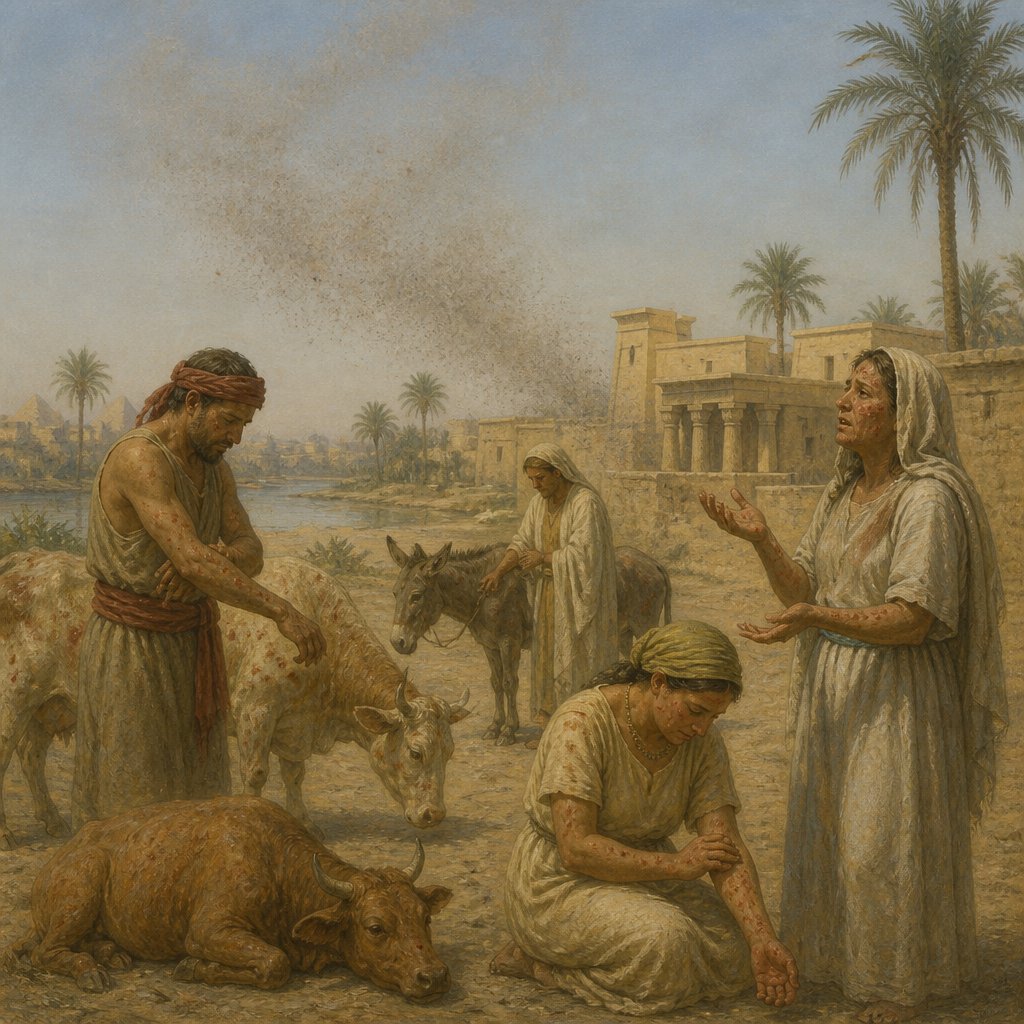
In the book of Exodus, we encounter the powerful narrative of God’s deliverance and the judgment upon Egypt through the plagues. Within this dramatic tale lies Exodus 9:9, which states, "And it shall become small dust in all the land of Egypt, and shall be a boil breaking forth with blains upon man, and upon beast, throughout all the land of Egypt." This verse encapsulates a profound truth regarding God’s sovereignty, the consequences of rebellion, and the transformative power of affliction.
To understand this verse fully, we must first reflect on the backdrop of the Egyptian bondage and the hard-heartedness of Pharaoh. Despite multiple signs of God’s authority and repeated warnings, Pharaoh’s heart remained hardened. Each time he refused to heed the commands of the Lord, he drew closer to the inevitable consequence of his defiance. The announcement of the plague, where dust would become boils, underscores a crucial biblical principle: sin bears fruit, and rebellion reaps consequences.
Dust signifies the lowest form of matter, the remnants of the earth from which man was created. In contrast, the boils represent the painful repercussions of sin—not just physical discomfort, but a deeper spiritual malady that affects the body and spirit. The dust turning into disease serves as a sober reminder that our actions lead to tangible effects that may touch both our lives and those around us. When we choose to stray from God’s commands, we do not just endanger ourselves; we amplify suffering throughout our environment. This principle rings true in our modern lives; our choices resonate beyond our immediate selves, affecting families, communities, and even our relationship with God.
Furthermore, scripture often uses boils as a symbol of defilement and punishment. In Exodus, these boils were a visible manifestation of inner corruption; they illustrated the agony of sin when it festers without repentance. The fact that this plague would afflict both man and beast reflects the holistic nature of sin—it impacts every aspect of creation. As Romans 8:22 declares, "For we know that the whole creation groaneth and travaileth in pain together until now," our rebellion against God disrupts the harmony He intended for both humanity and the world.
In our lives today, we may not experience literal boils or plagues, but the spiritual equivalent exists. We encounter trials and tribulations that act as God’s merciful invitations to turn back to Him. The afflictions we endure can often manifest our internal struggles, revealing places where we may have hardened our hearts like Pharaoh. The pains and challenges serve as dust turning into boils—a wake-up call meant to lead us back into the embrace of grace.
However, there is hope, as God does not desire for us to remain in affliction but to learn and grow through it. God, in His infinite wisdom and mercy, uses these "boils" in our lives to purify us and draw us closer to Him. Just as Egypt’s suffering was a call to repentance, our trials can lead us to deeper reliance on God. When we face spiritual or physical ailments, we can pause and reflect—are these challenges simply a result of our sinful choices, or are they God’s way of redirecting our attention to manifest His glory in our trials?
Therefore, as we meditate on Exodus 9:9, let us examine our hearts and lives for areas where we might be resistant to God’s calling and authority. Just as God warned Pharaoh, may we recognize His guidance in our lives and respond with humility rather than hardness. Let us allow the dust and boils of our experiences to become vessels of grace, drawing us back into the presence of our Savior—offering healing and restoration. In moments of discomfort, find peace in knowing that these challenges may serve purpose not merely as punishment, but as pathways to deeper sanctification and reconciliation with God.
Get our apps


Artwork for Exodus 9:9
Exodus 9:9 - "And it shall become small dust in all the land of Egypt, and shall be a boil breaking forth with blains upon man, and upon beast, throughout all the land of Egypt."

Exodus 9:5 - "And the LORD appointed a set time, saying, To morrow the LORD shall do this thing in the land."
"And it shall become small dust in all the land of Egypt, and shall be a boil breaking forth with blains upon man, and upon beast, throughout all the land of Egypt." - Exodus 9:9

Exodus 40:9
Exodus 2:9

Exodus 2:9

Exodus 24:9-11

Exodus 35:9 - "And onyx stones, and stones to be set for the ephod, and for the breastplate."

Exodus 9:32 - "But the wheat and the rie were not smitten: for they were not grown up."

Exodus 9:31 - "And the flax and the barley was smitten: for the barley was in the ear, and the flax was bolled."

The Plague on Livestock - Exodus 9:1-7

The Plague of Hail - Exodus 9:13-35

The Plague of Hail - Exodus 9:13-35

The Plague of Boils - Exodus 9:8-12

The Plague of Boils - Exodus 9:8-12

The Plague on Livestock - Exodus 9:1-7

The Plague of Boils - Exodus 9:8-12

The Plague of Boils - Exodus 9:8-12

The Plague of Boils - Exodus 9:8-12

The Plague of Boils - Exodus 9:8-12.

The Plague of Boils - Exodus 9:8-12

The Plague of Hail - Exodus 9:13-35

The Plague of Hail - Exodus 9:13-35

The Plague of Boils - Exodus 9:8-12

Exodus 9:26 - "Only in the land of Goshen, where the children of Israel were, was there no hail."

Exodus 20:9 - "Six days shalt thou labour, and do all thy work:"

Exodus 24:9 - "¶ Then went up Moses, and Aaron, Nadab, and Abihu, and seventy of the elders of Israel:"

Exodus 31:9 - "And the altar of burnt offering with all his furniture, and the laver and his foot,"

Exodus 9:2 - "For if thou refuse to let them go, and wilt hold them still,"

The Plague Death on Livestock - Exodus 9:1-7