A Wall of False Assurance: The Cost of Daubing
“Lo, when the wall is fallen, shall it not be said unto you, Where is the daubing wherewith ye have daubed it?” — Ezekiel 13:12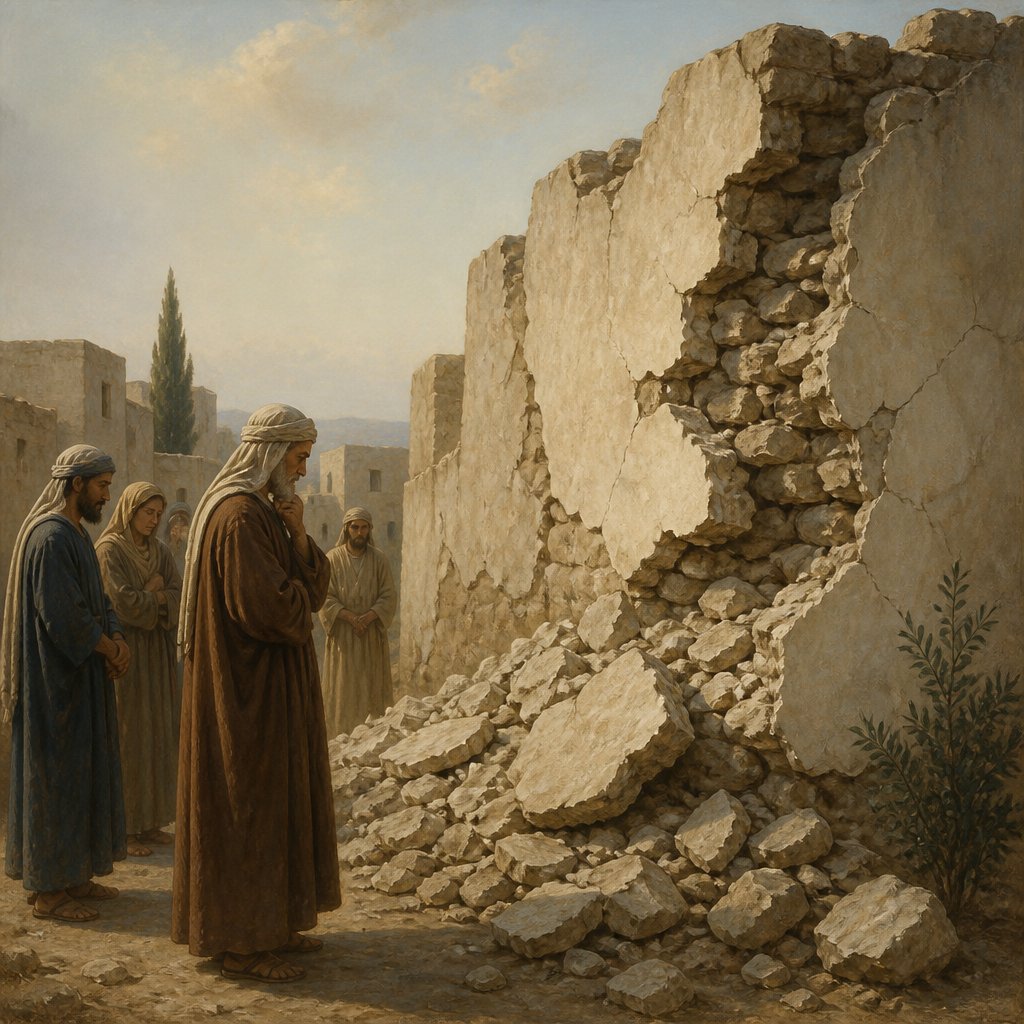
In Ezekiel 13:12, the Lord declares, "Lo, when the wall is fallen, shall it not be said unto you, Where is the daubing wherewith ye have daubed it?" This verse not only illustrates the consequences of relying on superficial fixes but also serves as a stark reminder of the importance of sound faith and genuine trust in God.
To fully appreciate the depth of this passage, we must first understand the context in which Ezekiel was prophesying. During this time, the people of Israel were living amidst great moral and spiritual decay. They relied on false prophets who preached peace and safety while ignoring the impending judgment of God. These so-called leaders attempted to cover the cracks in their society—a society deeply fractured by sin—with flimsy and deceptive assurances. They "daubed" the walls, suggesting a kind of cosmetic appeal that provided a false sense of security.
The imagery of the wall is poignant, representing the spiritual and moral fortifications that the community had constructed. The act of daubing can be seen as a metaphor for superficial fixes—quick remedies that temporarily hide real issues without addressing the underlying problems. Much like a builder who uses plaster to cover cracks instead of rebuilding the structure, the leaders of Israel sought to maintain the façade of security without fortifying their relationship with God.
When the Lord pronounced, "when the wall is fallen," he foretold the inevitable collapse of the false assurances that the people had come to depend on. Their flimsy coverings would not withstand the tests and trials that lay ahead; they could only postpone the inevitable reality that they must return to genuine repentance and faithfulness to God. This moment of judgment leads us to reflect on our own lives—what walls have we built to protect ourselves? What daubing have we applied, thinking it will suffice to keep us safe?
In our own context, the concept of daubing manifests in various forms: we might believe that attendance in church, good deeds, or even a superficial understanding of Scripture can replace an authentic relationship with God. However, these actions can become hollow shells if not grounded in a truthful awareness of who God is and what He requires of us. The walls we tend to raise can often distance us from experiencing the fullness of God's grace and love.
To adopt a daubing mentality also signifies a lack of faith; it reflects an attitude that values the outward appearance of righteousness over the inward, transformative work of the Holy Spirit. As believers, we are called to be builders of a sturdy foundation—Jesus Christ, the Cornerstone. Instead of daubing over the cracks of our lives, we should bring our brokenness to Him, allowing Him to repair and restore us with His unshakeable strength.
The prophetic warning in Ezekiel reminds us that there are no shortcuts to holiness, no quick fixes that can substitute for real change. True security is found in our commitment to walk in obedience to God's word and to actively engage in heartfelt repentance. If we dare to ignore the call to cultivate genuine faith, we will eventually find ourselves exposed and vulnerable when our false walls crumble.
As we reflect on Ezekiel 13:12, let it challenge us to examine what we have been relying on for our protection—what barriers we’ve constructed and what cracks we have failed to address. Are they built on the solid rock of faith, or are they nothing more than a temporary fix? Let us abandon the ways of daubing and seek the deep fortification that comes through earnest, transformative faith in Christ. May we be diligent to tear down the flimsy walls of false assurance and instead build up steadfast ones—a fortress anchored in the truth of God's word that endures through every storm.
Get our apps


Artwork for Ezekiel 13:12

Ezekiel 13:12 - "Lo, when the wall is fallen, shall it not be said unto you, Where is the daubing wherewith ye have daubed it?"
"Lo, when the wall is fallen, shall it not be said unto you, Where is the daubing wherewith ye have daubed it?" - Ezekiel 13:12

Ezekiel 12:13 - "My net also will I spread upon him, and he shall be taken in my snare: and I will bring him to Babylon to the land of the Chaldeans; yet shall he not see it, though he shall die there."

Ezekiel 7:12-13 (KJVA) 12 The time is come, the day draweth near: let not the buyer rejoice, nor the seller mourn: for wrath is upon all the multitude thereof. 13 For the seller shall not return to that which is sold, although they were yet alive: for the vision is touching the whole multitude thereof, which shall not return; neither shall any strengthen himself in the iniquity of his life.

Ezekiel 28:13

Ezekiel 1:6-13

ezekiel 47:1-12

ezekiel 47:1-12

ezekiel 47:1-12

ezekiel 47:1-12

ezekiel 47:1-12

Ezekiel 47:1-12

ezekiel 47:1-12

ezekiel 47:1-12

ezekiel 47:1-12

ezekiel 47:1-12

ezekiel 47:1-12

ezekiel 47:1-12

ezekiel 47:1-12

ezekiel 47:1-12

1 Corinthians 12:12-13

Ezekiel 13:1 - "And the word of the LORD came unto me, saying,"

Ezekiel 12:17 - "¶ Moreover the word of the LORD came to me, saying,"

Ezekiel 14:12 - "¶ The word of the LORD came again to me, saying,"

Ezekiel 47:1-9, 12

Ezekiel 13:4 - "O Israel, thy prophets are like the foxes in the deserts."

Ezekiel 19:13 - "And now she is planted in the wilderness, in a dry and thirsty ground."

Ezekiel 12:26 - "¶ Again the word of the LORD came to me, saying,"

Ezekiel 12:21 - "¶ And the word of the LORD came unto me, saying,"

Ezekiel 12:1 - "The word of the LORD also came unto me, saying,"