Inheritance of Righteousness: Breaking the Chains of Iniquity
"Yet say ye, Why? doth not the son bear the iniquity of the father? When the son hath done that which is lawful and right, and hath kept all my statutes, and hath done them, he shall surely live." - Ezekiel 18:19
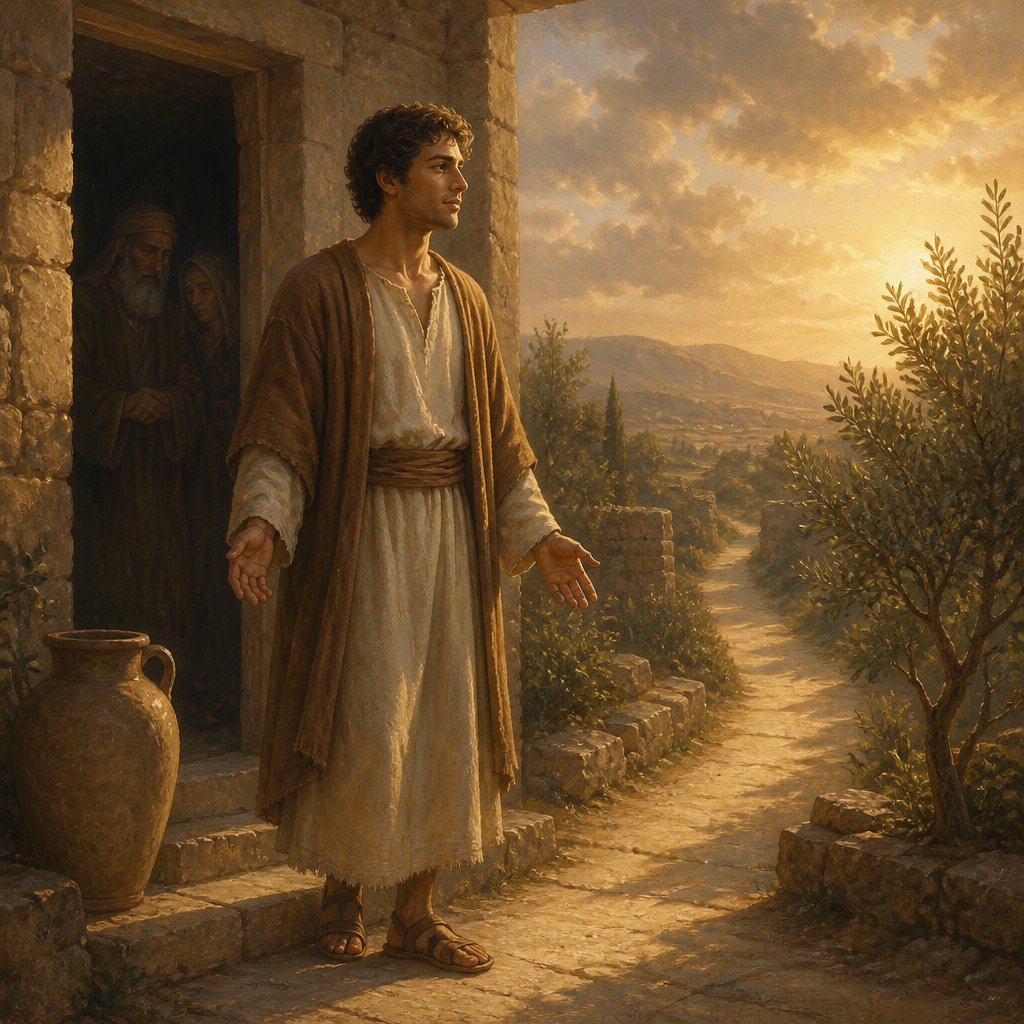
In Ezekiel 18:19, we encounter a profound truth about individual responsibility and the liberating nature of God's justice: "Yet say ye, Why? doth not the son bear the iniquity of the father? When the son hath done that which is lawful and right, and hath kept all my statutes, and hath done them, he shall surely live."
In this verse, we find ourselves in a dialogue that addresses a common misconception about sin and its consequences. Many assume that the weight of a parent’s sins is a hereditary sentence that manifests in the lives of their children. This belief, prevalent in both spiritual and secular realms, posits that one’s life destiny is inextricably tied to the choices of their forebears. But God, through His prophet Ezekiel, speaks directly to dismantle this idea.
The context of Ezekiel 18 is a pivotal moment in Israel’s history. Israel was grappling with the consequences of generations of sin, and the people were essentially saying, "Why should we be held accountable for our fathers' transgressions?" This question resonates deeply with human experience. Who among us has not felt the heavy shadow of familial expectations, pressures, or sins? It is a common struggle to understand our spiritual inheritance versus our personal accountability. But God assures us that righteousness is a personal journey.
The clarity of the verse focuses on individual action—"When the son hath done that which is lawful and right." Here lies the crux of God's message: the son is not doomed by the father's failures if he chooses the path of righteousness. In fact, God emphasizes the importance of choice and action over lineage in defining one's fate. This is an invitation to rise above the chains of past mistakes and to embrace the gift of agency that God has endowed to each of us.
The phrase "he shall surely live" encapsulates the promise of life that comes from faithfulness and obedience to the statutes of God. This is a stark reminder that our spiritual legacy is not rooted in the sins of our ancestors but rather in our relationship with God. We are invited to make our own decisions, to pave our own spiritual paths, and to live for God with hearts willing to follow His ways.
For the modern believer, this message is a call to liberation. We are empowered to break generational cycles of sin and dysfunction. Just as the son can step into a life defined by righteousness, so too can we—through Christ, who fulfills and embodies the Law. In Him, we are no longer bound by the iniquities of our forefathers or even our own past. Accepting this truth brings spiritual freedom.
In practical terms, we must ask ourselves, "What do I inherit from my family?" Rather than despair over the legacy of sin or suffering, let us shift our focus to what we can create and cultivate in our lives. We hold the power to break chains, rewrite stories, and establish a legacy of faithfulness. Our children may inherit our values, choices, and even our mistakes, but they can also inherit our commitment to righteousness and our pursuit of holiness.
As we reflect on Ezekiel 18:19, let us rejoice in the assurance that our lives, our actions, and our relationship with God define our destiny. The question posed in Ezekiel is not just about inherited iniquity but about the opportunities that await when we choose to follow God. It is a reminder that each generation has the chance to begin anew—to embrace God’s law, to do what is right, and to live fully.
In conclusion, may we strive to lead lives that honor God, rejecting the notion that we are dictated by our past. Let us pray for the strength to tread the righteous path, reading God’s statutes as our guiding light, and remembering that in Him, we shall surely find life.
Want to reflect more on Ezekiel 18:19?
Continue your spiritual journey with Bible Chat — an AI-powered tool for exploring God's Word through conversation. Ask questions, discover connections, and deepen your understanding.
Get Our Apps


Ezekiel 18:19 Artwork
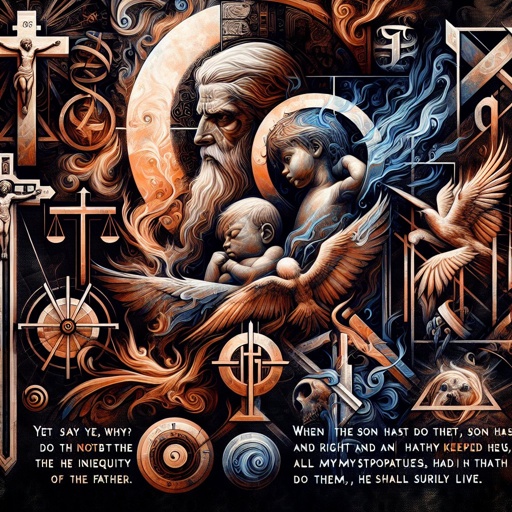
Ezekiel 18:19 - "¶ Yet say ye, Why? doth not the son bear the iniquity of the father? When the son hath done that which is lawful and right, and hath kept all my statutes, and hath done them, he shall surely live."
"¶ Yet say ye, Why? doth not the son bear the iniquity of the father? When the son hath done that which is lawful and right, and hath kept all my statutes, and hath done them, he shall surely live." - Ezekiel 18:19

Ezekiel 28:11-19

Ezekiel 28:11-19

Ezekiel 28:11-19

Ezekiel 28:11-19

Ezekiel 28:11-19

Ezekiel 28:11-19

Luke 10:18-19

Luke 13:18-19

Luke 10:18-19

Luke 10:18-19

Luke 13:18-19

Luke 10:18-19

Luke 10:18-19

Luke 10:18-19

Genesis 18-19

Genesis 19-18

Job 18-19

Ezekiel 18:5 - "¶ But if a man be just, and do that which is lawful and right,"

Isaiah 43:18-19

Genesis 27:18-19

Ezekiel 19:13 - "And now she is planted in the wilderness, in a dry and thirsty ground."

Ezekiel 19:1 - "Moreover take thou up a lamentation for the princes of Israel,"

Ezekiel 21:18 - "¶ The word of the LORD came unto me again, saying,"

Ezekiel 11:19 in pointillism style with no text

Ezekiel 18:1 - "The word of the LORD came unto me again, saying,"

Isaiah 43:18-19

Luke 10:18-19

Ezekiel 48:19 - "And they that serve the city shall serve it out of all the tribes of Israel."