The Weight of Loss: Finding Strength in Silence
"Forbear to cry, make no mourning for the dead, bind the tire of thine head upon thee, and put on thy shoes upon thy feet, and cover not thy lips, and eat not the bread of men." - Ezekiel 24:17
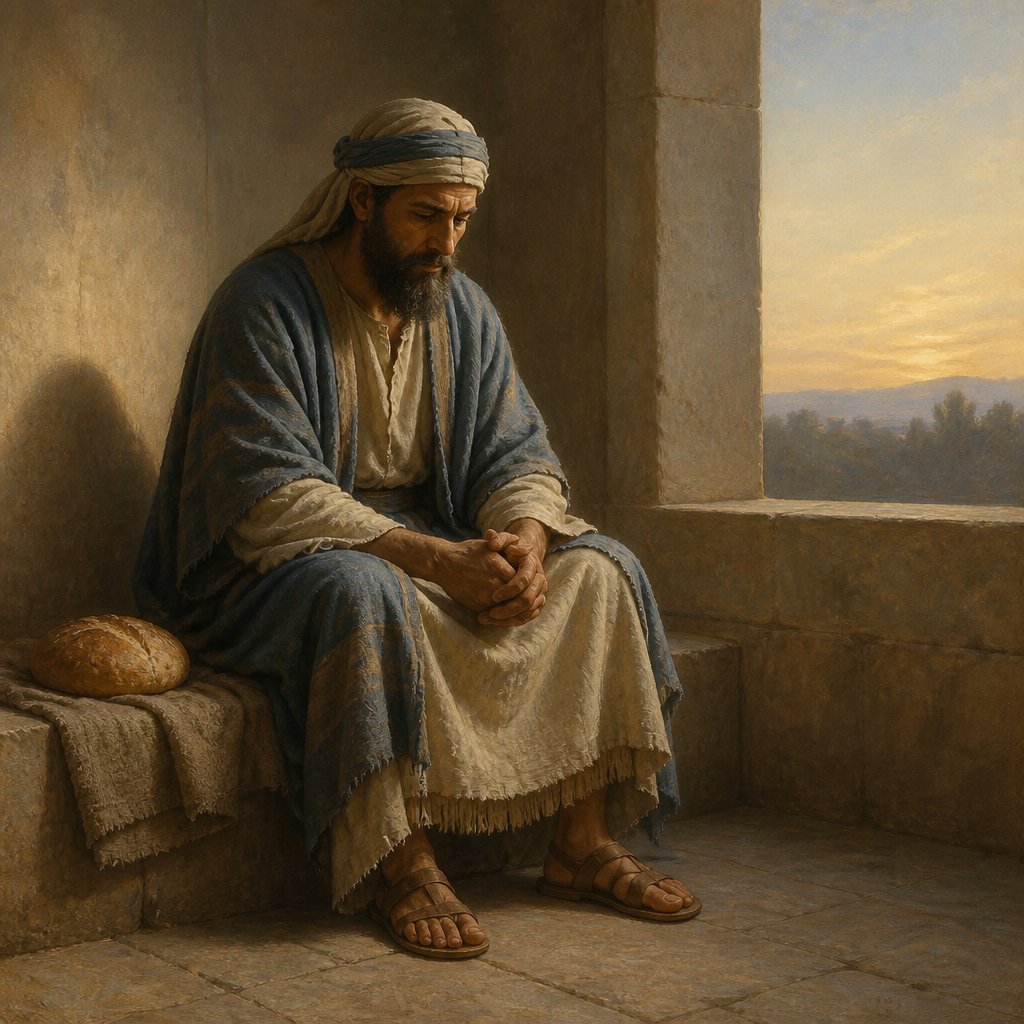
In Ezekiel 24:17, the Lord speaks to His prophet with a command that feels both jarring and deeply profound: "Forbear to cry, make no mourning for the dead, bind the tire of thine head upon thee, and put on thy shoes upon thy feet, and cover not thy lips, and eat not the bread of men." This passage holds a unique directive that challenges conventional responses to grief and invites us to explore the deeper meanings of mourning, resilience, and obedience.
At first glance, God’s instructions to Ezekiel appear harsh. He is asking His prophet, who likely is grieving the loss of his beloved wife, not to mourn publicly. In Israelite culture, mourning was accompanied by visible expressions of grief—torn garments, uncovered heads, and a cessation of daily routines. Yet here, God instructs Ezekiel to forbear his cries, to bind his head covering, don his shoes, keep his lips sealed and partake of ordinary meals. Why would God demand such a radical suppression of grief at such a crucial moment in Ezekiel's life?
To understand this directive, we must consider the context. The passage comes at a time when Israel was facing destruction, and Ezekiel’s life and message served as a literal and prophetic representation of Israel's fate. His silence in mourning was a powerful statement about the dire conditions surrounding his people. His actions would demonstrate that the grief and turmoil enfolding both his life and the nation of Israel had profound repercussions—they could lead to a greater understanding of their own separation from God.
In the ancient world, a prophet was not merely a spokesperson; he was a living embodiment of God’s message. By refraining from outward expressions of sorrow, Ezekiel demonstrated obedience to God above personal grief. This serves as a profound lesson in prioritizing faithfulness to God’s calling over the natural human inclination to express sorrow overtly. In times of profound trauma and sorrow, we too are called to reflect on our responses.
When faced with loss, we might naturally drift into despair, isolation, or an overwhelming need for sympathy from others. Yet, the silence imposed on Ezekiel challenges us to seek out different rhythms in our grieving. Rather than getting lost in our sorrow, we can turn our focus toward God’s purpose in our pain. There are seasons in our lives when we are invited not to linger too long in the shadows of despair but rather to rise up—bound in faith and wearing the armor of God’s promise.
Ezekiel's silence can be seen as a way of showing resilience, a lessons in discipline, even as he faced the heartache of losing his wife and witnessing the destruction around him. The act of putting on his shoes and preparing to “eat the bread” can signify an active choice to continue life despite grief. This is not to say that we should ignore our feelings of sadness or neglect our mourning; instead, it speaks to the heart of resilience in facing outward challenges.
Moreover, our willingness to propagate God’s message even during our darkest hours may help others find strength and solace in crisis. Our testimony and ability to move forward in faith can reflect God’s light amid darkness. Practicing resilience often requires us to overcome internal struggles. "Forbear to cry" doesn’t mean to abandon our emotions; rather, it invites us to channel our hurt into faith-filled actions.
As we reflect on Ezekiel 24:17, let us consider how we respond to loss in our own lives. How can we honor God through our times of grief? Are there ways we can bind our heads and put on our shoes, reframing our mourning to reflect an unwavering faith in God’s sustenance? In laying our grief before the Lord and choosing to listen for His guidance, we can transform sorrow into purpose, giving us the resilience to continue, ever anchored in His promises.
Want to reflect more on Ezekiel 24:17?
Continue your spiritual journey with Bible Chat — an AI-powered tool for exploring God's Word through conversation. Ask questions, discover connections, and deepen your understanding.
Get Our Apps


Ezekiel 24:17 Artwork

Ezekiel 24:17 - "Forbear to cry, make no mourning for the dead, bind the tire of thine head upon thee, and put on thy shoes upon thy feet, and cover not thy lips, and eat not the bread of men."
"Forbear to cry, make no mourning for the dead, bind the tire of thine head upon thee, and put on thy shoes upon thy feet, and cover not thy lips, and eat not the bread of men." - Ezekiel 24:17

Ezekiel 24:24 - "Thus Ezekiel is unto you a sign: according to all that he hath done shall ye do: and when this cometh, ye shall know that I am the Lord GOD."

Ezekiel 17:24 - "And all the trees of the field shall know that I the LORD have brought down the high tree, have exalted the low tree, have dried up the green tree, and have made the dry tree to flourish: I the LORD have spoken and have done it."

Genesis 24-17

Joshua 24:17

Ezekiel 3:17

Joshua 24:17

Joshua 24:17

Genesis 17-24

luke 24:17

Exodus 24:17

Ezekiel 24:15 - "¶ Also the word of the LORD came unto me, saying,"

Ezekiel 17:1 - "And the word of the LORD came unto me, saying,"

Ezekiel 12:17 - "¶ Moreover the word of the LORD came to me, saying,"

Ezekiel 22:17 - "And the word of the LORD came unto me, saying,"

Ezekiel 24:20 - "Then I answered them, The word of the LORD came unto me, saying,"

Ezekiel 17:11 - "¶ Moreover the word of the LORD came unto me, saying,"

Ezekiel 12:24 - "For there shall be no more any vain vision nor flattering divination within the house of Israel."

1 Chronicles 24:17 - "The one and twentieth to Jachin, the two and twentieth to Gamul,"

Ezekiel 1:17 - "When they went, they went upon their four sides: and they turned not when they went."

Ezekiel 24:4 - "Gather the pieces thereof into it, even every good piece, the thigh, and the shoulder; fill it with the choice bones."

Proverbs 17:24 - "Wisdom is before him that hath understanding; but the eyes of a fool are in the ends of the earth."

Leviticus 24:17 - "¶ And he that killeth any man shall surely be put to death."

Isaiah 24:17 - "Fear, and the pit, and the snare, are upon thee, O inhabitant of the earth."

Ezekiel 4:17 - "That they may want bread and water, and be astonied one with another, and consume away for their iniquity."

Ezekiel 17:2 - "Son of man, put forth a riddle, and speak a parable unto the house of Israel;"

Ezekiel 34:24 - "And I the LORD will be their God, and my servant David a prince among them; I the LORD have spoken it."

Ezekiel 24:26 - "That he that escapeth in that day shall come unto thee, to cause thee to hear it with thine ears?"

Ezekiel 48:24 - "And by the border of Benjamin, from the east side unto the west side, Simeon shall have a portion."