The Cost of Rebellion: Reflections on Ezekiel 26:12
“And they shall make a spoil of thy riches, and make a prey of thy merchandise: and they shall break down thy walls, and destroy thy pleasant houses: and they shall lay thy stones and thy timber and thy dust in the midst of the water.” — Ezekiel 26:12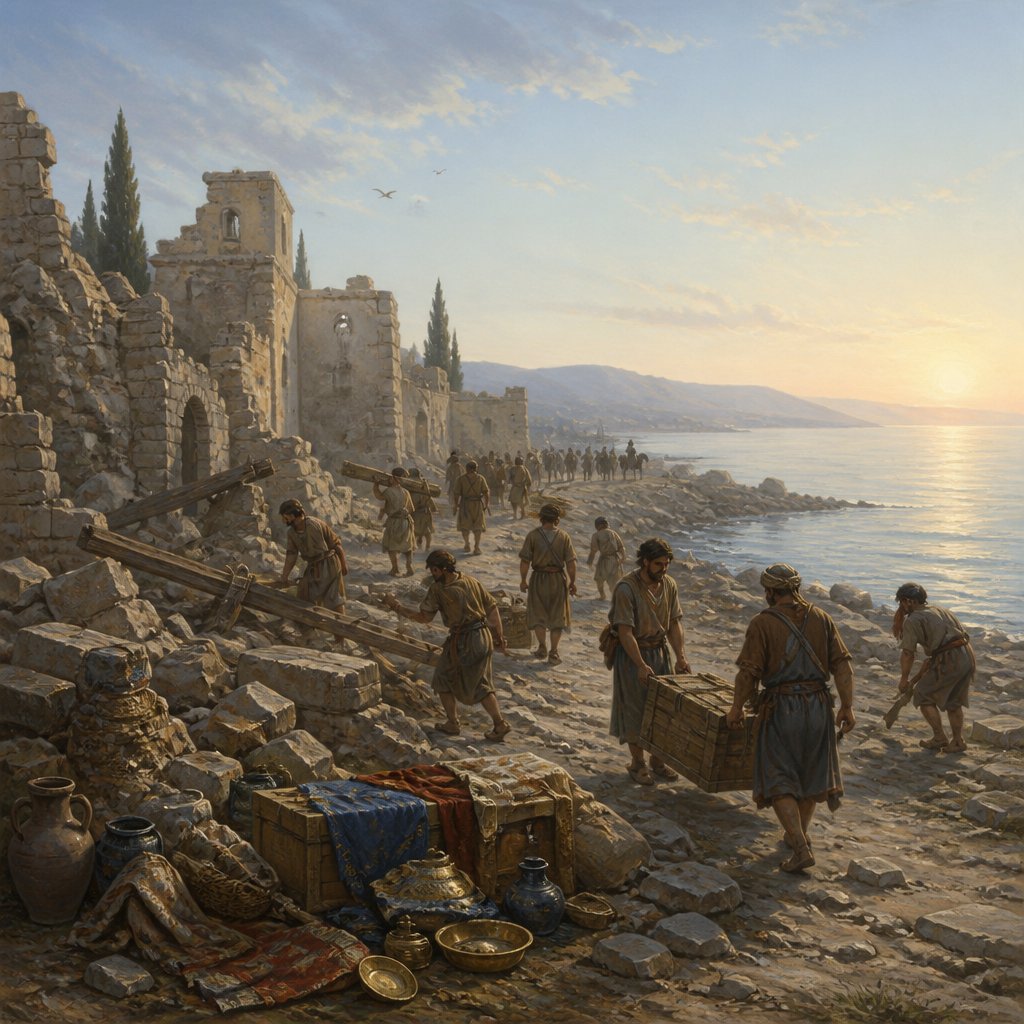
The book of Ezekiel presents us with a powerful prophetic narrative that not only reflects the historical context of Israel but also unveils deeper spiritual truths that resonate throughout the ages. Ezekiel 26:12 states, "And they shall make a spoil of thy riches, and make a prey of thy merchandise: and they shall break down thy walls, and destroy thy pleasant houses: and they shall lay thy stones and thy timber and thy dust in the midst of the water." This verse, steeped in imagery of destruction and loss, serves as a grim reminder of the consequences of turning away from God and failing to heed His warnings.
When we explore the background of this verse, we learn that it is directed towards the city of Tyre, a symbol of pride and commerce in the ancient world. Tyre was renowned for its wealth, sturdy fortifications, and beautiful homes. Yet, despite its splendor and affluence, it had become a hub of idolatry and opposition to God’s people. The prophecy of its desolation conveys not merely a historical occurrence but an enduring truth about the fragility of human pride and the divine judgment that follows rebellion.
The phrase "they shall make a spoil of thy riches" evokes a sense of vulnerability. It reminds us that material wealth, while often sought and cherished, is transient and can be lost in an instant. Our society glorifies the accumulation of riches, yet it is essential to recognize that true security comes not from our possessions but from our relationship with God. As Jesus teaches in Matthew 6:19-21, "Lay not up for yourselves treasures upon earth, where moth and rust doth corrupt, and where thieves break through and steal: But lay up for yourselves treasures in heaven..." This passage channels our focus from earthly riches to heavenly investments, urging us to prioritize our spiritual lives over material gain.
The next part of the verse speaks about the ruins of the walls and houses, symbolizing a loss of protection and glory. Walls often represent security and strength; these fortifications were designed to protect the inhabitants from external threats. When these walls are broken down, it signifies the removal of God’s protection due to the people’s disobedience. Reflecting on our lives, we must ask ourselves: are we erecting spiritual walls that are fortified by prayer, faith, and obedience? Or are we allowing sin and disobedience to weaken our defenses? Just as Tyre had its robust walls, we construct walls through our choices, our relationship with God, and our commitment to His Word.
The destruction of
Get our apps


Artwork for Ezekiel 26:12

Ezekiel 26:12 - "And they shall make a spoil of thy riches, and make a prey of thy merchandise: and they shall break down thy walls, and destroy thy pleasant houses: and they shall lay thy stones and thy timber and thy dust in the midst of the water."
"And they shall make a spoil of thy riches, and make a prey of thy merchandise: and they shall break down thy walls, and destroy thy pleasant houses: and they shall lay thy stones and thy timber and thy dust in the midst of the water." - Ezekiel 26:12

Ezekiel 12:26 - "¶ Again the word of the LORD came to me, saying,"

"¶ Again the word of the LORD came to me, saying," - Ezekiel 12:26

Genisis 26:12

Ezekiel 44:26 - "And after he is cleansed, they shall reckon unto him seven days."

"A new heart also will I give you, and a new spirit will I put within you: and I will take away the stony heart out of your flesh, and I will give you an heart of flesh." - Ezekiel 36:26

Luke 12:25-26

Luke 12:25-26

Luke 12:25-26

Luke 12:25-26
Luke 12:25-26

Luke 12:25-26

Luke 12:25-26

Ezekiel 48:26 - "And by the border of Issachar, from the east side unto the west side, Zebulun a portion."

ezekiel 47:1-12

ezekiel 47:1-12

ezekiel 47:1-12

Ezekiel 47:1-12

ezekiel 47:1-12

ezekiel 47:1-12

ezekiel 47:1-12

ezekiel 47:1-12

ezekiel 47:1-12

ezekiel 47:1-12

ezekiel 47:1-12

ezekiel 47:1-12

ezekiel 47:1-12

ezekiel 47:1-12

Ezekiel 24:26 - "That he that escapeth in that day shall come unto thee, to cause thee to hear it with thine ears?"