Turning Together: A Call to Surrender and Accountability
“Let now our rulers of all the congregation stand, and let all them which have taken strange wives in our cities come at appointed times, and with them the elders of every city, and the judges thereof, until the fierce wrath of our God for this matter be turned from us.” — Ezra 10:14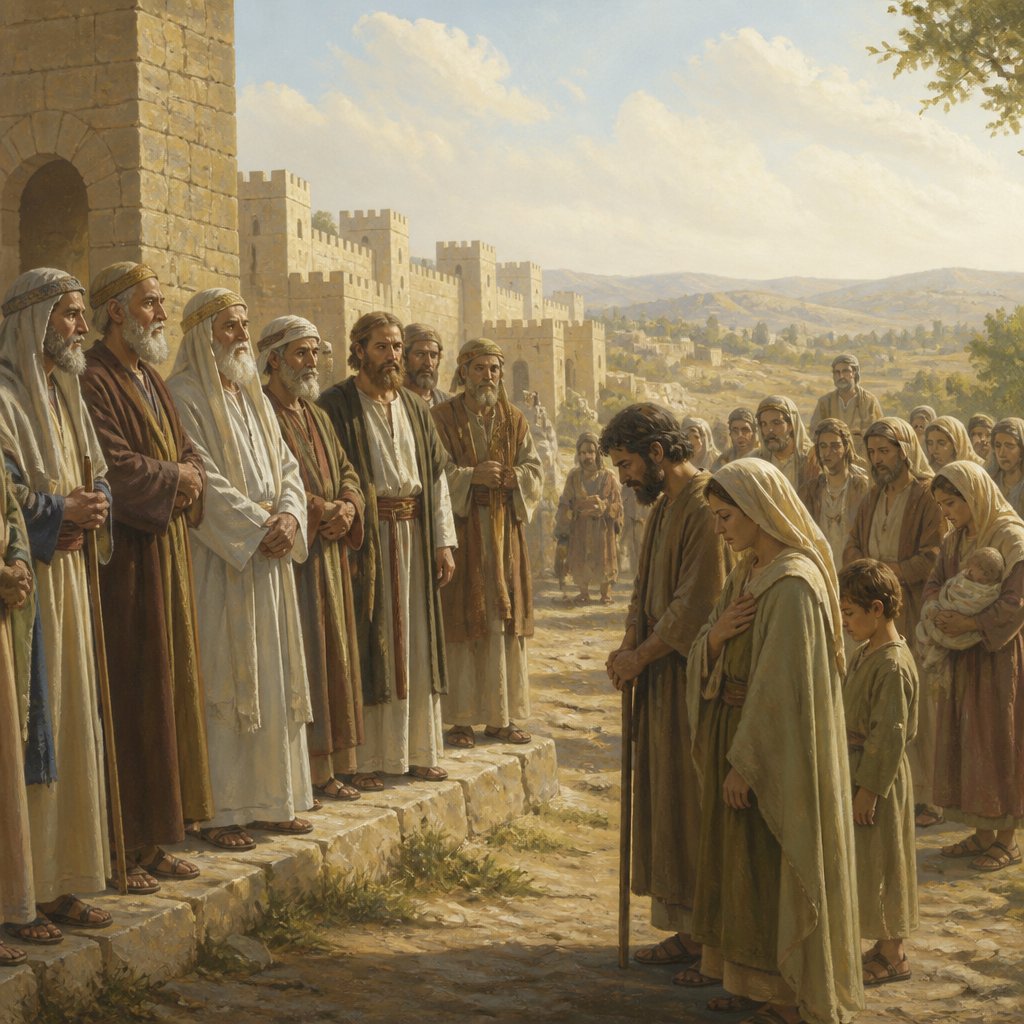
In the book of Ezra, we encounter the profound experience of the returned exiles as they navigate their newly restored identity in Jerusalem. The verse from Ezra 10:14 serves as both a call to action and an opportunity for reflection. The full text reads: "Let now our rulers of all the congregation stand, and let all them which have taken strange wives in our cities come at appointed times, and with them the elders of every city, and the judges thereof, until the fierce wrath of our God for this matter be turned from us."
At first glance, this verse may seem like a mere directive for accountability regarding intermarriage, but it amplifies themes of leadership, communal responsibility, and the reconciliation of our actions with God's commandments. It speaks volumes to how the people were called to gather collectively, emphasizing the importance of community in addressing sin and seeking restoration with God.
**The Context of Accountability**
The underlying historical context in Ezra reveals that the Israelites had returned from Babylonian captivity, a fate suffered due to their persistent disobedience. Now back in their homeland, the exiles faced the temptation of compromise—a persistence of their old ways. Intermarriage with foreign nations posed not just an issue of cultural integration but of spiritual dilution. God's command was clear; they were to remain distinct, celebrating their covenant relationship with Him. Instead of approaching this crisis with individualism, Ezra called upon leaders and community members, acknowledging that accountability is not just a personal affair but a collective one.
This approach becomes a powerful reminder that within Christian communities, the path towards holiness often requires a community to reflect upon its choices and decisions openly. Each member must recognize how their actions might adversely affect the entire body of believers. Such a collective re-evaluation necessitates vulnerability, humility, and a willingness to face uncomfortable truths.
**The Role of Leadership**
Ezra’s instructions highlighted the vital role of leaders in guiding the congregation. By urging the rulers to stand, he invokes a call for decisive leadership. Leaders, within any context, are tasked not merely with authority but with guiding their flock in alignment with divine principles. The message here is profound: leaders must hold themselves and those they lead accountable for their actions. Authority comes with responsibility, and it is through such responsible leadership that the congregation can come together to confront sin, seek forgiveness, and ultimately, restore a right relationship with God.
** The Importance of Timeliness**
The text speaks of an appointed time for those who had taken strange wives to come forward. This indicates a divine order and urgency. Spiritual matters are not to be neglected or postponed; rather, they require immediate action. Sin festers in darkness, but bringing it into the light is crucial for healing. The specific call to an appointed time signifies that there are moments in our response to God’s conviction that require swiftness and urgency. In our own lives, we too may hear the gentle prompting of the Holy Spirit urging us to confront situations, relationships, or habits that do not honor God.
**Turning the Wrath**
Finally, the verse speaks of the fierce wrath of God. This phrase is a stark reminder of the holiness of God and the seriousness of sin. It prompts us to consider the consequences that arise when we stray from God’s ways. Nevertheless, it also offers hope. The call to action is essentially a plea for restoration. It reflects a belief that repentance can turn God’s wrath into mercy. As we confront our own "strange wives"—those areas in our lives that lead us away from God—it opens the door for grace and restoration.
In conclusion, Ezra 10:14 resonates as a profound call to collective accountability, timely action, and the powerful potential of repentance. It is a gentle reminder of our need to stand together as we confront sin and seek alignment with God’s will for our lives. The beauty of church community is in its interdependence and mutual encouragement, spurring one another on toward love and good deeds (Hebrews 10:24). Today, let us reflect on our roles as both leaders and members of the body of Christ, inviting God’s grace into all facets of our lives.
Get our apps


Artwork for Ezra 10:14

Ezra 10:14 - "Let now our rulers of all the congregation stand, and let all them which have taken strange wives in our cities come at appointed times, and with them the elders of every city, and the judges thereof, until the fierce wrath of our God for this matter be turned from us."
"Let now our rulers of all the congregation stand, and let all them which have taken strange wives in our cities come at appointed times, and with them the elders of every city, and the judges thereof, until the fierce wrath of our God for this matter be turned from us." - Ezra 10:14

Ezra 10:10-12

Ezra 10:10 - "And Ezra the priest stood up, and said unto them, Ye have transgressed, and have taken strange wives, to increase the trespass of Israel."

Ezra 10:3

Ezra 3:10

Ezra 10:3

Ezra 10:5 - "Then arose Ezra, and made the chief priests, the Levites, and all Israel, to swear that they should do according to this word. And they sware."

Ezra 7:10 - "For Ezra had prepared his heart to seek the law of the LORD, and to do it, and to teach in Israel statutes and judgments."

Ezra 10:38 - "And Bani, and Binnui, Shimei,"

Ezra 10:37 - "Mattaniah, Mattenai, and Jaasau,"

Ezra 10:40 - "Machnadebai, Shashai, Sharai,"

Ezra 10:32 - "Benjamin, Malluch, and Shemariah."

Ezra 10:35 - "Benaiah, Bedeiah, Chelluh,"

Ezra 10:41 - "Azareel, and Shelemiah, Shemariah,"

Ezra 10:36 - "Vaniah, Meremoth, Eliashib,"

Ezra 10:42 - "Shallum, Amariah, and Joseph."

Ezra 10:39 - "And Shelemiah, and Nathan, and Adaiah,"

Ezra 10:20 - "And of the sons of Immer; Hanani, and Zebadiah."

Ezra 10:34 - "Of the sons of Bani; Maadai, Amram, and Uel,"

Ezra 2:14 - "The children of Bigvai, two thousand fifty and six."

Ezra 2:10 - "The children of Bani, six hundred forty and two."

Ezra 10:24 - "Of the singers also; Eliashib: and of the porters; Shallum, and Telem, and Uri."

Ezra 10:21 - "And of the sons of Harim; Maaseiah, and Elijah, and Shemaiah, and Jehiel, and Uzziah."

Ezra 10:31 - "And of the sons of Harim; Eliezer, Ishijah, Malchiah, Shemaiah, Shimeon,"

Ezra 10:28 - "Of the sons also of Bebai; Jehohanan, Hananiah, Zabbai, and Athlai."

Ezra 8:14 - "Of the sons also of Bigvai; Uthai, and Zabbud, and with them seventy males."

"Azareel, and Shelemiah, Shemariah," - Ezra 10:41

"And Bani, and Binnui, Shimei," - Ezra 10:38

"And Shelemiah, and Nathan, and Adaiah," - Ezra 10:39