Covenant of Purity: A Call to Faithfulness
“And they gave their hands that they would put away their wives; and being guilty, they offered a ram of the flock for their trespass.” — Ezra 10:19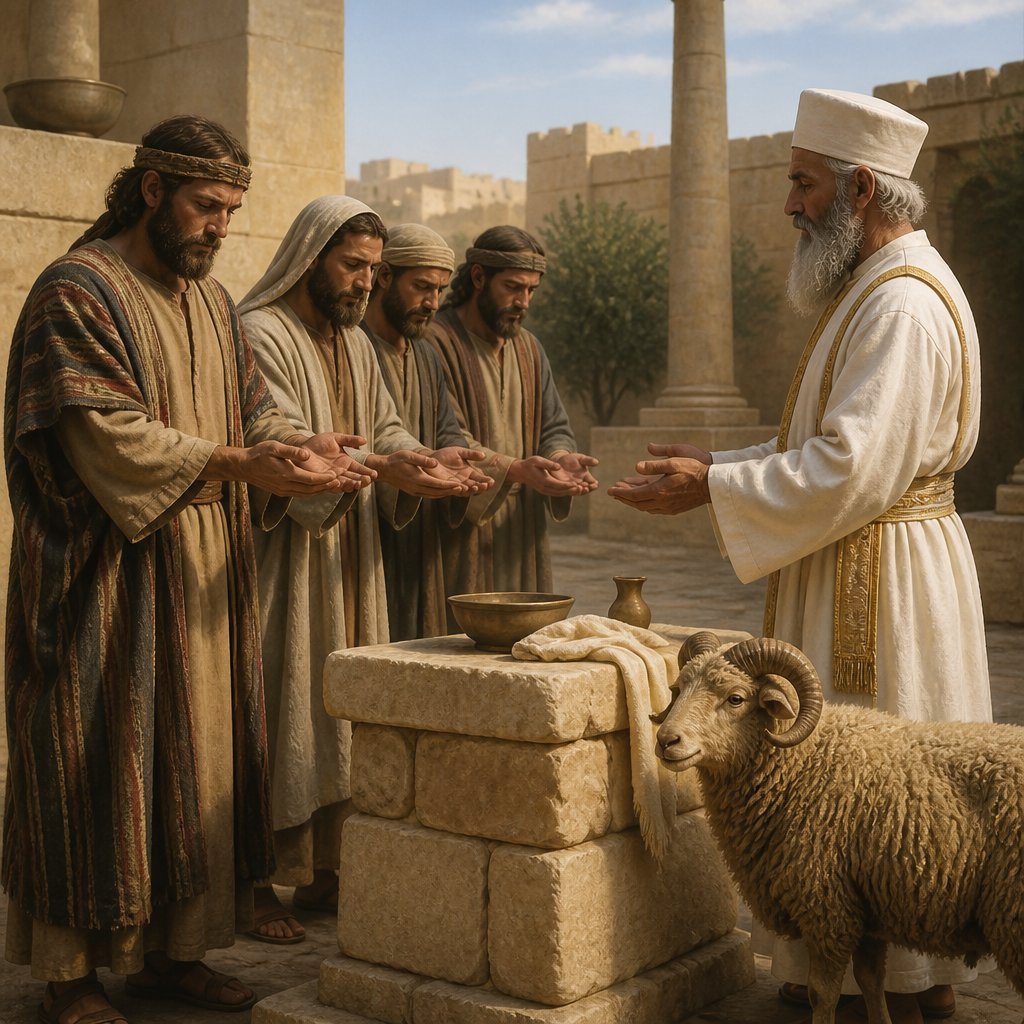
In the book of Ezra, we find a narrative that speaks directly to the heart of covenant relationships and the importance of faithfulness to God. Ezra 10:19 states, "And they gave their hands that they would put away their wives; and being guilty, they offered a ram of the flock for their trespass." This moment in the lives of the returning exiles is both profound and challenging, illustrating the complexities of faith, obedience, and the desire for restoration.
The context of this verse is crucial for understanding its implications. The Israelites had returned from Babylonian exile, filled with hope to rebuild their nation and restore their covenant with God. However, upon their return, they faced a serious issue: many had intermarried with foreign women, which was seen as a violation of God’s commandments. These marriages not only compromised their cultural and spiritual identity but also led them away from the worship of Yahweh.
When Ezra learned of this situation, his response was one of deep sorrow and mourning. He understood the gravity of the people's actions and the implications of their sin. In a remarkable display of leadership and humility, Ezra prostrated himself before God, praying earnestly for mercy and forgiveness.
As we reflect on this verse, it becomes evident that the men of Israel recognized their guilt. They were confronted with the uncomfortable reality that their actions had consequences. Their decision to "put away their wives" signifies a commitment to return to the covenantal standards set by God. It was not a decision made lightly; rather, it came from a place of sincere repentance and a desire to realign their lives with the will of God.
The act of offering a ram for their trespass signifies the recognition of sin and the need for atonement. In the Old Testament, sacrifices were an integral part of the covenant relationship with God. The ram, representing innocence, was offered to reconcile the guilt of the people. It carries with it the weight of repentance – the understanding that our sins have a cost, and that cost is covered by the blood of sacrifice. When we reflect on this, we see a foreshadowing of Christ, the ultimate sacrifice, who lays down His life for our trespasses, calling us to a life of repentance and renewal.
In our contemporary lives, this scripture prompts us to consider the areas where we may have strayed from our commitments, whether in our relationships, our work, or our spiritual lives. Just as the Israelites had to confront their alliances that pulled them away from God, we too might need to evaluate the influences in our lives. Are there habits, relationships, or commitments that distract us from our calling to honor God?
The courage displayed by these men in Ezra's time serves as a powerful example of accountability and the importance of community in our spiritual journey. They didn’t act alone; they vowed together, showing us the strength found in numbers and shared goals of faithfulness. This is a reminder that we are called to walk together in community, helping one another to adhere to the commitments we have made to God.
Moreover, repentance is a process. Recognizing our guilt, offering our sacrifices, and seeking restoration are essential steps in our relationship with God. Just as the men offered a ram for their guilt, we are invited to bring our burdens before the Lord, to confess our faults, and to seek His forgiveness. In doing so, we embrace the grace that comes with repentance.
As we close in prayer:
"Lord, help us to recognize the areas in our lives that require realignment with Your will. May we have the courage to confront our shortcomings and the humility to seek Your forgiveness. Lead us towards actions that reflect our commitment to You, and may we always find our significance in the strength of Your grace. Amen."
In this way, Ezra 10:19 remains not just a historical account but a vivid call to each believer: to live faithfully, to maintain purity in our commitments, and to embrace the transformative power of repentance.
Get our apps


Artwork for Ezra 10:19

Ezra 10:19 - "And they gave their hands that they would put away their wives; and being guilty, they offered a ram of the flock for their trespass."
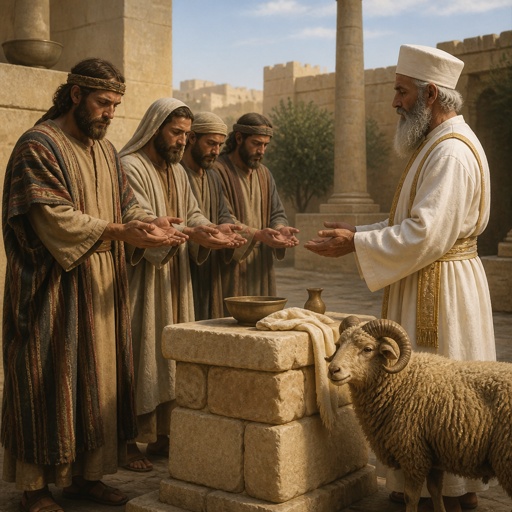
"And they gave their hands that they would put away their wives; and being guilty, they offered a ram of the flock for their trespass." - Ezra 10:19

Ezra 10:10-12

Ezra 10:10 - "And Ezra the priest stood up, and said unto them, Ye have transgressed, and have taken strange wives, to increase the trespass of Israel."

Ezra 10:3

Ezra 3:10

Ezra 10:3

Ezra 10:5 - "Then arose Ezra, and made the chief priests, the Levites, and all Israel, to swear that they should do according to this word. And they sware."

Ezra 7:10 - "For Ezra had prepared his heart to seek the law of the LORD, and to do it, and to teach in Israel statutes and judgments."

Ezra 10:38 - "And Bani, and Binnui, Shimei,"

Ezra 10:37 - "Mattaniah, Mattenai, and Jaasau,"

Ezra 10:40 - "Machnadebai, Shashai, Sharai,"

Ezra 10:32 - "Benjamin, Malluch, and Shemariah."

Ezra 2:19 - "The children of Hashum, two hundred twenty and three."

Ezra 10:35 - "Benaiah, Bedeiah, Chelluh,"

Ezra 10:41 - "Azareel, and Shelemiah, Shemariah,"

Ezra 10:36 - "Vaniah, Meremoth, Eliashib,"

Ezra 10:42 - "Shallum, Amariah, and Joseph."

Ezra 10:39 - "And Shelemiah, and Nathan, and Adaiah,"

Ezra 10:20 - "And of the sons of Immer; Hanani, and Zebadiah."

Ezra 10:34 - "Of the sons of Bani; Maadai, Amram, and Uel,"

Ezra 6:19 - "And the children of the captivity kept the passover upon the fourteenth day of the first month."

Ezra 8:19 - "And Hashabiah, and with him Jeshaiah of the sons of Merari, his brethren and their sons, twenty;"

Ezra 2:10 - "The children of Bani, six hundred forty and two."

Ezra 10:24 - "Of the singers also; Eliashib: and of the porters; Shallum, and Telem, and Uri."

Ezra 10:21 - "And of the sons of Harim; Maaseiah, and Elijah, and Shemaiah, and Jehiel, and Uzziah."

Ezra 10:31 - "And of the sons of Harim; Eliezer, Ishijah, Malchiah, Shemaiah, Shimeon,"

Ezra 10:28 - "Of the sons also of Bebai; Jehohanan, Hananiah, Zabbai, and Athlai."

"Azareel, and Shelemiah, Shemariah," - Ezra 10:41

"And Bani, and Binnui, Shimei," - Ezra 10:38