The Significance of the Vessels: Reflections on Ezra 1:10
“Thirty basons of gold, silver basons of a second sort four hundred and ten, and other vessels a thousand.” — Ezra 1:10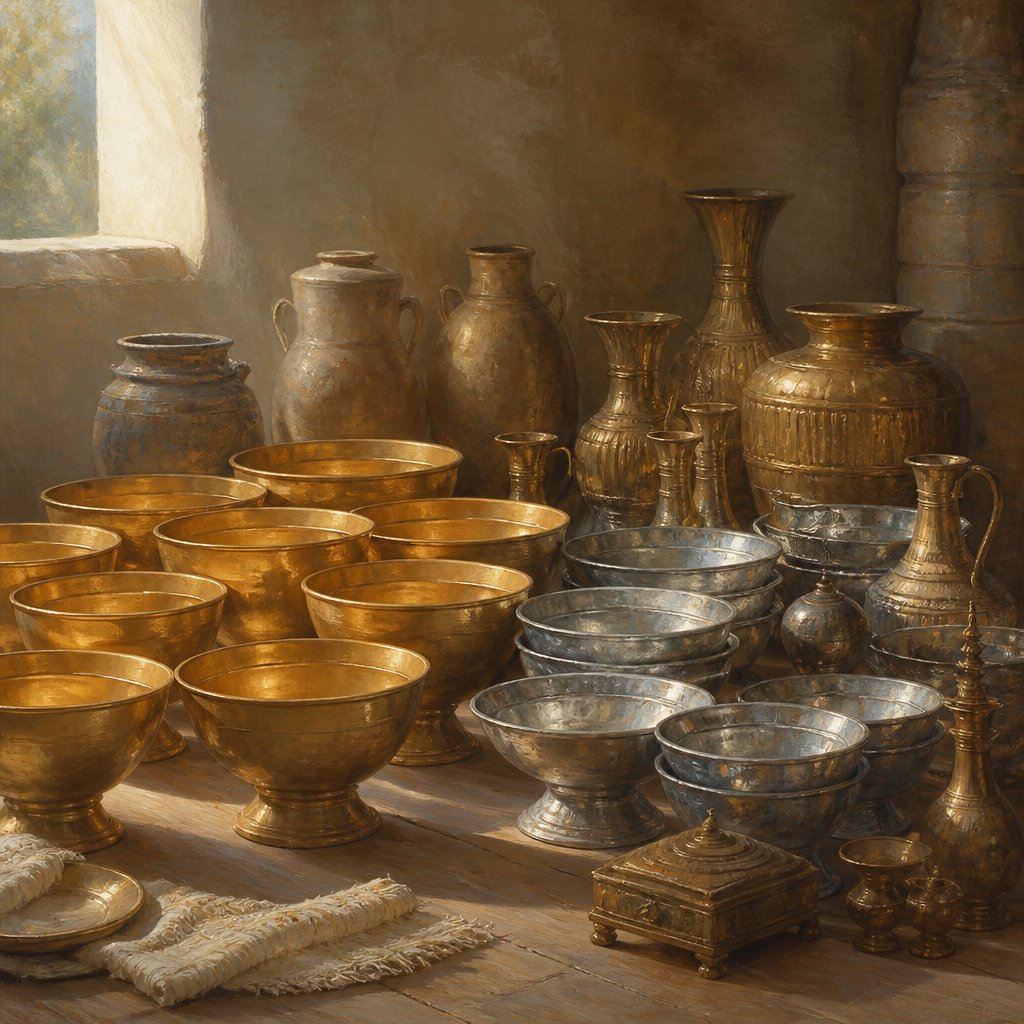
In the book of Ezra, we encounter the remarkable narrative of the Jewish people’s return to Jerusalem after their Babylonian captivity. Ezra 1:10 states, “Thirty basons of gold, silver basons of a second sort four hundred and ten, and other vessels a thousand.” At first glance, this verse may seem to present merely a list of items, an inventory of ceremonial vessels carried by those returning to rebuild the temple. However, a deeper examination reveals profound truths about God’s provision, the value of each believer, and the role of the church in God’s divine plan.
### God’s Provision in Our Lives
Ezra 1 opens with King Cyrus of Persia issuing a decree that allows the Jewish exiles to return to their homeland and rebuild the temple. In God’s sovereignty, He moves the heart of a secular king to fulfill His purpose. This is a powerful reminder that God's providence extends beyond the visible realm of the church and religious leaders; He can work through anyone, at any time, to bring about His will.
The specific mention of the basons—gold and silver vessels—symbolizes not only the return of material goods to the temple but also the restoration of worship. Each of these basons was crafted for a unique purpose in the temple rituals, illustrating the care God has in preparing the means for His worship. Similarly, in our own lives, we must recognize that God provides for us in multifaceted ways, ensuring we have the necessary resources to serve Him, worship Him, and fulfill His calling.
### The Value of Each Vessel
When we take a closer look at the composition of the vessels mentioned—both gold and silver, as well as “vessels a thousand”—it becomes clear that each type has a distinct value and role within the temple's worship. Gold was precious and served the most revered and sacred uses, while silver and other vessels had their significant places as well.
This pattern reminds us that in the grand tapestry of God’s kingdom, each believer holds intrinsic value, irrespective of our perceived worth or skills. The Apostle Paul echoes this sentiment in 1 Corinthians 12, illustrating that the church is like a body, with each member serving different functions yet equally important.
As we navigate our spiritual journeys, we must embrace our value and unique contributions within the body of Christ. Whether we feel like golden basons or simple clay vessels, we are created for a purpose. Just as the priests used each vessel for specific acts of worship, we too are called to serve in ways that may seem small but are essential to the health of the church and the extension of God’s kingdom.
### The Call to Rebuild
Ezra 1:10 is significant not only as an inventory but within the greater context of returning to a restored place of worship. The Israelites faced the daunting task of rebuilding a broken-down temple—representing a physical and spiritual restoration. This rebuilding is symbolic of everything we face in our walk with Christ; we are daily called to reconstruct and restore in the areas of our lives that may have been broken down.
The call to rebuild is a collective call, reaching out not just to individual believers but to the church as a whole. The gathering of these vessels reminds us of the church's mission to continually seek restoration, not only of the places of worship we attend but in the world around us. Each vessel gathered for the temple represented a part of God's plan, just as each of us is called to partake in the mission of spreading the Gospel, serving others, and embodying Christ’s love.
### Conclusion
In conclusion, Ezra 1:10 serves as a poignant reminder of God's meticulous provision, the inherent value of each believer, and our collective calling to participate in rebuilding. As we reflect on this passage, let us commit ourselves to recognizing our significance in God’s plan, embracing our unique roles, and actively contributing to the restoration of our world for His glory. May we be inspired by the example of the returning exiles and strive to be vessels—golden, silver, and otherwise—that are fit for the Master’s use.
Get our apps


Artwork for Ezra 1:10

Ezra 1:10 - "Thirty basons of gold, silver basons of a second sort four hundred and ten, and other vessels a thousand."
"Thirty basons of gold, silver basons of a second sort four hundred and ten, and other vessels a thousand." - Ezra 1:10

Ezra 10:10-12

Ezra 10:10 - "And Ezra the priest stood up, and said unto them, Ye have transgressed, and have taken strange wives, to increase the trespass of Israel."

Ezra 10:1 - "Now when Ezra had prayed, and when he had confessed, weeping and casting himself down before the house of God, there assembled unto him out of Israel a very great congregation of men and women and children: for the people wept very sore."

Ezra 10:3

Ezra 3:10

Ezra 10:3

Ezra 10:5 - "Then arose Ezra, and made the chief priests, the Levites, and all Israel, to swear that they should do according to this word. And they sware."

Ezra 7:10 - "For Ezra had prepared his heart to seek the law of the LORD, and to do it, and to teach in Israel statutes and judgments."

Ezra 10:38 - "And Bani, and Binnui, Shimei,"

Ezra 10:37 - "Mattaniah, Mattenai, and Jaasau,"

Ezra 10:40 - "Machnadebai, Shashai, Sharai,"

Ezra 10:32 - "Benjamin, Malluch, and Shemariah."

Ezra 10:36 - "Vaniah, Meremoth, Eliashib,"

Ezra 10:35 - "Benaiah, Bedeiah, Chelluh,"

Ezra 10:42 - "Shallum, Amariah, and Joseph."

Ezra 10:41 - "Azareel, and Shelemiah, Shemariah,"

Ezra 10:39 - "And Shelemiah, and Nathan, and Adaiah,"

Ezra 10:20 - "And of the sons of Immer; Hanani, and Zebadiah."

Ezra 10:34 - "Of the sons of Bani; Maadai, Amram, and Uel,"

Ezra 2:10 - "The children of Bani, six hundred forty and two."

Ezra 10:21 - "And of the sons of Harim; Maaseiah, and Elijah, and Shemaiah, and Jehiel, and Uzziah."

Ezra 10:24 - "Of the singers also; Eliashib: and of the porters; Shallum, and Telem, and Uri."

Ezra 10:28 - "Of the sons also of Bebai; Jehohanan, Hananiah, Zabbai, and Athlai."

Ezra 10:31 - "And of the sons of Harim; Eliezer, Ishijah, Malchiah, Shemaiah, Shimeon,"

"Azareel, and Shelemiah, Shemariah," - Ezra 10:41

"And Bani, and Binnui, Shimei," - Ezra 10:38

"And Shelemiah, and Nathan, and Adaiah," - Ezra 10:39

"Vaniah, Meremoth, Eliashib," - Ezra 10:36