Answering the Call to Restore: A Journey to Rebuild
“Who is there among you of all his people? his God be with him, and let him go up to Jerusalem, which is in Judah, and build the house of the LORD God of Israel, (he is the God,) which is in Jerusalem.” — Ezra 1:3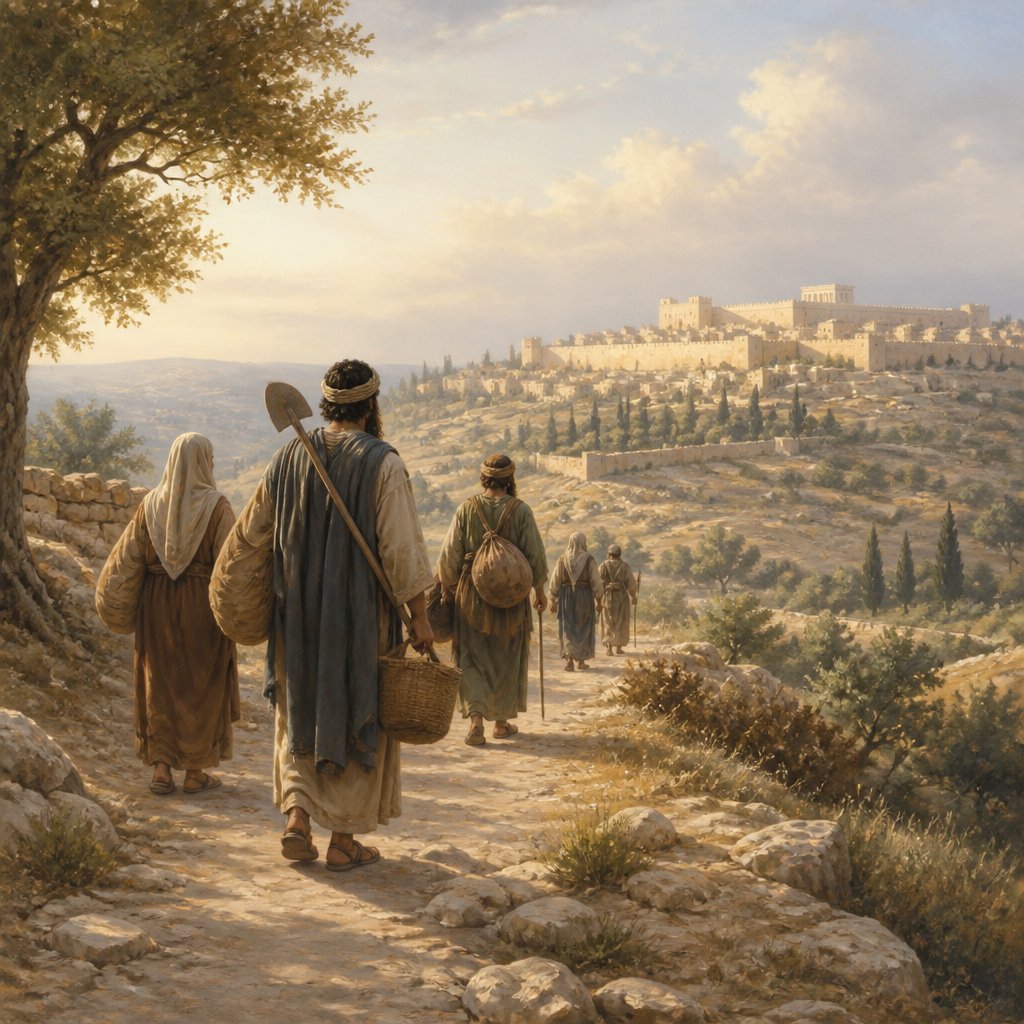
**Devotional Title: Answering the Call to Restore: A Journey to Rebuild**
Ezra 1:3 (KJV) boldly proclaims: "Who is there among you of all his people? his God be with him, and let him go up to Jerusalem, which is in Judah, and build the house of the LORD God of Israel, (he is the God,) which is in Jerusalem." In this powerful proclamation, King Cyrus of Persia creates a defining moment in the history of the Jewish people, offering them not just permission but a divine invitation to return to their homeland and restore the temple of the LORD.
As we unpack this verse, the first realization strikes us: it is an invitation extended to **all people**. The call, “Who is there among you of all his people?” echoes through the ages, reminding us that God’s call is universal — open to all who are willing to answer. It emphasizes that those chosen to return to Jerusalem were not handpicked based on merit but were invited to partake in God's plan due to His grace. We, too, are reminded that God’s calling is not reserved for a select few; all of us have a role in His grand narrative.
The next profound phrase, “his God be with him,” brings forth a comforting assurance. To realize that God is with those who heed the call instills courage. This is essential because the journey to rebuild the temple would not be without its trials and tribulations. Just as the exiles faced opposition upon their return, we, too, will encounter challenges when we embark on our personal journey of faith when attempting to build our own "temples" — be it our lives, our families, or our communities. The promise that God accompanies us strengthens us, reminding us that we are never alone in our endeavors.
The phrase “let him go up to Jerusalem, which is in Judah” is significant. Jerusalem symbolizes **restoration, identity, and purpose**. For the Israelites, returning to Jerusalem was not simply a geographical move; it represented a return to their roots, their covenant with God, and the revival of their worship. In our spiritual journeys, we must identify the 'Jerusalem' we are called to. Is it a fresh start after a period of wandering? Perhaps it is a call to mend relationships or to revive a passion for serving others. Whatever it is, we are encouraged to discern what our personal Jerusalem is and to strive toward that goal.
Moreover, the call to “build the house of the LORD God of Israel” extends beyond the physical act of construction; it signifies a **spirit of renewal and dedication** to God. The temple’s rebuilding was a community effort requiring sacrifice, unity, and a shared vision among the people. Similarly, when we commit to building our lives in alignment with God’s purpose, it calls for the collective participation of the body of Christ. We must unite, as the early Jews did, not only in our prayers but in our actions, lifting each other up as we progress toward our common goals.
Lastly, we observe in this verse the affirmation that God is not just any deity but **the God** of Israel. This phrase serves as a reminder of God’s sovereignty and faithfulness throughout history. When uncertainty looms about our paths or the tasks set before us seem daunting, we must anchor ourselves in the understanding that He is an unchanging God amidst changing circumstances. Just as He guided the Israelites upon their return, He will guide us through our quests and assure us that His plans for us are good.
In conclusion, Ezra 1:3 invites us on a transformative journey. As we respond to God’s calling, let us heed His voice, recognize His presence within us, reclaim our purpose, and commit to building His house with intentionality. May we respond collectively with our hearts intertwined and strive to restore what has been lost, trusting always in the faithfulness of “His God” who is with us every step of the way.
Get our apps


Artwork for Ezra 1:3

Ezra 1:3 - "Who is there among you of all his people? his God be with him, and let him go up to Jerusalem, which is in Judah, and build the house of the LORD God of Israel, (he is the God,) which is in Jerusalem."
"Who is there among you of all his people? his God be with him, and let him go up to Jerusalem, which is in Judah, and build the house of the LORD God of Israel, (he is the God,) which is in Jerusalem." - Ezra 1:3

Altar rebuilt in Jerusalem. Ezra 3:1-3

Ezra 3:1 - "And when the seventh month was come, and the children of Israel were in the cities, the people gathered themselves together as one man to Jerusalem."

Ezra 3:2

Ezra 10:3

Ezra 3:2

Ezra 3:10

Ezra 3:9

Ezra 3:2

Ezra 9:3

Ezra 3:2

Ezra 3:2

Ezra 10:3

Zerubbabel in Ezra chapter 3

Ezra 1:1

Ezra 1:1

Ezra 7:3 - "The son of Amariah, the son of Azariah, the son of Meraioth,"

Ezra 2:3 - "The children of Parosh, two thousand an hundred seventy and two."

Pagan women leave with their children ezra 10:3

Ezra 7:1 - "Now after these things, in the reign of Artaxerxes king of Persia, Ezra the son of Seraiah, the son of Azariah, the son of Hilkiah,"

Ezra 9:1

Ezra 9:1

Ezra 9:1

Pagan women leave with their children ezra 10:3

Ezra 1:1 king Cyrus

Ezra 9:1-2

Ezra 6:1-12

Ezra 8:3 - "Of the sons of Shechaniah, of the sons of Pharosh; Zechariah: and with him were reckoned by genealogy of the males an hundred and fifty."

Ezra 3:11 – "With praise and thanksgiving they sang to the Lord: 'He is good; his love toward Israel endures forever.'"