A Generous Heart: The Spirit of Sacrifice and Service
"They gave after their ability unto the treasure of the work threescore and one thousand drams of gold, and five thousand pound of silver, and one hundred priests' garments." - Ezra 2:69
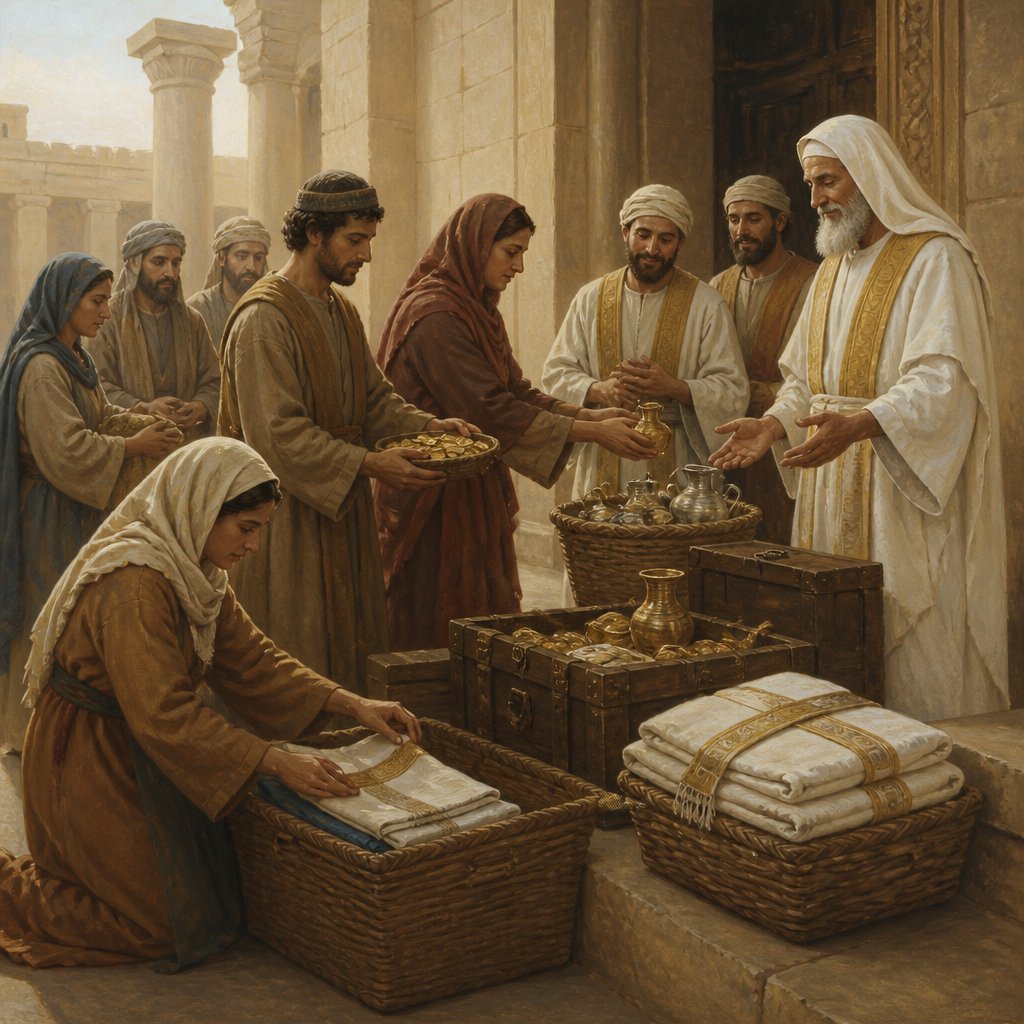
In Ezra 2:69, we read, "They gave after their ability unto the treasure of the work threescore and one thousand drams of gold, and five thousand pound of silver, and one hundred priests' garments." This verse speaks profoundly of the community spirit among the exiled Jews returning to Jerusalem, showcasing the importance of sacrificial giving rooted in faith, love, and a shared purpose.
To understand the significance of this passage, we must place ourselves in the context of the Israelites’ situation. After decades of exile in Babylon, they were finally returning home to rebuild their temple, the cornerstone of their worship and identity. The return was not only a physical journey but also a spiritual revival, a reclaiming of what had been lost, and a recommitment to their covenant with God.
The phrase "They gave after their ability" invites us to reflect on what it means to give according to our means, yet with a generous spirit. This kind of giving is driven not merely by the amount donated but by an understanding of the mission that the resources will serve. We see here that giving is closely tied to our personal ability, our blessings, and our intentions. Each individual contributor in this verse was not judged on how much they gave compared to others, but on the faith and love behind their offerings.
The reported numbers alone—threescore and one thousand drams of gold, five thousand pounds of silver, and one hundred priests’ garments—are staggering. Threescore translates to sixty, so together, they gathered a significant amount of gold; the kinds of offerings they prepared show their heartfelt desire for the rebuilding of the temple. What sparked such generosity? It was a community united in a vision. They recognized the temple was not just a building, but a symbol of God’s presence among them, a holy place where they could offer sacrifices and worship. Thus, their gifts were not just transactions but expressions of restoration and obedience to God’s calling.
In our modern context, this verse encourages us to consider our own contributions to God’s work. Are we giving after our ability? Are we investing in the rebuilding of our communities—be it spiritually, physically, or relationally—through generosity? Just as the Israelites were motivated to give by their shared identity and vision, so too should we find a compelling vision to spur our generosity on. Whether it’s by donating our finances, time, skills, or spirit—what matters is the heart behind our actions.
Let us remember that sacrality is found not only in monetary gifts but also in our personal sacrifices. The hundred priests’ garments signify support for those who would lead worship—a reminder that our generosity also extends to serving those called to lead in worship and ministry. A generous heart embraces these leaders who carry burdens in their spiritual and community commitments. As we consider our contributions, we should ask ourselves: How can we support our spiritual leaders? How can our resources empower others in their mission?
Moreover, the act of giving opens our hearts. When we contribute to God’s work, we align ourselves more closely with His purposes. Our lives start to intertwine with the mission of God, fostering patience and compassion. Instead of drawing back in a culture where scarcity reigns, the act of giving true to our ability transforms us into conduits of God’s endless bounty and grace.
In conclusion, let's take the lessons from Ezra 2:69 to heart: we are called to give according to our ability, motivated not merely by obligation but driven by love for God and His work. Our contributions matter—they are an extension of our commitment to God and a tangible representation of our faith. Let us strive to give generously and joyously, ensuring that resources are available for the work of the Kingdom, so that as a community, we mirror the heart of the one who gave it all.
Want to reflect more on Ezra 2:69?
Continue your spiritual journey with Bible Chat — an AI-powered tool for exploring God's Word through conversation. Ask questions, discover connections, and deepen your understanding.
Get Our Apps


Ezra 2:69 Artwork
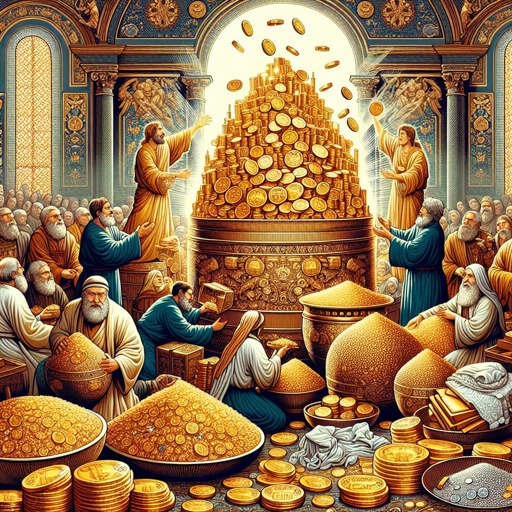
Ezra 2:69 - "They gave after their ability unto the treasure of the work threescore and one thousand drams of gold, and five thousand pound of silver, and one hundred priests' garments."
"They gave after their ability unto the treasure of the work threescore and one thousand drams of gold, and five thousand pound of silver, and one hundred priests' garments." - Ezra 2:69
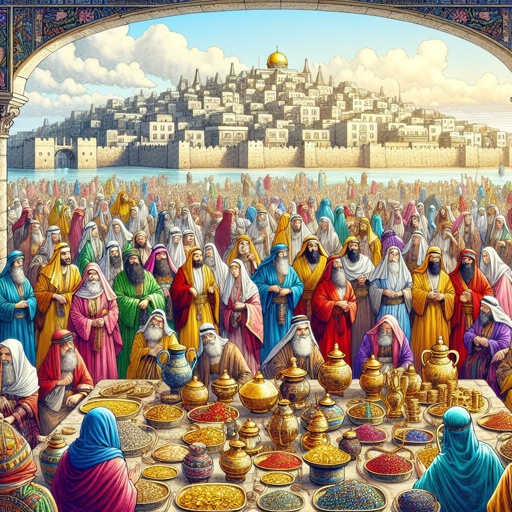
Ezra 2:68-69 - "Some of the heads of the families, when they came to the house of the LORD which is in Jerusalem, offered freely for the house of God, to erect it in its place. According to their ability, they gave to the treasury for the work 61,000 gold drachmas, 5,000 minas of silver, and 100 priestly garments."

Psalms 69:2 - "I sink in deep mire, where there is no standing: I am come into deep waters, where the floods overflow me."

Ezra 3:2

Ezra 3:2

Ezra 3:2
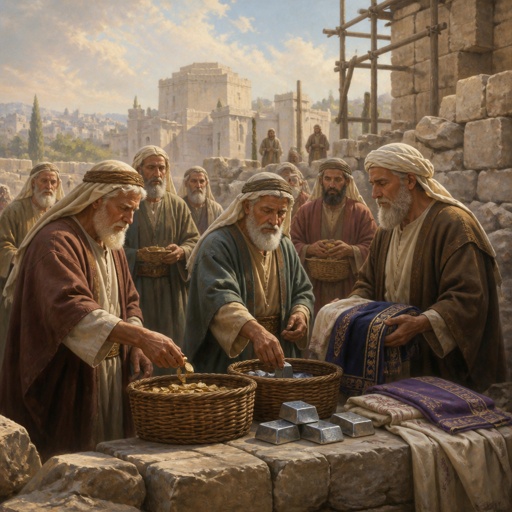
"Some of the heads of the families, when they came to the house of the LORD which is in Jerusalem, offered freely for the house of God, to erect it in its place. According to their ability, they gave to the treasury for the work 61,000 gold drachmas, 5,000 minas of silver, and 100 priestly garments." - Ezra 2:68-69

Ezra 3:2

Ezra 3:2

Ezra 9:1-2

Zerubbabel in Ezra chapter 2

Ezra 2:22 - "The men of Netophah, fifty and six."
Ezra 2:18 - "The children of Jorah, an hundred and twelve."

Ezra 2:54 - "The children of Neziah, the children of Hatipha."

Ezra 2:20 - "The children of Gibbar, ninety and five."

Ezra 2:24 - "The children of Azmaveth, forty and two."

Ezra 2:39 - "The children of Harim, a thousand and seventeen."

Ezra 9:1-2

Ezra 2:9 - "The children of Zaccai, seven hundred and threescore."

Ezra 2:27 - "The men of Michmas, an hundred twenty and two."

Ezra 2:29 - "The children of Nebo, fifty and two."

Ezra 2:56 - "The children of Jaalah, the children of Darkon, the children of Giddel,"

Ezra 2:11 - "The children of Bebai, six hundred twenty and three."

Ezra 2:53 - "The children of Barkos, the children of Sisera, the children of Thamah,"

Ezra 2:48 - "The children of Rezin, the children of Nekoda, the children of Gazzam,"

Ezra 2:15 - "The children of Adin, four hundred fifty and four."

Ezra 7:2 - "The son of Shallum, the son of Zadok, the son of Ahitub,"

Ezra 2:21 - "The children of Beth-lehem, an hundred twenty and three."

Ezra 2:45 - "The children of Lebanah, the children of Hagabah, the children of Akkub,"