The Legacy of Numbers: Faithfulness in the Footsteps of Bigvai
“The children of Bigvai, two thousand fifty and six.” — Ezra 2:14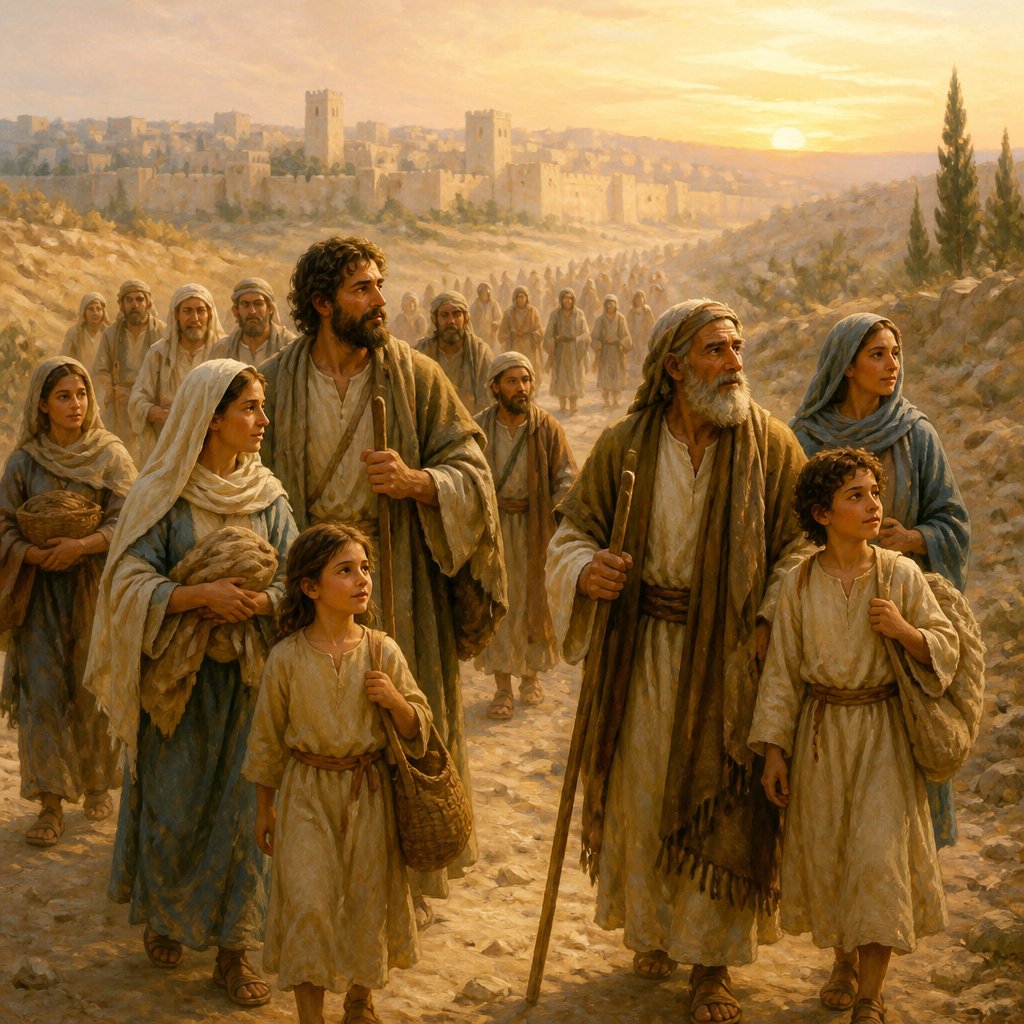
As we delve into the genealogies and listings of names in the Scriptures, we often encounter verses that seem mundane or simply statistical. Ezra 2:14 states, "The children of Bigvai, two thousand fifty and six." At first glance, this verse may appear to be nothing more than a record of numbers, but within it lies a rich tapestry of meaning, reflection, and spiritual application that invites us to explore the significance of faithfulness in the journey of restoration.
The context of this verse is vital for our understanding. The book of Ezra narrates the return of the Israelites from Babylonian exile, a pivotal moment in their history. This return was not just about regaining their homeland; it symbolized a restoration of their identity, culture, and, most importantly, their relationship with God. The list of exiles returning—including Bigvai's children—indicates the inclusivity and importance of every individual in the restoration project. It was not just the prominent individuals or leaders who mattered but every family, every descendant, and every name on the list.
The mention of Bigvai reminds us that, in the history of God's people, faithfulness often comes through the ordinary lives of individuals whose names we might not recognize today. Bigvai is not a celebrated character like Moses or David; he is a representative of the myriad of those who had to endure a period of silence and obscurity. Yet, his descendants were part of a new beginning, tasked with rebuilding Jerusalem and restoring the worship of God in the Temple.
In our own lives, we may often feel that we are overlooked or not significant enough in God’s grand plan. Yet, every life has a story, every name carries weight, and every act of faithfulness contributes to the kingdom work. Each of us, like the children of Bigvai, has a role to play in the collective mission of God. The legacy we build—whether it is within our families, in our workplaces, or within our communities—can echo through generations.
Consider also the number mentioned: two thousand fifty and six. Numbers in Scripture often carry symbolic significance. Here, we are reminded of the vastness of God's promise and the richness of His blessings. The returning exiles numbered in the thousands—a reminder that God’s faithfulness is bountiful, and His provision is abundant. This prompts us to reflect on our own lives: Are we recognizing and thanking God for the blessings that number far beyond our ability to count?
As we read through genealogies, we witness God’s hand at work throughout history—He is not absent in the mundane or routine details. He is intricately involved, weaving the tapestry of His plan through every person, every family, every small contribution. Each descendant of Bigvai, each of those faithful individuals who made the journey back to their promised land, signifies God’s faithfulness to His people despite their struggles.
In practical terms, this verse invites us into a posture of faithfulness. How do we remain steadfast in our own calling? It encourages us to serve diligently within our circles, knowing that God sees our contributions, however small they may seem. Like the children of Bigvai, we are not called to greatness or publicity but to faithfulness in the little things. Oftentimes, it is in the act of sowing faithfulness that we reap an abundant harvest down the road.
Let us then embrace our part in the story of God’s redemption, just like the descendants of Bigvai. May we be encouraged as we read those names and numbers—it is not merely about statistics, but about individuals faithfully following God through generations. Let us aim to leave a legacy of faithfulness that glorifies Him, knowing that the God who sees the detailed accounts of the past is also guiding our present and future.
Get our apps


Artwork for Ezra 2:14

Ezra 2:14 - "The children of Bigvai, two thousand fifty and six."

"The children of Bigvai, two thousand fifty and six." - Ezra 2:14

Ezra 8:14 - "Of the sons also of Bigvai; Uthai, and Zabbud, and with them seventy males."

Ezra 3:2

Ezra 3:2

Ezra 3:2

Ezra 3:2

Ezra 3:2

Ezra 9:1-2

Zerubbabel in Ezra chapter 2

Ezra 2:22 - "The men of Netophah, fifty and six."
Ezra 2:18 - "The children of Jorah, an hundred and twelve."

Ezra 2:54 - "The children of Neziah, the children of Hatipha."

Ezra 2:20 - "The children of Gibbar, ninety and five."

Ezra 2:24 - "The children of Azmaveth, forty and two."

Ezra 2:39 - "The children of Harim, a thousand and seventeen."

Ezra 9:1-2

Ezra 2:9 - "The children of Zaccai, seven hundred and threescore."

Ezra 2:27 - "The men of Michmas, an hundred twenty and two."

Ezra 2:29 - "The children of Nebo, fifty and two."

Ezra 2:56 - "The children of Jaalah, the children of Darkon, the children of Giddel,"

Ezra 2:11 - "The children of Bebai, six hundred twenty and three."

Ezra 2:53 - "The children of Barkos, the children of Sisera, the children of Thamah,"

Ezra 2:48 - "The children of Rezin, the children of Nekoda, the children of Gazzam,"

Ezra 2:15 - "The children of Adin, four hundred fifty and four."

Ezra 7:2 - "The son of Shallum, the son of Zadok, the son of Ahitub,"

Ezra 2:21 - "The children of Beth-lehem, an hundred twenty and three."

Ezra 2:45 - "The children of Lebanah, the children of Hagabah, the children of Akkub,"

Ezra 2:49 - "The children of Uzza, the children of Paseah, the children of Besai,"

Ezra 2:51 - "The children of Bakbuk, the children of Hakupha, the children of Harhur,"