Counting the Faithful: Lessons from Ezra 2:17
“The children of Bezai, three hundred twenty and three.” — Ezra 2:17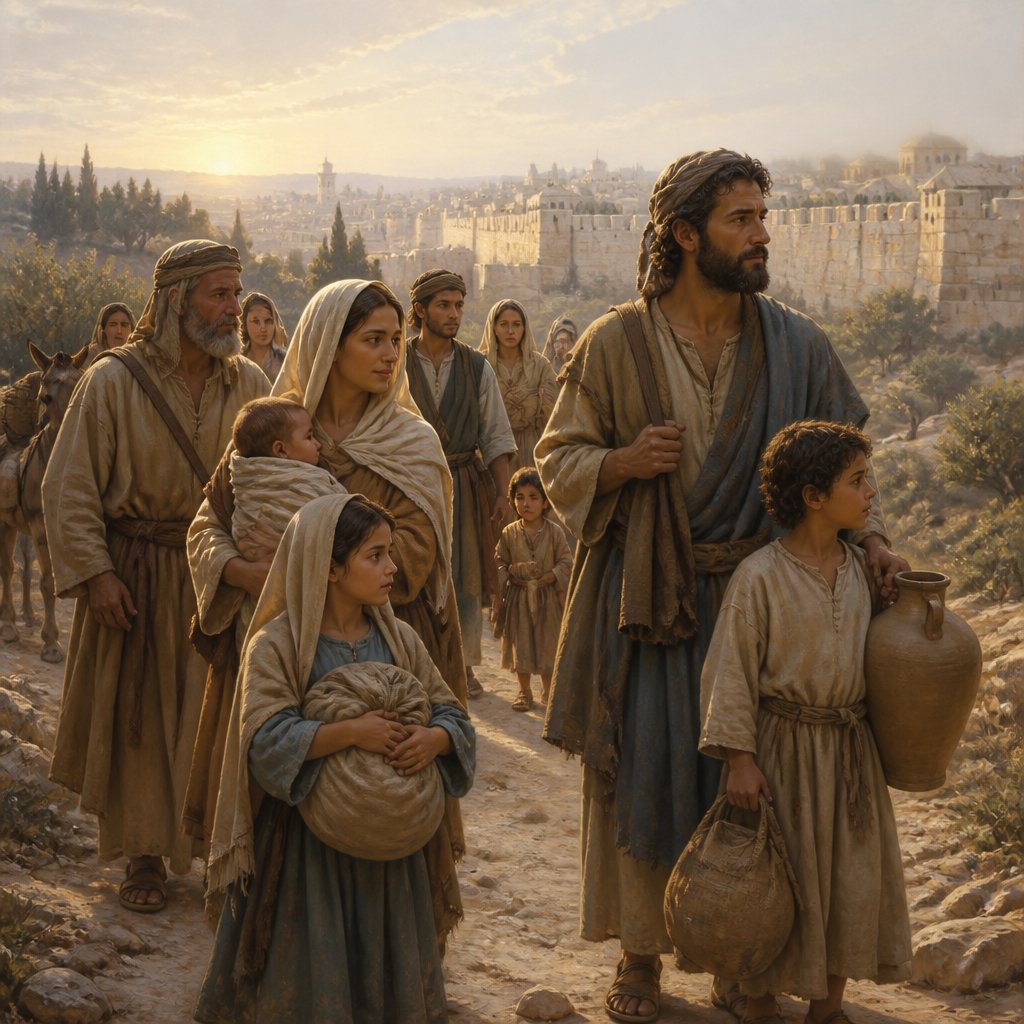
In the book of Ezra, chapter 2, verse 17 we read, "The children of Bezai, three hundred twenty and three." On the surface, this verse might seem like just another enumeration of descendants returning from Babylonian captivity, largely overlooked and forgotten amid the grand narrative of the exodus from exile. Yet, it offers rich insights into the faithfulness of God and the importance of community.
The context of Ezra teaches us about resilience and the unwavering faith of the Jewish people during a period of restoration. After seventy years of exile, the Israelites found their way back to Jerusalem, driven by a desire to rebuild not only their city but their identity as God’s chosen people. Each individual mentioned in this genealogical list had a story, a reason why they chose to return. Among them was Bezai, and with him, three hundred twenty-three faithful souls—people who were willing to collectively answer the call to restore their homeland, their identity, and their covenant with God.
When we consider Bezai’s lineage, we must remember that numbers in scripture often carry meaning beyond the literal count. The number three hundred and twenty-three, while a concrete figure, also serves as a reminder that every single person matters to God. Each of those three hundred twenty-three individuals had left their comfort zone, faced the uncertainty ahead, and made a courageous choice to be part of something greater than themselves. This act of obedience and collective movement embodies the essence of faithfulness.
Additionally, the act of counting is significant. It highlights importance. God is meticulous about details. He knows our names, our stories, and our journeys. Just as He knew Bezai and the three hundred twenty-three members of his family, He knows each of us intimately. In a world that often reduces people to statistics or mere roles in a larger narrative, this verse gently reminds us that everyone has intrinsic value in God’s plan. Each person returned, and each person counted was vital for God's purposes to unfold in Jerusalem.
From this, we glean an important lesson about community and belonging. The collective return illustrates the beauty of unity in diversity. Within Bezai's lineage were diverse voices, backgrounds, and gifts all converging to achieve a shared vision. As believers, this is a powerful reminder that our churches and communities reflect the body of Christ, with different members contributing their unique attributes for the greater benefit of the whole. The complexity of our community leads to a richer tapestry of worship, broader perspectives, and ultimately, a more profound manifestation of God's glory.
Moreover, when we reflect on the act of returning to Jerusalem, it echoes a deeper spiritual return—a return to our first love, Jesus Christ. Just like Bezai’s family returned home, we too are invited daily to return to God’s presence, acknowledging our dependence on Him and seeking His guidance for our lives. Each time we choose to return, we are counted among the faithful, participating in the journey of faith where everyone’s contribution matters.
In conclusion, Ezra 2:17 may seem like a mere data point in a historical account, yet it speaks volumes about faithfulness, community, and the heart of God who counts and values each one of us. Let's embrace the spirit of Bezai and his family, remaining faithful in our call and recognizing that every voice and every heart matters in the greater narrative of God's redemptive plan for mankind. As we move forward, let’s embody the courage of those returning, uniting our hearts and hands in the purpose that God has placed before us, knowing that we are all essential to bringing His kingdom to earth.
Get our apps


Artwork for Ezra 2:17
Ezra 2:17 - "The children of Bezai, three hundred twenty and three."
"The children of Bezai, three hundred twenty and three." - Ezra 2:17

Ezra 10:17 - "And they made an end with all the men that had taken strange wives by the first day of the first month."

Ezra 3:2

Ezra 3:2

Ezra 3:2

Ezra 3:2

Ezra 3:2

Ezra 9:1-2

Zerubbabel in Ezra chapter 2

1 Chronicles 4:17 - "And the sons of Ezra were, Jether, and Mered, and Epher, and Jalon: and she bare Miriam, and Shammai, and Ishbah the father of Eshtemoa."

Ezra 2:22 - "The men of Netophah, fifty and six."
Ezra 2:18 - "The children of Jorah, an hundred and twelve."

Ezra 2:54 - "The children of Neziah, the children of Hatipha."

Ezra 2:20 - "The children of Gibbar, ninety and five."

Ezra 2:24 - "The children of Azmaveth, forty and two."

Ezra 2:39 - "The children of Harim, a thousand and seventeen."

Ezra 9:1-2

Ezra 2:9 - "The children of Zaccai, seven hundred and threescore."

Ezra 2:27 - "The men of Michmas, an hundred twenty and two."

Ezra 2:29 - "The children of Nebo, fifty and two."

Ezra 2:56 - "The children of Jaalah, the children of Darkon, the children of Giddel,"

Ezra 2:11 - "The children of Bebai, six hundred twenty and three."

Ezra 2:53 - "The children of Barkos, the children of Sisera, the children of Thamah,"

Ezra 2:45 - "The children of Lebanah, the children of Hagabah, the children of Akkub,"

Ezra 2:48 - "The children of Rezin, the children of Nekoda, the children of Gazzam,"

Ezra 2:15 - "The children of Adin, four hundred fifty and four."

Ezra 2:21 - "The children of Beth-lehem, an hundred twenty and three."

Ezra 2:51 - "The children of Bakbuk, the children of Hakupha, the children of Harhur,"

Ezra 2:49 - "The children of Uzza, the children of Paseah, the children of Besai,"