The Legacy of Jorah: Counting the Faithful
“The children of Jorah, an hundred and twelve.” — Ezra 2:18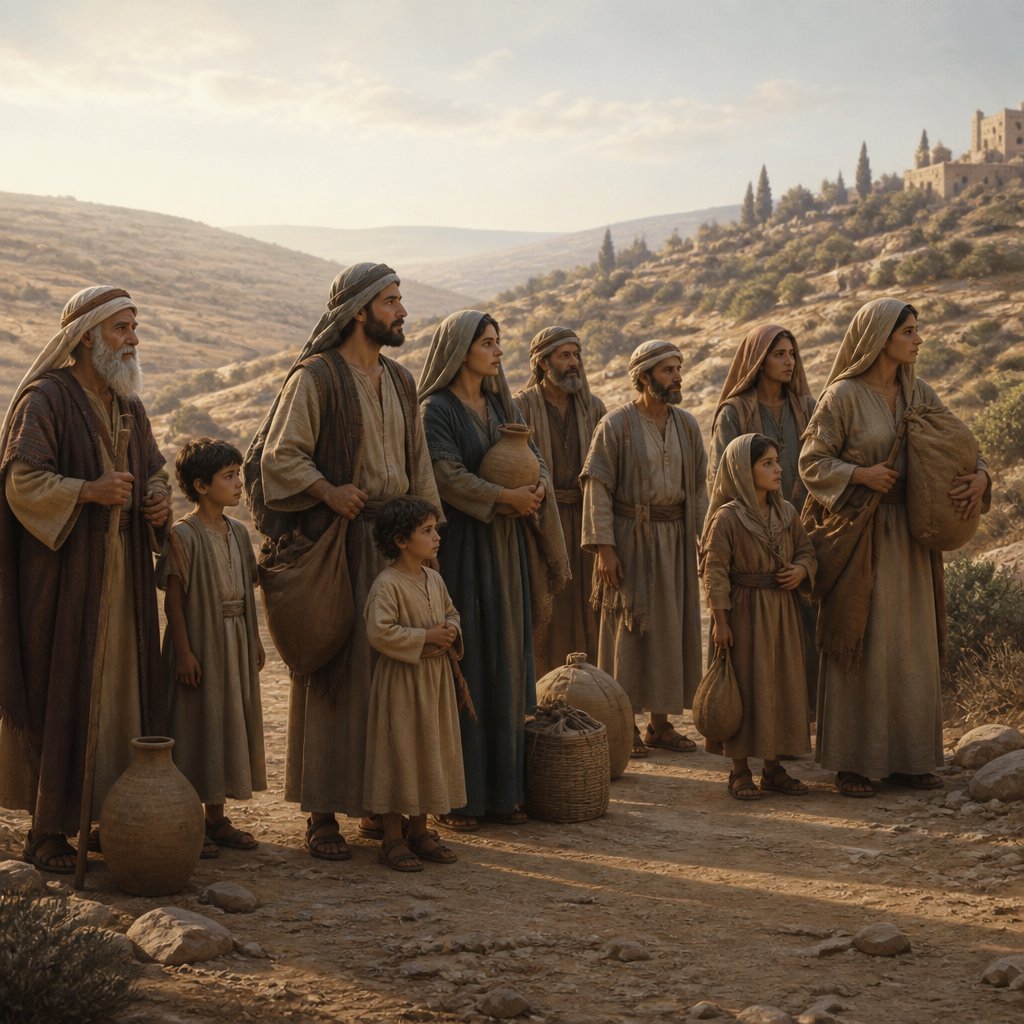
When we find ourselves reading through genealogies and lists in the Bible, it’s easy to feel overwhelmed or even disinterested. A verse like Ezra 2:18, which states, "The children of Jorah, an hundred and twelve," may seem a mere accounting of names and numbers. However, upon deeper reflection, we can extract profound spiritual truths that speak to the heart of our faith journey.
Jorah, whose descendants are mentioned, was just one individual in a long line of God’s chosen people. Yet, in the grand narrative of Scripture, the inclusion of his name—and the number of his descendants—tells us more than just a statistic; it reflects the faithfulness and the work of God’s Spirit among His people throughout generations.
The first lesson from this verse is the recognition of legacy. Jorah may not have been a king or a prophet, but his faithfulness as a parent—exemplified in the lives of his children, who are counted among the exiles returning to their homeland—is a testament to how every believer has a role in God’s unfolding story. Our own lives might seem average or devoid of spectacular moments, yet it’s in the everyday faithfulness that we can leave a lasting legacy. As noted in Psalm 102:18, "This shall be written for the generation to come: and the people which shall be created shall praise the Lord." Jorah’s faith, passed down to one hundred and twelve children, teaches us that raising a family in the fear of the Lord can result in an inheritance that extends well beyond our years.
Secondly, the significance of numbers in the Bible often symbolizes a deeper truth. The number one hundred and twelve invokes a sense of completeness and perfection. Not only does it show the organized nature of God’s people, but it also highlights the incredible task before the returning exiles. In the chaos and uncertainty of returning to a homeland that had been ravaged, the remnant of Jorah reminds us that the Lord is not just interested in masses; He cares for each individual, each family unit, and every faithful believer. It’s a reminder to us that His work is meticulous, tending to each heart that clings to Him, just as He counts the hairs on our head (Luke 12:7).
Additionally, think of the hardships faced by those returning from exile. They were not only rebuilding their homes but also their faith communities in a land that was foreign to them. Jorah’s children, being numerically significant, would have played an essential role in establishing new foundations for worship and community. The presence of one hundred and twelve descendants suggests that they formed a substantial group, likely contributing to the gatherings for worship, prayer, and collective efforts to rebuild the walls of Jerusalem. Matthew Henry states that "the church is not only a single individual but is comprised of all believers who together form the body of Christ." Thus, the faithful must gather, support, and encourage one another to fulfill God’s calling.
Finally, consider the character of Jorah himself. What kind of man was he that God would honor his lineage in this way? While the scripture does not provide elaborate details about Jorah, the simple acknowledgment of his descendants tells us he was likely a man who devoted his life to God’s service. His example encourages us to seek to live in a way that honors God, fostering faith in those around us.
As we reflect on Ezra 2:18, let us remember the vital role we play in our communities, churches, and families. We may not have a specific mention in the annals of scripture, but like Jorah, our faithfulness can have a ripple effect through generations. Let us aspire to leave a legacy rooted in Christ—one that nurtures and encourages future generations to seek Him, building a community that brings glory to His name.
Get our apps


Artwork for Ezra 2:18
Ezra 2:18 - "The children of Jorah, an hundred and twelve."
"The children of Jorah, an hundred and twelve." - Ezra 2:18

Ezra 3:2

Ezra 3:2

Ezra 3:2

Ezra 6:18 - "And they set the priests in their divisions, and the Levites in their courses, for the service of God, which is at Jerusalem; as it is written in the book of Moses."

Ezra 4:18 - "The letter which ye sent unto us hath been plainly read before me."

Ezra 3:2

Ezra 3:2

Ezra 9:1-2

Zerubbabel in Ezra chapter 2

Ezra 7:18 - "And whatsoever shall seem good to thee, and to thy brethren, to do with the rest of the silver and the gold, that do after the will of your God."

Ezra 2:22 - "The men of Netophah, fifty and six."

Ezra 2:54 - "The children of Neziah, the children of Hatipha."

Ezra 2:20 - "The children of Gibbar, ninety and five."

Ezra 2:24 - "The children of Azmaveth, forty and two."

Ezra 2:39 - "The children of Harim, a thousand and seventeen."

Ezra 9:1-2

Ezra 2:9 - "The children of Zaccai, seven hundred and threescore."

Ezra 2:27 - "The men of Michmas, an hundred twenty and two."

Ezra 2:29 - "The children of Nebo, fifty and two."

Ezra 2:56 - "The children of Jaalah, the children of Darkon, the children of Giddel,"

Ezra 2:11 - "The children of Bebai, six hundred twenty and three."

Ezra 2:53 - "The children of Barkos, the children of Sisera, the children of Thamah,"

Ezra 2:45 - "The children of Lebanah, the children of Hagabah, the children of Akkub,"

Ezra 2:48 - "The children of Rezin, the children of Nekoda, the children of Gazzam,"

Ezra 2:15 - "The children of Adin, four hundred fifty and four."

Ezra 2:21 - "The children of Beth-lehem, an hundred twenty and three."

Ezra 2:51 - "The children of Bakbuk, the children of Hakupha, the children of Harhur,"

Ezra 2:49 - "The children of Uzza, the children of Paseah, the children of Besai,"