Called to Serve: The Legacy of the Nethinims
“The Nethinims: the children of Ziha, the children of Hasupha, the children of Tabbaoth,” — Ezra 2:43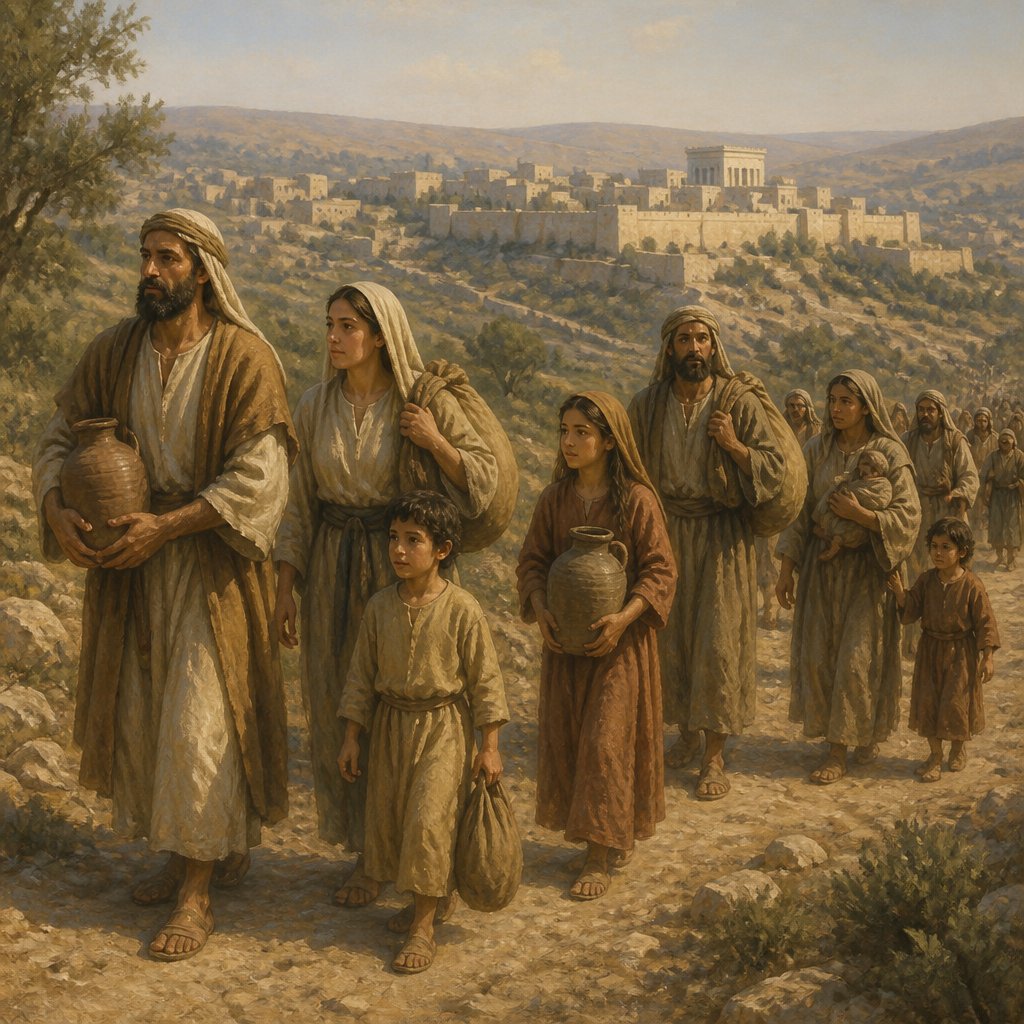
The verse we reflect on today comes from Ezra 2:43, which in the King James Version states, "The Nethinims: the children of Ziha, the children of Hasupha, the children of Tabbaoth." At first glance, this verse may appear to be a mere listing of names within the context of the Israelites returning from Babylonian captivity to rebuild Jerusalem. However, upon deeper contemplation, it unveils profound themes of servitude, identity, and the role of lesser-known figures in God's grand narrative.
The Nethinims were a group designated for service, often regarded as temple servants. Their name, derived from the Hebrew root word meaning "given" or "to give," suggests that they were 'given' to the work of ministry and service to the Levites and priests in the temple. Though they occupied a humble status compared to the prominent figures like priests and leaders, their contributions were invaluable to the life and practice of worship among the people of Israel.
This brings to mind the important truth that God values each role within His kingdom. Just as the Nethinims were recognized alongside returning exiles, we too should remember that God sees and cherishes every act of service, no matter how small it may seem in our eyes. In 1 Corinthians 12:12-14, Paul elaborates on how the body of Christ functions with many parts, each uniquely gifted and vital to the whole. "For as the body is one, and hath many members, and all the members of that one body, being many, are one body: so also is Christ." Every believer has a purpose and a calling, similar to that of the Nethinims, and this should encourage us to embrace our positions, whether in the spotlight or in the background.
Each child mentioned in Ezra 2:43, Ziha, Hasupha, and Tabbaoth, represents a family line devoted to a particular aspect of serving the community and God’s temple. Their identities, not just as individuals but as families, indicate that service was a heritage passed down. In this way, we can examine our own lives and legacies. What do we pass on to the next generation? Are we instilling a spirit of servantoood, dedication, and love for God’s work in our families? If we desire our children to serve God faithfully, we must first model that commitment ourselves.
Moreover, the Nethinims’ service was often practical, involving the necessary, mundane tasks of maintaining the temple and supporting worship without the fanfare typical of more public ministries. This draws attention to the reality that true service often occurs behind the scenes. Are we content to serve quietly and faithfully? Jesus, our ultimate example of servanthood, washed the feet of His disciples, reminding us in John 13:14-15 that to be great in God’s kingdom, we must first serve. This inversion of worldly values highlights the significance of our everyday choices to love, support, and nurture others.
Additionally, the legacy of the Nethinims teaches us about humility. They understood their place in history and the worshiping community. Their names, preserved in scripture, emphasize God’s ability to recognize and honor those who dedicate themselves to His work despite societal status. Through this, we are reminded that God’s economy does not function like the world’s; those who are the least in the eyes of man may be the greatest in the kingdom of Heaven.
As we interpret Ezra 2:43 today, let us not overlook this seemingly insignificant verse. Instead, let us reflect on the value God places on service, the heritage of faithfulness we pass down, the importance of humility, and the understanding that each member of His body plays an irreplaceable role. May we embrace our God-given callings and honor the legacy of the Nethinims by serving joyfully, knowing that every effort counts in the eyes of our Creator.
Get our apps


Artwork for Ezra 2:43

Ezra 2:43 - "¶ The Nethinims: the children of Ziha, the children of Hasupha, the children of Tabbaoth,"
"¶ The Nethinims: the children of Ziha, the children of Hasupha, the children of Tabbaoth," - Ezra 2:43

Ezra 10:43 - "Of the sons of Nebo; Jeiel, Mattithiah, Zabad, Zebina, Jadau, and Joel, Benaiah."
"Of the sons of Nebo; Jeiel, Mattithiah, Zabad, Zebina, Jadau, and Joel, Benaiah." - Ezra 10:43

Isaiah 43:2

Ezra 3:2

Ezra 3:2

Ezra 3:2

Ezra 3:2

Ezra 3:2

Ezra 9:1-2

Zerubbabel in Ezra chapter 2

Ezra 2:22 - "The men of Netophah, fifty and six."
Ezra 2:18 - "The children of Jorah, an hundred and twelve."

Ezra 2:54 - "The children of Neziah, the children of Hatipha."

Ezra 2:20 - "The children of Gibbar, ninety and five."

Ezra 2:24 - "The children of Azmaveth, forty and two."

Ezra 2:39 - "The children of Harim, a thousand and seventeen."

Ezra 9:1-2

Ezra 2:9 - "The children of Zaccai, seven hundred and threescore."

Ezra 2:27 - "The men of Michmas, an hundred twenty and two."

Ezra 2:29 - "The children of Nebo, fifty and two."

Ezra 2:56 - "The children of Jaalah, the children of Darkon, the children of Giddel,"

Ezra 2:11 - "The children of Bebai, six hundred twenty and three."

Ezra 2:53 - "The children of Barkos, the children of Sisera, the children of Thamah,"

Ezra 2:48 - "The children of Rezin, the children of Nekoda, the children of Gazzam,"

Ezra 2:15 - "The children of Adin, four hundred fifty and four."

Ezra 7:2 - "The son of Shallum, the son of Zadok, the son of Ahitub,"

Ezra 2:21 - "The children of Beth-lehem, an hundred twenty and three."

Ezra 2:45 - "The children of Lebanah, the children of Hagabah, the children of Akkub,"