Rebuilding the House of God: A Faithful Response to Divine Decrees
“In the first year of Cyrus the king the same Cyrus the king made a decree concerning the house of God at Jerusalem, Let the house be builded, the place where they offered sacrifices, and let the foundations thereof be strongly laid; the height thereof threescore cubits, and the breadth thereof threescore cubits;” — Ezra 6:3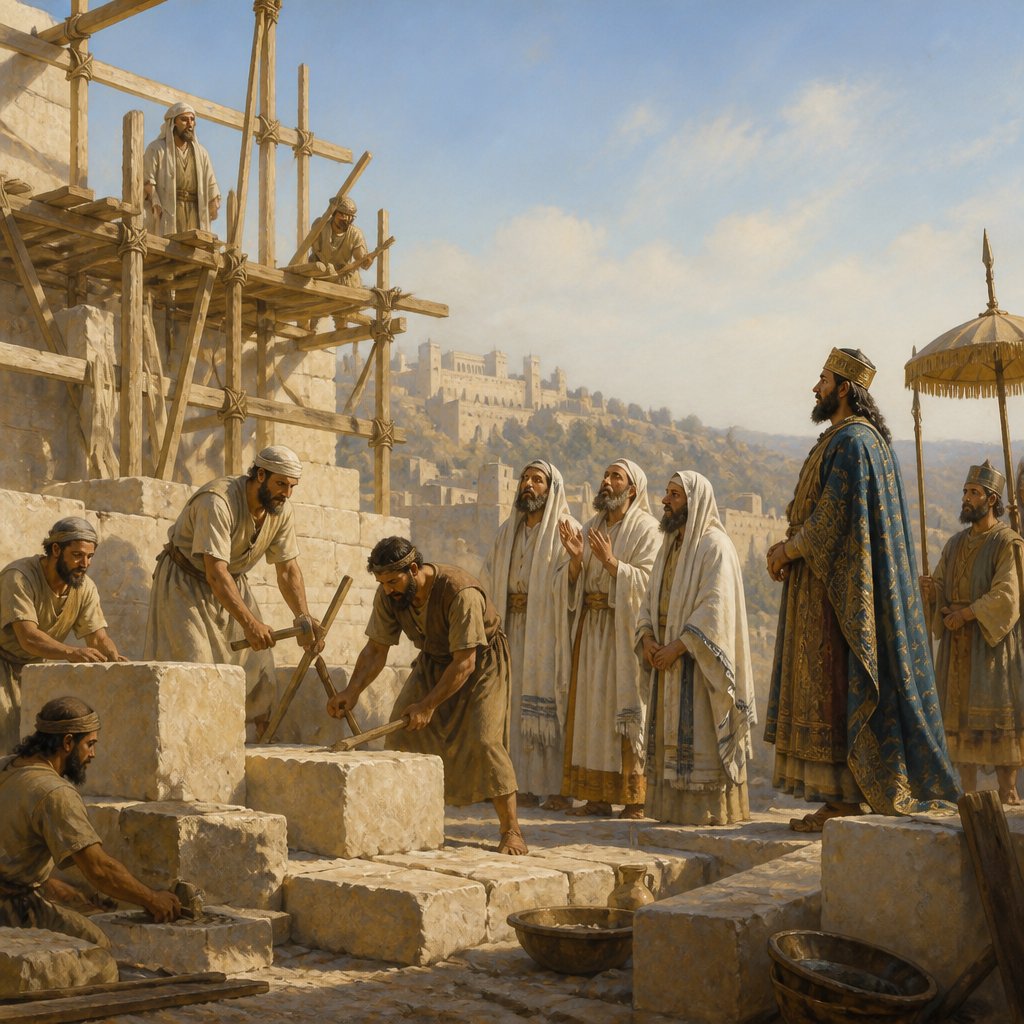
The verse from Ezra 6:3, "In the first year of Cyrus the king the same Cyrus the king made a decree concerning the house of God at Jerusalem, Let the house be builded, the place where they offered sacrifices, and let the foundations thereof be strongly laid; the height thereof threescore cubits, and the breadth thereof threescore cubits;" serves as a profound reminder of God’s provision and the call to rebuild not only physical structures but also our spiritual lives in accordance with His will.
Cyrus’s decree is remarkable for both its historical and spiritual significance. The momentous decision not only marked a pivotal point in the history of Israel but also illustrated God’s sovereignty and faithfulness to His promises. In the context of previous exiles, this decree was a fulfillment of prophecy, demonstrating that despite the years of bondage and despair, God was still committed to His people. Moses had spoken of a land filled with promises and blessings, one where God would dwell among His people, and Cyrus’s proclamation served as the catalyst for restoring that divine relationship.
Cyrus, a potentate of Babylon, was not a Jew; yet he found favor in the eyes of the Lord. His decree revealed that God could use anyone—regardless of their heritage or understanding—to accomplish His purpose. In our lives, we must remember that God's providence often comes from unexpected sources. Are we alert to the opportunities and guidance that come our way through others, even those we might overlook? God can speak through circumstances, relationships, and events beyond our understanding or control.
When we think about the house of God being rebuilt, it prompts us to consider what it means for us personally and communally to lay strong foundations in our spiritual lives. Just as the physical temple in Jerusalem was meant to be a place of worship and sacrifice, our lives should be temples of the Holy Spirit (1 Corinthians 6:19). Are we offering our lives in constant worship? Are we building on the sturdy foundations of faith, hope, and love?
The specifications given in the decree—"the height thereof threescore cubits, and the breadth thereof threescore cubits"—point towards the glory and grandeur of the Lord. The temple was to be both vast and solid, representing the greatness of God’s presence among His people. Similarly, when we build our spiritual houses, we are not meant to make them flimsy or superficial. We are called to excavate the depths of faith and construct upon it with prayer, Bible study, and acts of kindness—ensuring that our foundations are secure to withstand the storms we will undoubtedly face.
God’s call to rebuild also touches upon the theme of sacrifice. The temple was the place where the Israelites made their offerings to atone for their sins and worship God. In the New Testament, we are reminded that our sacrifices are living sacrifices, holy and acceptable to God (Romans 12:1). This requires a degree of personal examination and honesty about what we are willing to lay down at His feet. Are we sacrificing our time, energy, and resources to further His kingdom? In what ways can we contribute to the building up of His house, our church communities, and the lives of others?
Lastly, Cyrus’s decree reminds us to trust in God’s timing. It was under his reign that the rebuilding commenced, but it took years of effort, trials, and tribulations. The journey of faith often is not a straight path; it’s filled with twists, turns, and the need for perseverance. Are we discouraged by slow progress in our own lives? Let the story of Ezra and the rebuilding of the temple encourage us to remain steadfast, trusting that God’s plans are being fulfilled in His perfect timing.
As we reflect on Ezra 6:3, let us commit to being active participants in God’s rebuilding project. May we lay our foundations upon His Word and stand firm in faith, knowing that He is with us every step of the way.
Get our apps


Artwork for Ezra 6:3

Ezra 6:3 - "In the first year of Cyrus the king the same Cyrus the king made a decree concerning the house of God at Jerusalem, Let the house be builded, the place where they offered sacrifices, and let the foundations thereof be strongly laid; the height thereof threescore cubits, and the breadth thereof threescore cubits;"
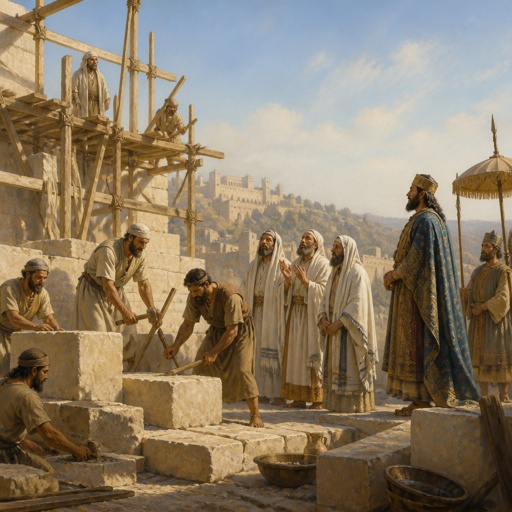
"In the first year of Cyrus the king the same Cyrus the king made a decree concerning the house of God at Jerusalem, Let the house be builded, the place where they offered sacrifices, and let the foundations thereof be strongly laid; the height thereof threescore cubits, and the breadth thereof threescore cubits;" - Ezra 6:3

Ezra 3:6 - "From the first day of the seventh month began they to offer burnt offerings unto the LORD. But the foundation of the temple of the LORD was not yet laid."

Ezra 9:6

Ezra 6:16

Ezra 10:3

Ezra 3:10

Ezra 3:2

Ezra 3:2

Ezra 3:9

Ezra 3:2

Zerubbabel in Ezra chapter 6

Ezra 6:1-12

Ezra 9:3

Ezra 3:2

Ezra 3:2

Ezra 10:3

Ezra 6:15-16

Ezra 6:15-16

Zerubbabel in Ezra chapter 3

Altar rebuilt in Jerusalem. Ezra 3:1-3

Ezra 7:3 - "The son of Amariah, the son of Azariah, the son of Meraioth,"

Ezra 6:19 - "And the children of the captivity kept the passover upon the fourteenth day of the first month."

Ezra 8:6 - "Of the sons also of Adin; Ebed the son of Jonathan, and with him fifty males."

Ezra 2:3 - "The children of Parosh, two thousand an hundred seventy and two."

Ezra 6:6 - "Now therefore, Tatnai, governor beyond the river, Shethar-boznai, and your companions the Apharsachites, which are beyond the river, be ye far from thence:"
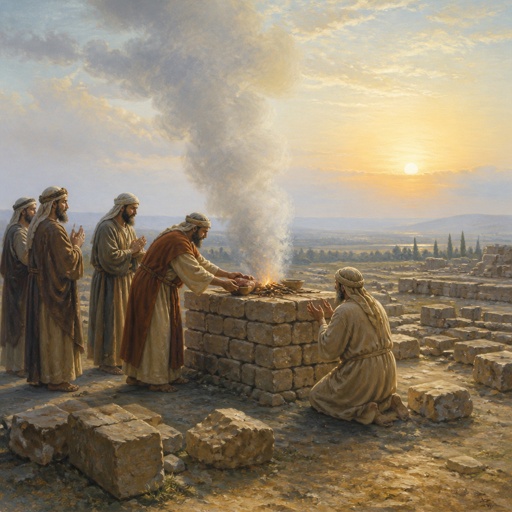
"From the first day of the seventh month began they to offer burnt offerings unto the LORD. But the foundation of the temple of the LORD was not yet laid." - Ezra 3:6

Ezra 6:2 - "And there was found at Achmetha, in the palace that is in the province of the Medes, a roll, and therein was a record thus written:"

Ezra 2:6 - "The children of Pahath-moab, of the children of Jeshua and Joab, two thousand eight hundred and twelve."

Pagan women leave with their children ezra 10:3