Faith Beyond Ritual: The Freedom of Grace
“But neither Titus, who was with me, being a Greek, was compelled to be circumcised:” — Galatians 2:3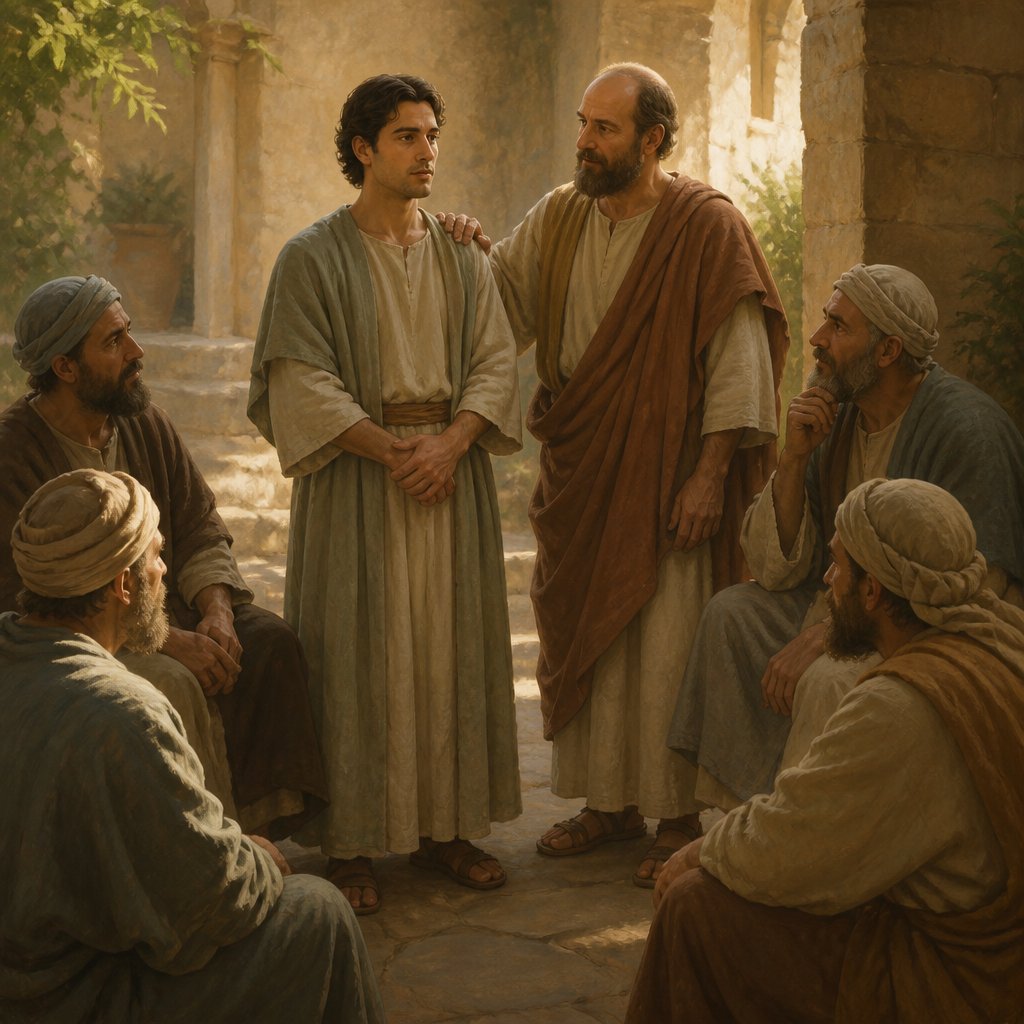
In Galatians 2:3, the Apostle Paul writes, "But neither Titus, who was with me, being a Greek, was compelled to be circumcised." This simple statement bears profound implications for our understanding of faith, grace, and the nature of our relationship with God. At first glance, this verse appears to highlight a cultural and religious dispute in the early church. However, upon deeper reflection, it becomes a declaration of the freedom of grace that transcends traditional laws and rituals.
Titus, a Gentile and a companion of Paul, represents the very essence of what it means to be included in God’s family without the encumbrance of Jewish law. The act of circumcision in the Jewish tradition was not merely a physical procedure; it was a covenant sign, a marker of identity, and a requirement for acceptance within the Jewish community. Yet, Paul’s assertion that Titus was not compelled to undergo this rite shakes the very foundations of religious expectations.
It is crucial to understand why Paul made this bold claim. During this time, the early church was embroiled in debates concerning the necessary steps for Gentiles to join the fold of believers. Certain factions argued that adherence to Jewish law, including circumcision, was essential. Paul vehemently opposed this notion, advocating for a radical new understanding of faith that rests wholly on the grace of Christ rather than on human efforts or adherence to the law.
This brings us to the crux of Paul’s message: the essence of the Gospel is not found in rituals or regulations but in the transformative power of God’s grace. For many of us today, the symbolism of the circumcision debate may appear distant, yet we face our own challenges of feeling worthy of God’s love based on our perceived adherence to rules, customs, or moral standards. How often do we find ourselves striving to earn God’s favor, wondering if we are “doing enough”?
Paul’s treatment of Titus serves as a wakeup call. It reminds us that our standing with God is not dictated by our actions or rituals but solely by our faith in Jesus Christ. Galatians 5:1 declares, "Stand fast therefore in the liberty wherewith Christ hath made us free, and be not entangled again with the yoke of bondage." Just as Titus’s inclusion affirms, we are free from the bondages of legalism.
Moreover, we must recognize that God’s acceptance extends to everyone. The message of the Gospel is universal and inclusive. Titus, as a Greek, was not considered clean or worthy by Jewish standards, yet Paul affirms his place in the community of believers. This radical inclusivity reflects the heart of Christ, who broke barriers and reached out to those society marginalized. As modern believers, we are called to mirror this same openness and acceptance, embracing all who come seeking a relationship with Christ.
In our interactions with others, we ought to extend the grace that has been so generously given to us. Do we create spaces that reflect God’s love, or do we inadvertently build fences that enforce barriers?
As we meditate on Galatians 2:3, let us celebrate the freedom that is ours in Christ. It is a freedom that invites us into a deep and personal relationship with our Savior, unencumbered by the shackles of performance. Remember that just as Titus was welcomed without condition, so are we. Our worth is not measured in religious rituals, but in the immeasurable love of God and the sacrifice of Christ, who says, "Come to me, all ye that labour and are heavy laden, and I will give you rest" (Matthew 11:28).
Let us rejoice in our freedom and live out our faith boldly, extending the grace of God to those around us.
Get our apps


Artwork for Galatians 2:3

Galatians 2:3 - "But neither Titus, who was with me, being a Greek, was compelled to be circumcised:"

"But neither Titus, who was with me, being a Greek, was compelled to be circumcised:" - Galatians 2:3

Galatians 3:2 - "This only would I learn of you, Received ye the Spirit by the works of the law, or by the hearing of faith?"

Galatians 3:3

Galatians 3, 11

Galatians 3:3 - "Are ye so foolish? having begun in the Spirit, are ye now made perfect by the flesh?"

Galatians 3:20 - "Now a mediator is not a mediator of one, but God is one."

Galatians 2:20

Galatians 3:6 - "Even as Abraham believed God, and it was accounted to him for righteousness."

Galatians 3:9 - "So then they which be of faith are blessed with faithful Abraham."

Galatians 3:12 - "And the law is not of faith: but, The man that doeth them shall live in them."

Galatians 3:7 - "Know ye therefore that they which are of faith, the same are the children of Abraham."

Galatians 3:18 - "For if the inheritance be of the law, it is no more of promise: but God gave it to Abraham by promise."

Galatians 2:20

Galatians 3:26 - "For ye are all the children of God by faith in Christ Jesus."

Galatians 3:25 - "But after that faith is come, we are no longer under a schoolmaster."

Galatians 3:27 - "For as many of you as have been baptized into Christ have put on Christ."

Galatians 3:1 - "O foolish Galatians, who hath bewitched you, that ye should not obey the truth, before whose eyes Jesus Christ hath been evidently set forth, crucified among you?"

"This only would I learn of you, Received ye the Spirit by the works of the law, or by the hearing of faith?" - Galatians 3:2

Galatians 3:29 - "And if ye be Christ's, then are ye Abraham's seed, and heirs according to the promise."

Galatians 1:2 - "And all the brethren which are with me, unto the churches of Galatia:"

Galatians 6:3 - "For if a man think himself to be something, when he is nothing, he deceiveth himself."

Galatians 3:4 - "Have ye suffered so many things in vain? if it be yet in vain."

galatians 2:20 abstract watercolor

Galatians 3:11 - "But that no man is justified by the law in the sight of God, it is evident: for, The just shall live by faith."

Galatians 2:15 - "We who are Jews by nature, and not sinners of the Gentiles,"

Galatians 1:3 - "Grace be to you and peace from God the Father, and from our Lord Jesus Christ,"

Galatians 5:3 - "For I testify again to every man that is circumcised, that he is a debtor to do the whole law."

Galatians 4:3 - "Even so we, when we were children, were in bondage under the elements of the world:"

Galatians 3:24 - "Wherefore the law was our schoolmaster to bring us unto Christ, that we might be justified by faith."