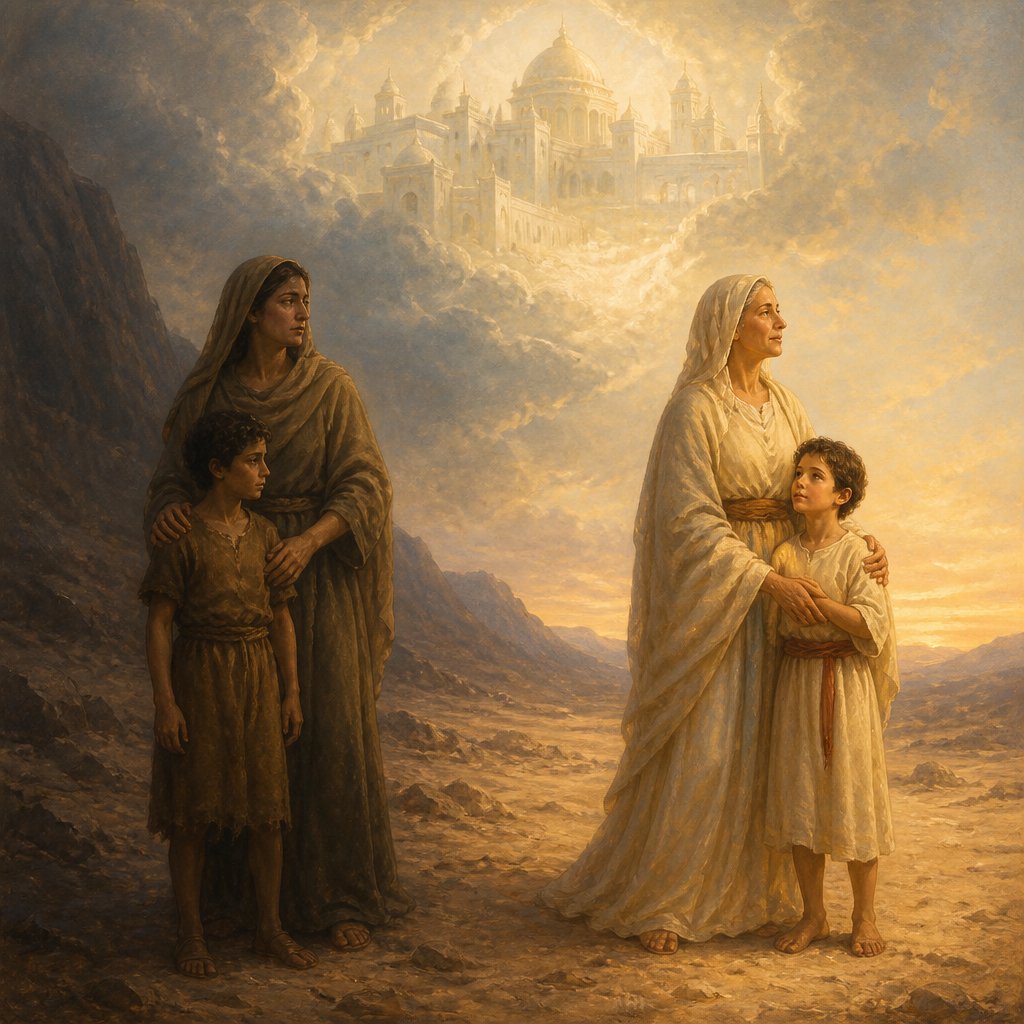
In Galatians 4:21-31, the Apostle Paul draws a powerful contrast between two women: Hagar, the bondwoman, and Sarah, the freewoman. This passage invites us to reflect not only on the historical context of Abraham’s family but also on the spiritual implications of our identity in Christ. Paul’s rhetorical questions challenge those who desire to live under the law, prompting us to consider what it truly means to be children of God.
**Understanding Our Spiritual Heritage**
Paul presents a foundational truth: there are two types of children—those born of the flesh and those born of the promise. Hagar represents the covenant of the law, bound to the flesh, enslaving her children. In contrast, Sarah embodies the covenant of grace through faith, representing freedom and the divine promise of God. Paul asserts: "For it is written, that Abraham had two sons, the one by a bondmaid, the other by a freewoman" (Galatians 4:22, KJV).
These verses underline the fact that not all who are descendants of Abraham are children of God. As his children, we are heirs to God’s promise through faith in Jesus Christ, who fulfilled the law on our behalf. Paul skillfully uses Hagar and Sarah as allegories of two covenants—the law and grace. He explains, "For these are the two covenants; the one from the mount Sinai, which gendereth to bondage, which is Agar" (Galatians 4:24, KJV).
**The Bondage of the Law vs. The Freedom of Grace**
The law, given at Mount Sinai, was intended to lead people to realize their need for a savior, yet it also generically continues to bind many to performance-based acceptance. This legalistic approach to faith can quickly become a trap. It can leave believers feeling enslaved by their inability to attain perfection. However, Paul reminds his readers, "But Jerusalem which is above is free, which is the mother of us all" (Galatians 4:26, KJV).
The Jerusalem above signifies a new covenant based on God’s grace, leading us into a loving and intimate relationship with Him. Here, we find the freedom to embrace our identity as children of promise, born from above by the Spirit. The term “children of promise” is profound. It signifies that our lineage does not rely on earthly standards or lineage; it springs from God’s intent and faithfulness.
**Rejoicing in Our Spiritual Birthright**
Paul emphasizes our position by quoting Isaiah: "Rejoice, thou barren that bearest not; break forth and cry, thou that travailest not: for the desolate hath many more children than she which hath an husband" (Galatians 4:27, KJV). The barren woman symbolizes those who were once in bondage—whether to sin, law, or hopelessness—yet are invited to rejoice in the new life that Christ offers.
Through faith in Christ, we have moved from being enslaved to the elements of the world (Galatians 4:9), to enjoying the fullness of freedom that accompanies the promises of God. As believers, we are called to enter into the joy of our inheritance and to proclaim our identity as children of God.
**The Call to Live in Freedom**
Lastly, Paul exhorts us in verse 30, "Cast out the bondwoman and her son: for the son of the bondwoman shall not be heir with the son of the freewoman" (KJV). This verse is a clarion call to discard any remnants of legalism that may steal our freedom and joy.
In closing, we must ask ourselves: Are we living as children of the promise? Are we embracing the freedom and grace offered to us through Christ? Let us rejoice and walk boldly in our identity as heirs of God, heirs with Christ. Each day brings an opportunity to live out this miraculous truth: we are not children of the bondwoman, but of the free. In our freedom, let us extend grace, love, and compassion to others, embodying the spirit of the promise that brings hope and life.
Amen.
Get our apps


Artwork for Galatians 4:21-31
"Tell me, you who desire to be under the law, do you not listen to the law? For it is written that Abraham had two sons, one by a slave woman and one by a free woman. But the son of the slave was born according to the flesh, while the son of the free woman was born through promise. Now this may be interpreted allegorically: these women are two covenants. One is from Mount Sinai, bearing children for slavery; she is Hagar. Now Hagar is Mount Sinai in Arabia; she corresponds to the present Jerusalem, for she is in slavery with her children. But the Jerusalem above is free, and she is our mother. For it is written, “Rejoice, O barren one who does not bear; break forth and cry aloud, you who are not in labor! For the children of the desolate one will be more than those of the one who has a husband.” Now you, brothers, like Isaac, are children of promise. But just as at that time he who was born according to the flesh persecuted him who was born according to the Spirit, so also it is now. But what does the Scripture say? “Cast out the slave woman and her son, for the son of the slave woman shall not inherit with the son of the free woman.” So, brothers, we are not children of the slave but of the free woman." - Galatians 4:21-31

Galatians 4:31 - "So then, brethren, we are not children of the bondwoman, but of the free."
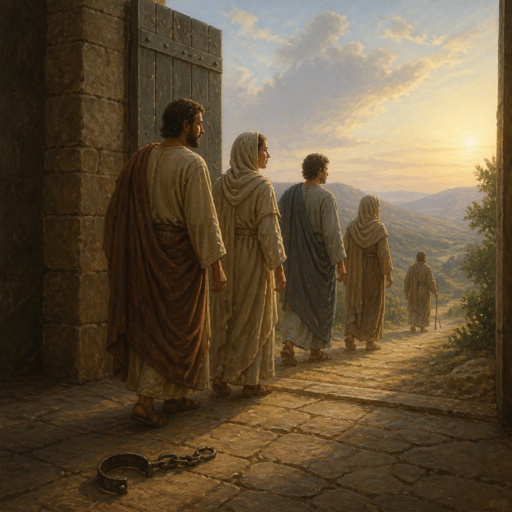
"So then, brethren, we are not children of the bondwoman, but of the free." - Galatians 4:31

Galatians 4:21 - "Tell me, ye that desire to be under the law, do ye not hear the law?"
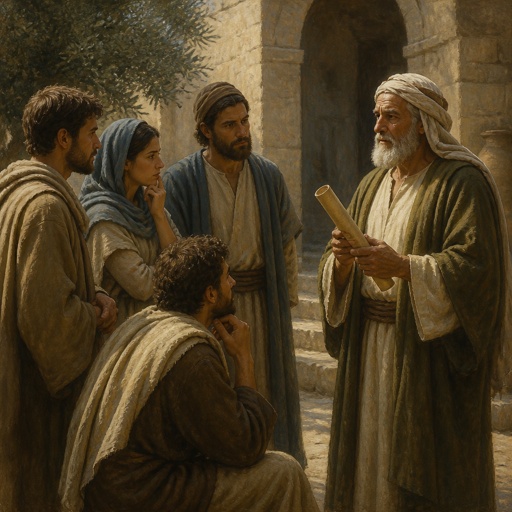
"Tell me, ye that desire to be under the law, do ye not hear the law?" - Galatians 4:21

galatians 4:4

Galatians 6:4

Galatians 6:4

Galatians 6:4

Galatians 6:4

Galatians 6:4

Galatians 6:4

Galatians 4:13

Galatians 1:21 - "Afterwards I came into the regions of Syria and Cilicia;"

Galatians 4:24-27

Galatians 6:4

Galatians 4:13

Galatians 6:4

Galatians 6:4

Galatians 4:13

Galatians 6: 4-5

Galatians 6: 4-5

Galatians 6: 4-5

Galatians 2:21 - "I do not frustrate the grace of God: for if righteousness come by the law, then Christ is dead in vain."

Galatians 4:28 - "Now we, brethren, as Isaac was, are the children of promise."

Galatians 4:10 - "Ye observe days, and months, and times, and years."

Galatians 4:4 - "But when the fulness of the time was come, God sent forth his Son, made of a woman, made under the law,"

"Afterwards I came into the regions of Syria and Cilicia;" - Galatians 1:21

Galatians 4:26 - "But Jerusalem which is above is free, which is the mother of us all."

Galatians 4:2 - "But is under tutors and governors until the time appointed of the father."