The Divine Disruption: Understanding God's Intervention in Human Unity
"Go to, let us go down, and there confound their language, that they may not understand one another's speech." - Genesis 11:7
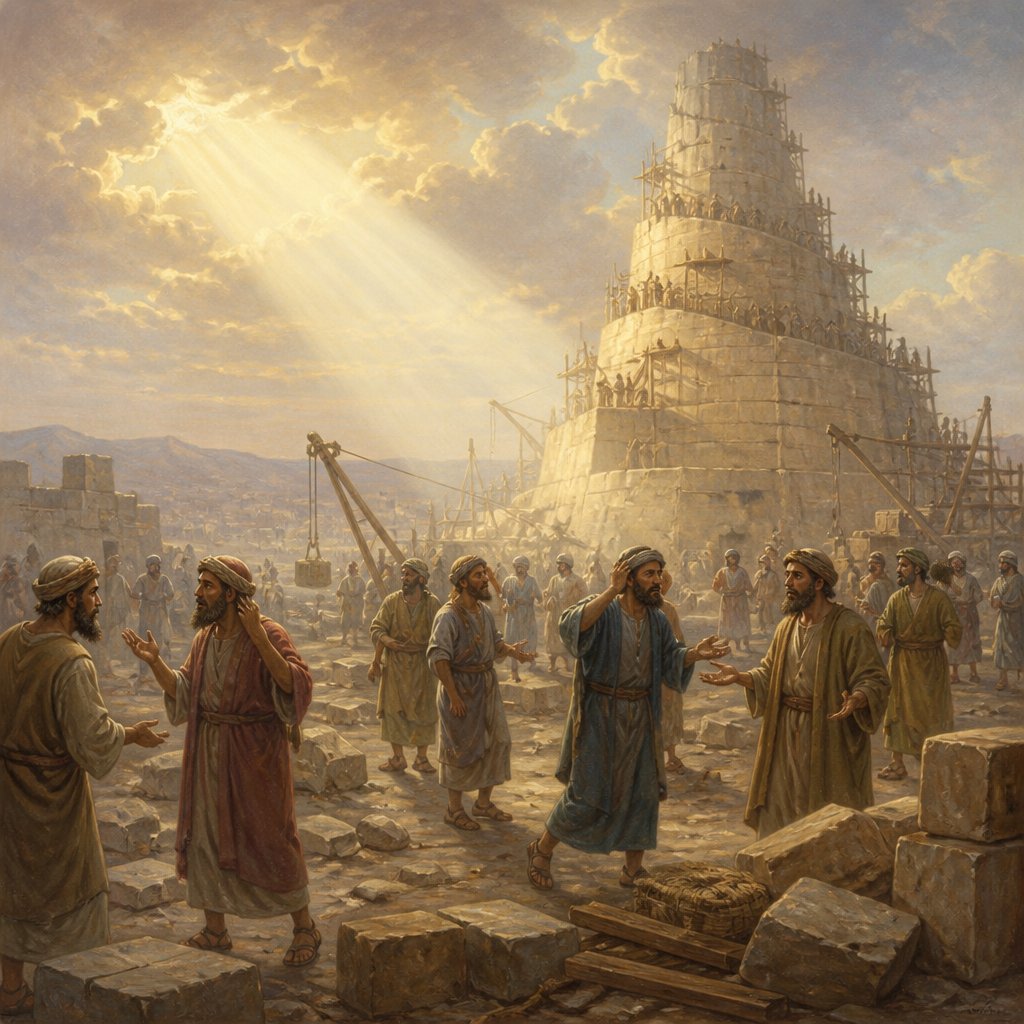
Genesis 11:7 reads, "Go to, let us go down, and there confound their language, that they may not understand one another's speech." This verse is a profound insight into the nature of human ambition and divine intervention. The Tower of Babel story offers an essential understanding of God’s sovereignty and the limits of human endeavor.
To fully appreciate this scripture, we must begin by reflecting on the context in which it occurs. After the great flood, humanity was united, speaking one language and sharing a common purpose. They sought to build a city and a tower that reached heaven, a monument to their collective strength and intellect. Their goal was to make a name for themselves and to avoid being scattered across the earth (Genesis 11:4). This ambition, while seemingly innocent, unveiled a critical flaw in humanity's heart: the desire to reach God on human terms, rather than submitting to His divine authority.
In their pursuit, they overlooked God’s command to "be fruitful, and multiply, and replenish the earth" (Genesis 1:28). Instead of scattering and filling the earth, they chose to settle in one place, promoting self-sufficiency over divine dependency. This wasn't merely an architectural endeavor; it was a symbolic act of rebellion against the Creator. Their ambition to build a monument to human achievement and to reach the heavens reflected a prideful desire to rival God.
In response to this collective ambition, God intervenes. His decision to confuse their language is a pivotal moment in biblical history and leadership. It serves a dual purpose: it is both a judgment on human pride and a protective measure to curb their potential for further rebellion. By introducing linguistic confusion, God ensured that they would not be able to collaborate as effectively toward their ambitious plans. This divine disruption illustrates a powerful truth: when humanity attempts to elevate itself against God, He will act to realign us with His purposes.
Understanding God’s action at Babel requires us to recognize that God values unity, but He desires that unity to be rooted in reverence for Him, not in rebellion. The church today can derive lessons from this ancient narrative. In our quest for collective goals—be they in our personal lives, communities, or churches—we must ensure that our motives align with God's will. Human enterprises lacking divine submission can lead to chaos and are ultimately hindered by misunderstanding and confusion.
Today, as we navigate a world marked by increasing division and strife, this story echoes in many facets of our lives. Language, a gift from God, can be used to communicate love, and when misused, it can create barriers. Just as the people of Babel faced confusion in their speech, we too find ourselves in a world where messages are often misunderstood, intentions are miscommunicated, and unity is severely challenged.
As believers, it is our responsibility to seek God’s guidance in how we communicate and relate to one another. The invitation is to build bridges rather than towers. We are called to embrace the diversity of language and culture, seeking common ground in our shared faith in Christ. This is the unity God desires—not uniformity, but harmony rooted in respect and love for one another, regardless of our differences.
In conclusion, Genesis 11:7 is not merely a warning against human pride but an invitation to explore what divine intervention looks like in our lives. Let us pray for clarity in our speech, humility in our ambitions, and the ability to celebrate differences that honor God’s design. May we always seek His will above our own and strive towards unity that reflects His glory.
Want to reflect more on Genesis 11:7?
Continue your spiritual journey with Bible Chat — an AI-powered tool for exploring God's Word through conversation. Ask questions, discover connections, and deepen your understanding.
Get Our Apps


Genesis 11:7 Artwork

Genesis 11:7 - "Go to, let us go down, and there confound their language, that they may not understand one another's speech."
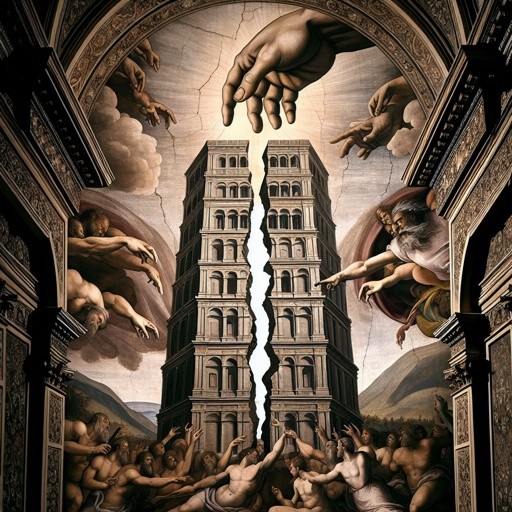
Genesis 11:7 - It should feature a godly hand seperating the tower in half
"Go to, let us go down, and there confound their language, that they may not understand one another's speech." - Genesis 11:7

Genesis 7:11 - "¶ In the six hundredth year of Noah's life, in the second month, the seventeenth day of the month, the same day were all the fountains of the great deep broken up, and the windows of heaven were opened."

Genesis 11:5

genesis 8:11

genesis 8:11

Genesis 8:11

genesis 8:11

Genesis 8:11

Genesis 15:11

Genesis 21-11

genesis 8:11

Genesis 11:5

Genesis 18-11
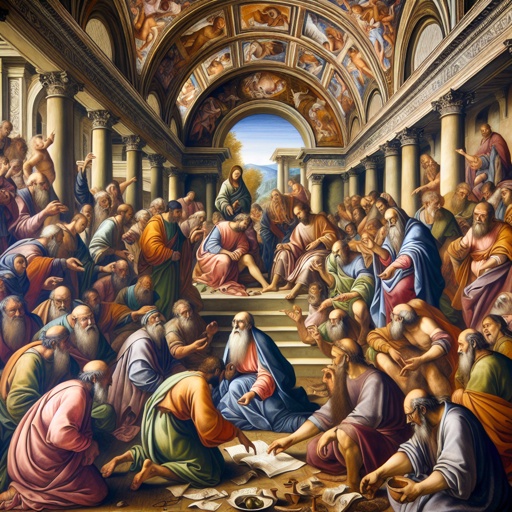
Genesis 20-11

Genesis 28-11

Genesis 11:5

Genesis 8:11

Genesis 23:11

Genesis 22:11

genesis 8:11

Genesis 24-11

Genesis 16:11

Genesis 11:5

genesis 8:11

Genesis 11:5

Genesis 17-11

genesis 8:11

Genesis 8:11