The Weight of Loss: Lessons from Haran’s Death
"And Haran died before his father Terah in the land of his nativity, in Ur of the Chaldees." - Genesis 11:28
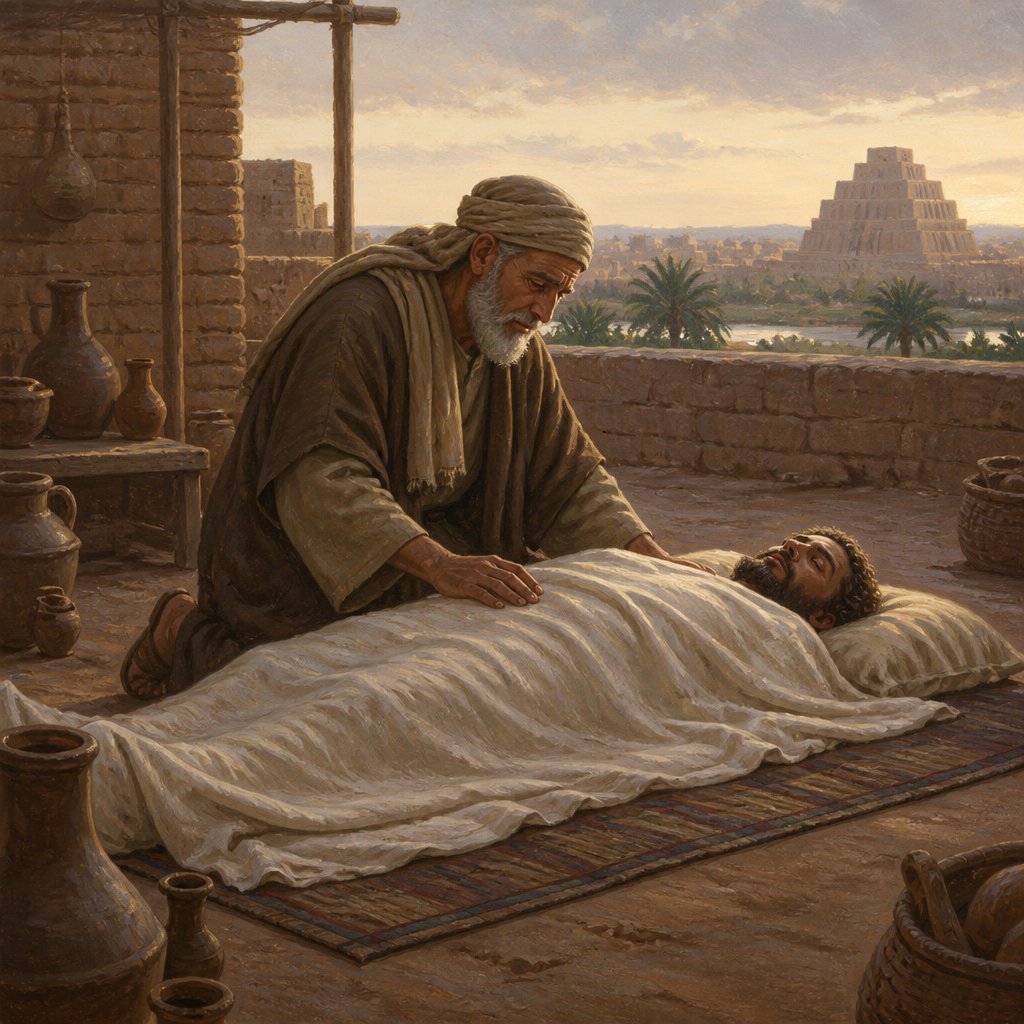
Genesis 11:28 states, "And Haran died before his father Terah in the land of his nativity, in Ur of the Chaldees." In this concise verse, we find a world of implications concerning family, legacy, and the painful journey of life.
To understand the gravity of Haran’s death, it is crucial to appreciate the context. Ur of the Chaldees was a prosperous city, known for its culture and idolatry, located in ancient Mesopotamia. Terah, Haran's father, was not only a patriarch but a man who witnessed profound transformations within his family. The narrative does not explicitly tell us his thoughts or feelings about Haran's untimely death. However, we can surmise the shock and despair that a parent experiences when losing a child.
Haran's demise before the eyes of his father was not just a loss; it was a rupture in the fabric of familial expectations and dreams. Haran likely held promises for the future, destinies intertwined with those of his father and brothers. He was to inherit life’s traditions, joys, and responsibilities, yet he passed before he could even begin to realize these promises. This moment of loss resonates throughout generations, amplifying the truth that life is fragile and unpredictable.
For Terah, the loss of Haran wasn’t merely personal; it acted as a catalyst for the family’s future. Following Haran’s death, Terah made a monumental choice to leave Ur and journey towards Canaan. This transition was not just a geographical shift; it symbolized a spiritual awakening and a breaking away from the past. It illustrates a common human response to loss—a desire to escape, to find new identities, and to search for hope amid grief.
In Haran’s death, we witness a profound truth about life: that God often directs our paths through moments of heartbreak. Just as Terah responded to his grief with action, so too must we. Loss can be a motivator, pushing us towards a deeper reliance on God, urging us to leave behind what was familiar, and prompting us to seek a relationship with the Divine that we may have overlooked.
The Bible recounts that after leaving Ur, Terah eventually settled in Haran—the name bearing the weight of his loss, a constant reminder of what was sacrificed along the journey. Similarly, we carry with us the memories and lessons learned through our experiences of loss. They shape who we become and how we interact with others. In the stories of our lives, loss often forms a bridge to understanding God’s providence, reminding us that while we mourn our dead, we also celebrate the life we still possess.
Haran’s untimely death teaches us to hold our loved ones dearly and to be aware of the fragility of life. It challenges us to reflect on the relationships that matter most. Are we investing in those connections while we can? Are we expressing love and forgiveness today, rather than waiting for the unthinkable? Through Haran’s brief mention in Scripture, we are prompted to prioritize our families and to appreciate their presence while we can.
In the broader narrative, this verse is a foreshadowing of the significant role that Abraham, Haran’s brother, will play in biblical history. Abraham, after the death of Haran, becomes a beacon of faith and obedience, calling us to dwell on the belief that even through loss, God has a plan. The passing of one generation does not extinguish the hopes of another; rather, it often ignites a new beginning, illuminating the path set before us.
As we ponder Haran’s death, let us not lose sight of the bigger picture that God is weaving through our stories. In our grief, we can turn to God for comfort, recognizing that our pain is not in vain—it transforms us and draws us nearer to His heart.
Want to reflect more on Genesis 11:28?
Continue your spiritual journey with Bible Chat — an AI-powered tool for exploring God's Word through conversation. Ask questions, discover connections, and deepen your understanding.
Get Our Apps


Genesis 11:28 Artwork

Genesis 11:28 - "And Haran died before his father Terah in the land of his nativity, in Ur of the Chaldees."
"And Haran died before his father Terah in the land of his nativity, in Ur of the Chaldees." - Genesis 11:28

Genesis 28-11

Genesis 28:11 - "And he lighted upon a certain place, and tarried there all night, because the sun was set; and he took of the stones of that place, and put them for his pillows, and lay down in that place to sleep."

Genesis 28-15

Genesis 28-12

Genesis 28-16

Genesis 28-21

Genesis 28-22

Genesis 28-17

Genesis 21:28

Genesis 28:18

Genesis 24:28

Genesis 28:18

Genesis 28-20

Genesis 28-13

Genesis 28-19

Genesis 28-14

Genesis 19-28

Genesis 28:10

Genesis 18-28

Ezekiel 28:11-19

Ezekiel 28:11-19

Ezekiel 28:11-19

Ezekiel 28:11-19

Ezekiel 28:11-19

Ezekiel 28:11-19

Genesis 10:28 - "And Obal, and Abimael, and Sheba,"

Genesis 36:28 - "The children of Dishan are these; Uz, and Aran."

Matthew 28:11