A Sanctuary in the Wilderness: Building Altars in Our Lives
“Then Abram removed his tent, and came and dwelt in the plain of Mamre, which is in Hebron, and built there an altar unto the LORD.” — Genesis 13:18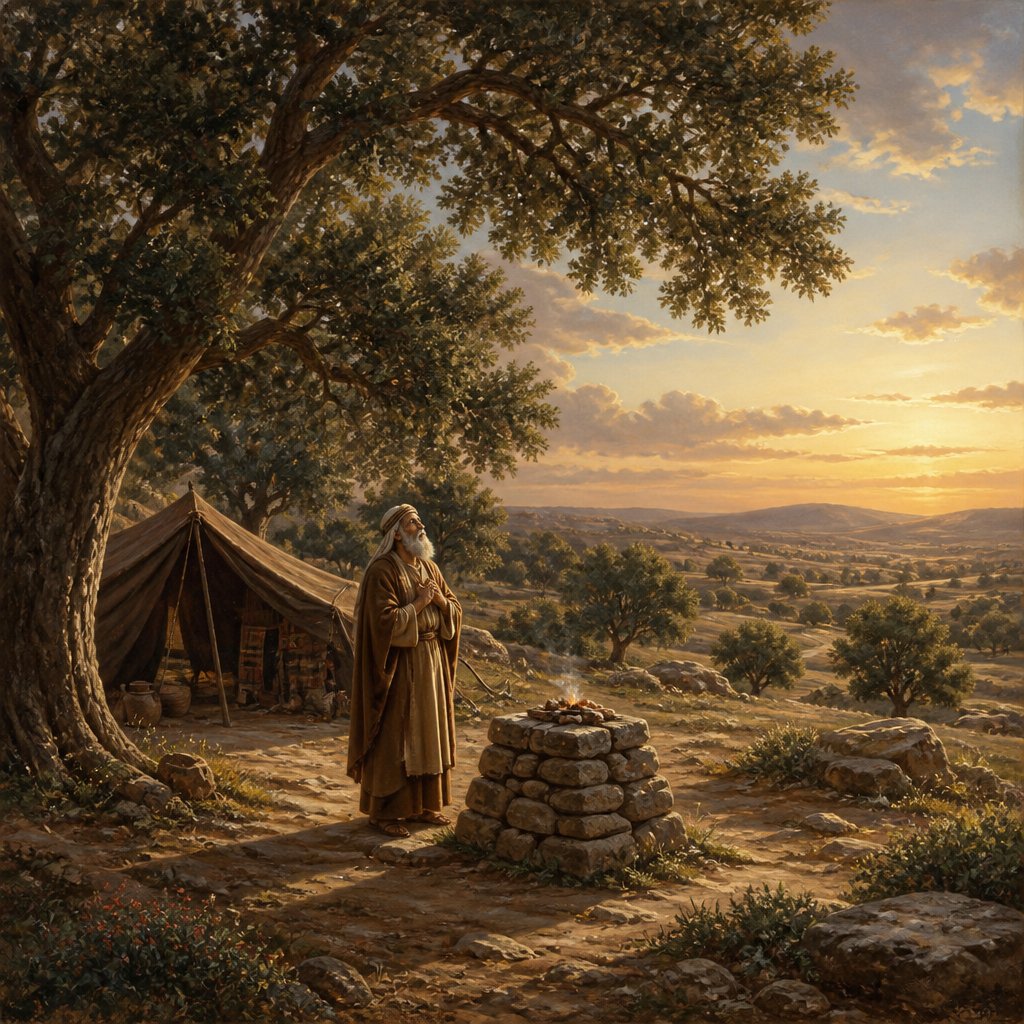
The journey of faith is often a journey through unfamiliar territory; it is a pilgrimage where each step is taken under the watchful eye of a God who promises to guide. Genesis 13:18 reads, "Then Abram removed his tent, and came and dwelt in the plain of Mamre, which is in Hebron, and built there an altar unto the LORD." In this simple yet profound verse, we uncover a narrative steeped in significance for our spiritual lives, wrapped in the actions of Abram choosing to dwell, build, and worship.
**The Context of Journeying**
Abram, known later as Abraham, is a figure of faith in the rich tapestry of biblical history. His life is a testament to the radical obedience to God's call. Prior to this moment, Abram had traversed many lands—leaving behind his homeland in Ur, journeying to Canaan, and sojourning in Egypt. Each moment of transition symbolizes the challenges and uncertainties that accompany the life of faith. It is often in these moments that we find ourselves stripped of familiarity, nudged by God into new experiences that test the steadfastness of our belief.
**The Significance of Location**
The choice of Mamre, a plain located in Hebron, speaks volumes about God's sovereign hand in our lives. Even the locations we occupy have divine significance. Mamre means "strength" — a stronghold for Abram in a time of need. In moments when we feel weak or lost, dwelling in the plain of Mamre reminds us that God provides strength amid uncertainties. Furthermore, Hebron, meaning "fellowship" or "association," indicates the importance of communal support and the strength we draw from one another in the walk of faith. As we travel our paths, we must seek places of refuge and strength, dwelling in communities that encourage our growth and faithfulness.
**Abram's Action: Building an Altar**
The act of building an altar was not merely an architectural endeavor but an expression of worship and devotion. Altars symbolize connection with the Lord, a physical manifestation of an internal relationship. For Abram, building this altar was his response to God’s promises and presence. In our daily lives, we are called to construct altars of remembrance and gratitude. These could be literal spaces of prayer in our homes or metaphorical moments of surrender where we acknowledge the goodness of God.
To build our own altars, we must pause amid the busyness, reflecting on His faithfulness. Just as Abram raised a monument to worship, we too must find ways to express our gratitude, whether it's through dedicated times of prayer, worship, or acts of compassion toward others. Remember that God meets us in our acknowledgment of Him, and our worship provides space for His presence to dwell in our lives.
**The Importance of Dwelling**
To dwell signifies more than simply residing; it indicates a commitment to being present in the moment God has ordained. Abram did not rush off after building the altar; he settled—he made it a point to stay in the presence of God. In a fast-paced world that often rushes us through life, we need to learn the art of dwelling. Where are the plain of Mamre's in our lives calling us to pause and establish a deep-rooted connection with God?
**Conclusion: Setting Up Altars**
As we navigate our own uncertainties, may we learn from Abram's journey. Let us remove our proverbial tents of worry and confusion and find our Mamre—a place where we can dwell, build, and worship. Let us construct altars in our lives, established in prayer and praise, creating memorials of God's faithfulness. We are reminded that life may often take us through unexpected paths, but God remains our constant guide, leading us to places of strength and fellowship. In every season, let us worship the LORD who sustains and keeps us, just as Abram did in the plain of Mamre.
Get our apps


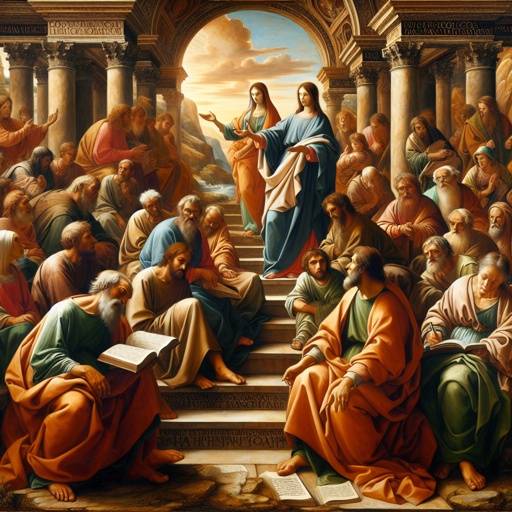
Artwork for Genesis 13:18

Genesis 13:18 - "Then Abram removed his tent, and came and dwelt in the plain of Mamre, which is in Hebron, and built there an altar unto the LORD."

Genesis 13:18 Then Abram removed his tent, and came and dwelt in the plain of Mamre, which is in Hebron, and built there an Altar unto the LORD.
"Then Abram removed his tent, and came and dwelt in the plain of Mamre, which is in Hebron, and built there an altar unto the LORD." - Genesis 13:18
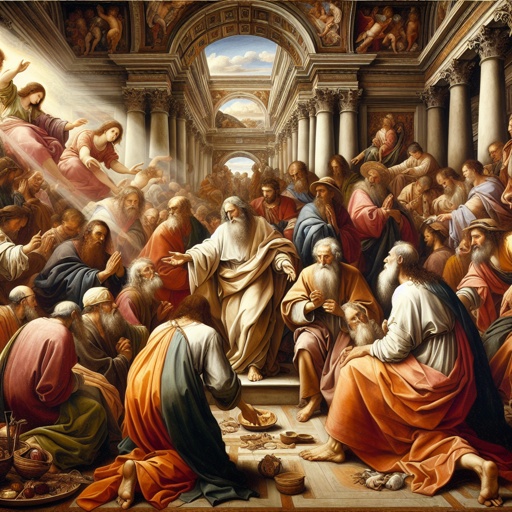
Genesis 18-13

Genesis 18:13 - "And the LORD said unto Abraham, Wherefore did Sarah laugh, saying, Shall I of a surety bear a child, which am old?"
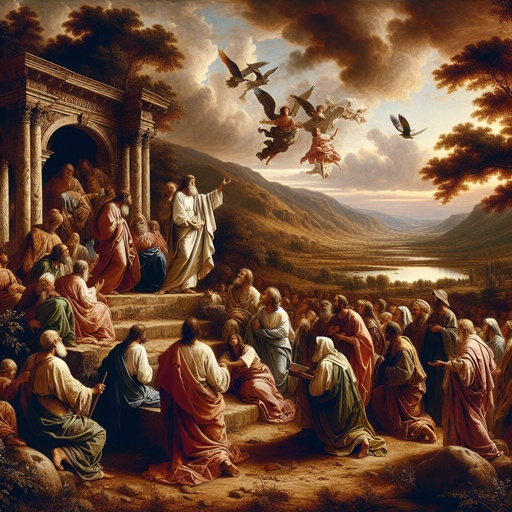
Genesis 18-18

Genesis 18-12

Genesis 24-18

Genesis 18-10

Genesis 18-16

Genesis 18:25

Genesis 22-18

Genesis 18-30

Genesis 18-26

Genesis 17-18

Genesis 18-32

Genesis 26:18

Genesis 18-25

Genesis 18-9

Genesis 18-14
Genesis 15:18

Genesis 18-19

Genesis 18-2

Genesis 23-18

Genesis 18-28

Genesis 18-1

Genesis 25-18

Genesis 20-18

Genesis 18-22

Genesis 18-17