The Well of Hope: Discovering God's Provision in Our Despair
“And God opened her eyes, and she saw a well of water; and she went, and filled the bottle with water, and gave the lad drink.” — Genesis 21:19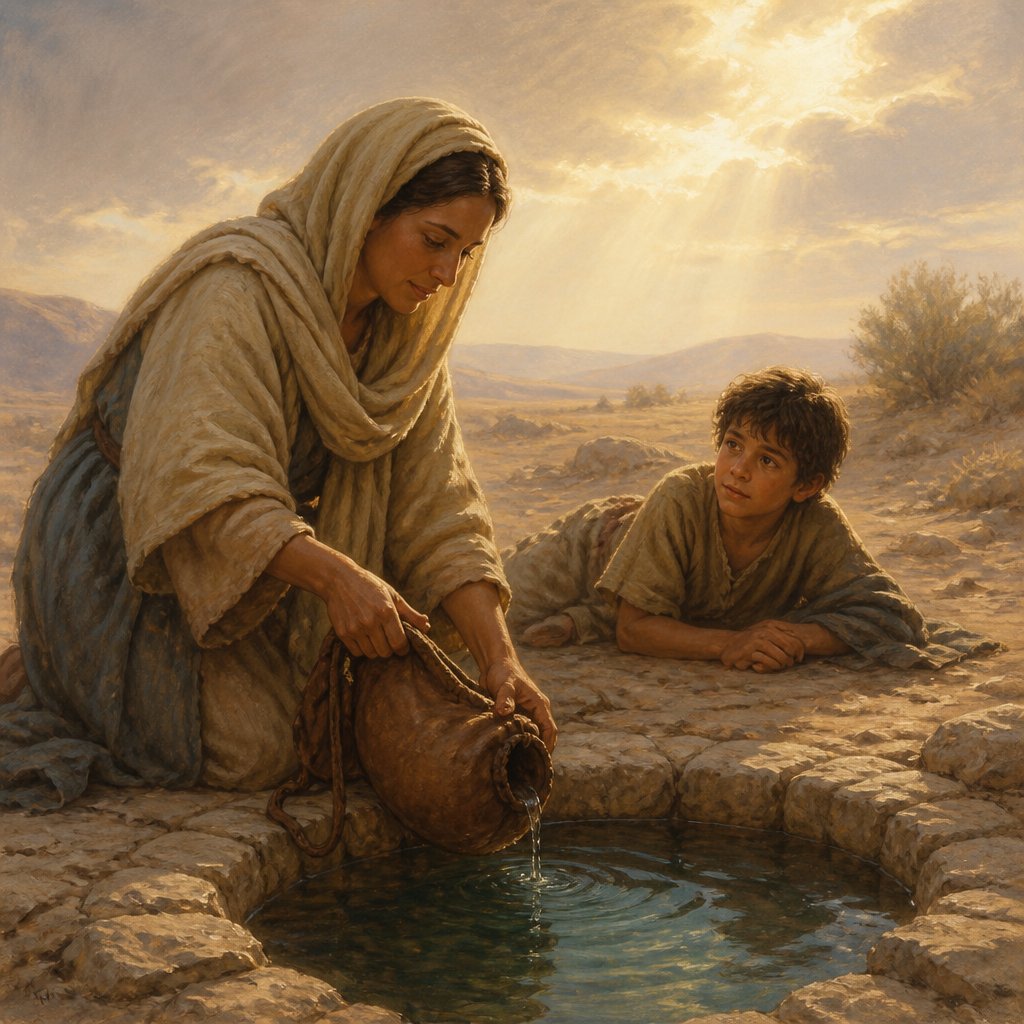
In Genesis 21:19, we read, "And God opened her eyes, and she saw a well of water; and she went, and filled the bottle with water, and gave the lad drink." This poignant moment occurs in a narrative charged with emotion and desperation, revealing profound truths about God’s care and timely provision for those whom He loves.
The context of this verse involves Hagar, Sarah's Egyptian maidservant, and her son Ishmael. After being cast out into the wilderness with only scant provisions, despair enveloped Hagar as she watched her son suffer from thirst. In her desperation, she placed Ishmael under a bush, distancing herself so as not to witness his suffering. In that bleak moment, she felt utterly alone and abandoned. Yet, it was in this very place of hopelessness that God intervened.
"And God opened her eyes..." This phrase encapsulates the truth that in times of distress, many of us are blinded by our circumstances. Our focus on our problems can prevent us from seeing the solutions God's providence has already placed around us. Hagar’s experience reflects our own at times; we see nothing but our struggles, failing to recognize the grace and goodness waiting just beyond our sight. It’s often during our darkest hours that God desires to reveal His plans and provisions to us.
The act of God opening Hagar's eyes is multi-faceted. It signifies a divine intervention, moving beyond human understanding. How many times have we felt abandoned and alone, only to discover later that God had been working on our behalf the entire time? This reminds us that spiritual sight is vital; it allows us to perceive resources, solutions, and encouragement that are otherwise obscured by fear, anxiety, or despair.
Upon her eyes being opened, Hagar sees a well of water. This well was not a product of her effort; it was a provision from God. It’s essential to acknowledge that sometimes, the resources we need to overcome our trials are right in front of us, yet we don’t see them until God allows us to. In moments of need, we must approach our prayers with an expectation to see—believing that God can and will reveal the provisions He has arranged for us.
Next, we see Hagar acting in faith. "And she went, and filled the bottle with water." Her belief in God's provision led to action. The narrative illustrates an essential truth in our journey of faith—recognizing God's provision should propel us into action. In our neediness, it can be easy to remain passive, but God calls us to actively seek out the well He has provided. This often requires us to step away from our paralysis of fear or disappointment and approach Him with a heart willing to pursue the blessings He has for us, even in the face of adversity.
Finally, Hagar gives the lad drink. This act of nurturing represents not only physical sustenance but also acts as a metaphor for the spiritual nourishment we receive from God in times of trial. As we experience God’s provision, we are also called to share that abundance with others, especially those who are vulnerable or in need. Hagar’s heart reflects the essence of God's love—a love that equips us to care for others, instilling in us the power of compassion and kindness.
In conclusion, Genesis 21:19 serves as a powerful reminder of God’s faithfulness and provision. In your moments of despair, remember that God sees you. Ask Him to open your eyes to the wells He has placed in your life and be prepared to act in faith. Trust that the sustenance you require, whether physically or spiritually, is found in Him. Through faith and action, may you not only receive His blessings but also become a channel of His life-giving waters to those around you.
Get our apps


Artwork for Genesis 21:19

Genesis 21-19

Genesis 21:19 - "And God opened her eyes, and she saw a well of water; and she went, and filled the bottle with water, and gave the lad drink."
"And God opened her eyes, and she saw a well of water; and she went, and filled the bottle with water, and gave the lad drink." - Genesis 21:19

Genesis 19-21
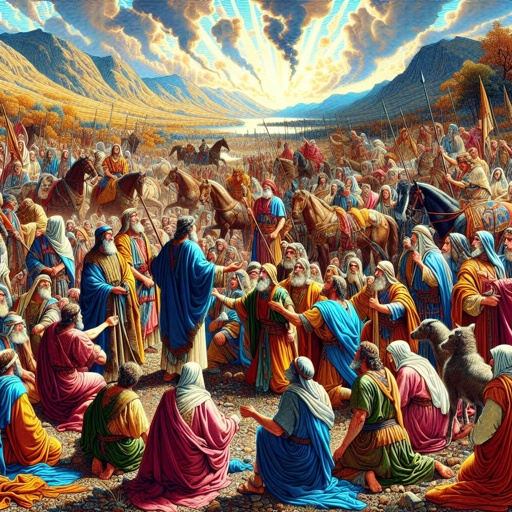
Genesis 19:21 - "And he said unto him, See, I have accepted thee concerning this thing also, that I will not overthrow this city, for the which thou hast spoken."

Revelation 19:19-21

Revelation 19:19-21

Revelation 19:19-21

Genesis 21-21

Genesis 19-19

Genesis 1:21

Genesis 1:21

Genesis 21-20

Genesis 21-6

Genesis 21-13

Genesis 21-10

Genesis 21-34

Genesis 21-2

Genesis 21-7
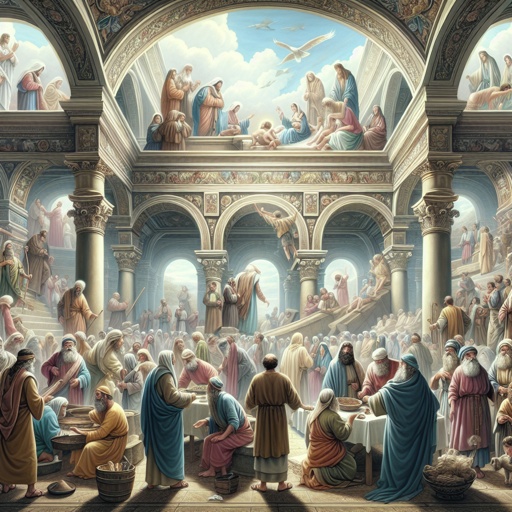
Genesis 21-32

Genesis 21-29

Genesis 21:1

Genesis 21:9

Genesis 21-30

Genesis 21-25

Genesis 21:25

Genesis 15:21

Genesis 24-21

Genesis 21:22

Genesis 21-5