The Legacy of Faith: Exploring the Lineage of Huz and Buz
“Huz his firstborn, and Buz his brother, and Kemuel the father of Aram,” — Genesis 22:21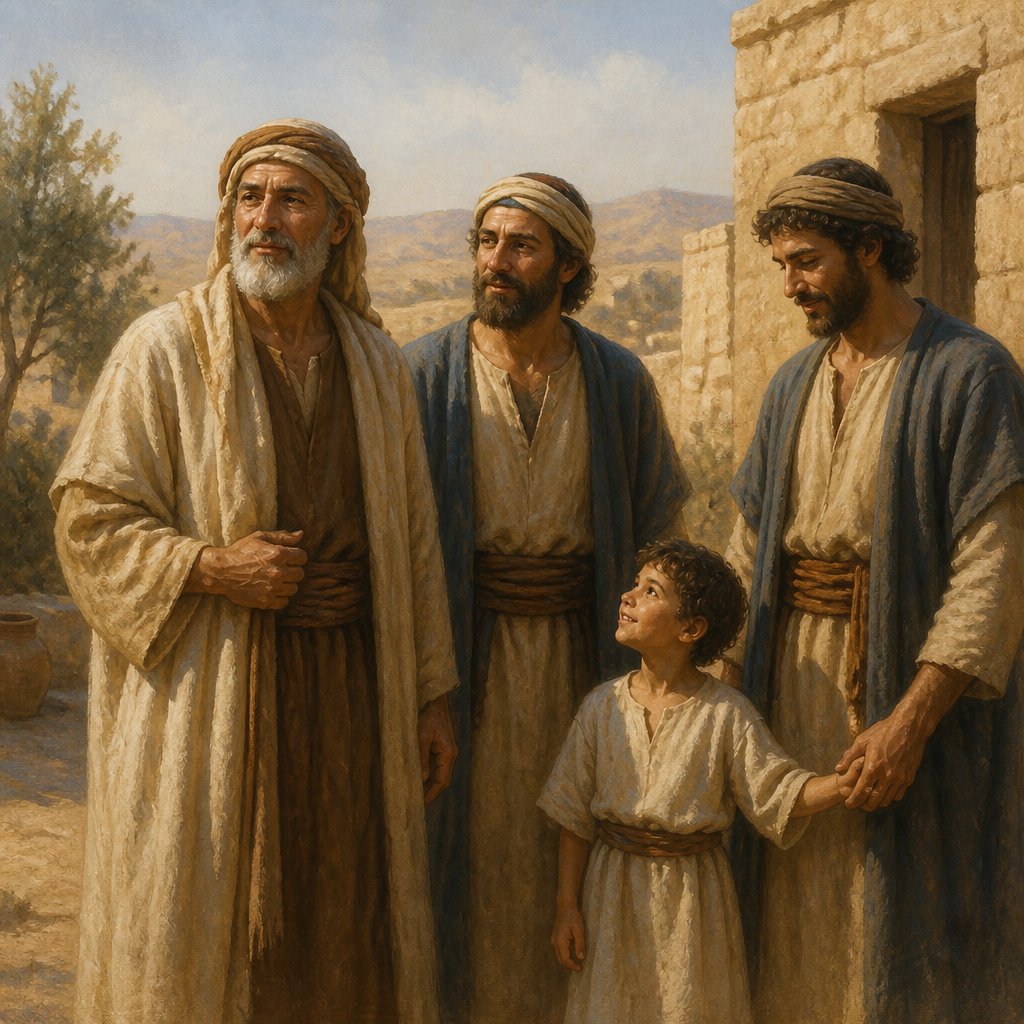
When we look at Genesis 22:21 in the King James Version (KJV) — "Huz his firstborn, and Buz his brother, and Kemuel the father of Aram" — at first glance, this verse might seem like just another genealogy, a list of names that holds little significance in our modern context. However, every name in the Bible holds a meaningful story, and the legacy of Huz and Buz invites us to reflect on our own spiritual ancestry and the impact we can make within our families and communities.
To understand the weight of this verse, we must consider the broader narrative of Genesis. Genesis is not merely a historical account; it is a foundational document of faith and the unfolding story of God's relationship with humanity. Chapters prior to Genesis 22 recount crucial events, including the promises made to Abraham, the covenant established with him, and the trials he faced. In the context of faith, we learn that these trials often bring forth blessings and a legacy that extends beyond our understanding.
Huz and Buz, as the descendants of Abraham through his brother Nahor, remind us of the importance of family in spiritual heritage. Huz signifies an enterprising spirit, which can be interpreted as one who is eager to act, while Buz can represent a family known for wisdom or inquiry. The names themselves encourage us to consider what characteristics we are instilling in our own families. Are we modeling a life of action and wisdom? Do our children see us living out our faith in tangible ways?
As we reflect on Huz and Buz, we can draw parallels to their lives alongside the biblical theme of inheritance — not just material wealth but spiritual richness as well. Each generation inherits traits, traditions, and beliefs from the previous one. What inheritance are we passing on? In the letters of Paul, we are reminded to train our children in the way they should go (Proverbs 22:6). This formative process is essential for developing a legacy that points to Christ.
Furthermore, Kemuel, the father of Aram, adds to the richness of this verse. Aram eventually becomes significant as a region associated with ancestors and tribes. In this lineage, we witness how God works through families, using them as vessels to fulfill His divine plans. Each name mentioned is a reminder of God’s sovereign hand in history, orchestrating events, establishing nations, and fulfilling promises.
In our contemporary lives, we might feel overwhelmed by uncertainty or perceive that our actions produce little effect on future generations. However, the lineage of Huz and Buz compels us to consider that each small action, prayer, and moment of faith can ripple out into the lives of our children and their descendants. We may never know how our faithfulness today can shape outcomes far beyond our vision.
Thus, this verse calls us to embrace our role as spiritual ancestors. By expressing faith actively, serving our communities, and sharing the Gospel with diligence, we plant seeds that can blossom into a rich spiritual legacy. We are reminded of 2 Timothy 1:5 KJV, wherein Paul comments on Timothy's faith — a faith that first dwelt in his grandmother Lois and his mother Eunice. This is a beautiful picture of heritage, where the faithfulness of one generation can enrich the next.
As we meditate on this significance, let our hearts ignite with a fresh desire to nurture our families in faith. Let us be intentional about creating moments that draw us closer to God together, fostering conversations that build wisdom, and planting seeds of faithfulness that will multiply through generations. Huz and Buz may have small mention, but within their lives, we see the foundation upon which we can build our own legacy — strong, steadfast, and glorifying to God.
Get our apps


Artwork for Genesis 22:21

Genesis 22-21

Genesis 22:21 - "Huz his firstborn, and Buz his brother, and Kemuel the father of Aram,"

"Huz his firstborn, and Buz his brother, and Kemuel the father of Aram," - Genesis 22:21

Genesis 21:22

Genesis 21:22 - "¶ And it came to pass at that time, that Abimelech and Phichol the chief captain of his host spake unto Abraham, saying, God is with thee in all that thou doest:"

Genesis 1:21-22 (KJVA) 21 And God created great whales, and every living creature that moveth, which the waters brought forth abundantly, after their kind, and every winged fowl after his kind: and God saw that it was good. 22 And God blessed them, saying, Be fruitful, and multiply, and fill the waters in the seas, and let fowl multiply in the earth.

Genesis 22-22

Genesis 21-21

Genesis 22:22 - "And Chesed, and Hazo, and Pildash, and Jidlaph, and Bethuel."

Matthew 9:21-22

Genesis 22

Genesis 1:21

Matthew 9:21-22

Matthew 9:21-22

Matthew 9:21-22

Matthew 9:21-22

Genesis 1:21

Genesis 22 14

Genesis 28-22

Genesis 18-22

Genesis 22-8

Genesis 22-9

Genesis 22-12

Genesis 22:15

Genesis 22-10

Genesis 22-16

Genesis 22-14

Genesis 17-22

Genesis 22-23

Genesis 22-7