The Legacy of Reumah: A Divine Tapestry of Faith
"And his concubine, whose name was Reumah, she bare also Tebah, and Gaham, and Thahash, and Maachah." - Genesis 22:24
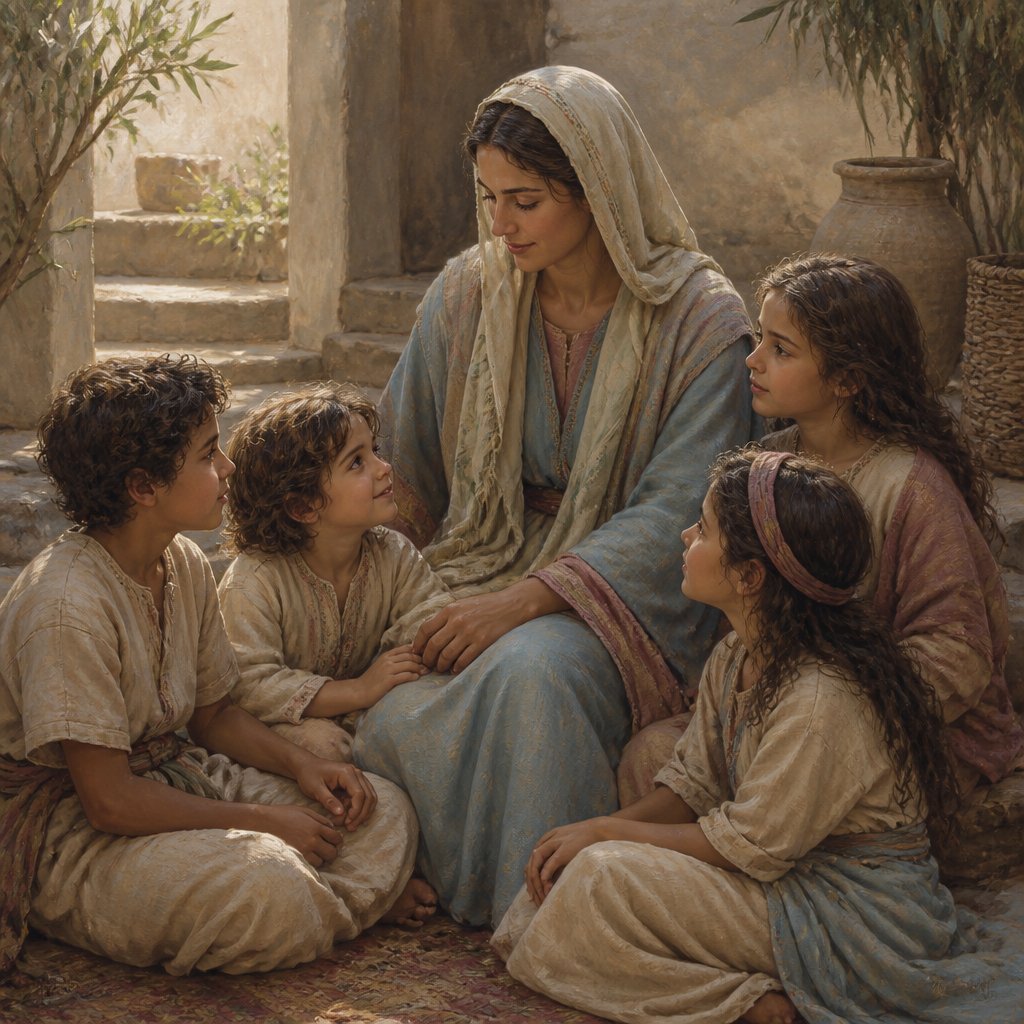
In the heart of Genesis 22, specifically verse 24, we encounter a passage that at first glance may seem like a mere footnote in the grand narrative of the patriarchal saga. The verse reads in the King James Version: "And his concubine, whose name was Reumah, she bare also Tebah, and Gaham, and Thahash, and Maachah." Hour after hour, we may read through genealogies and miss the richness contained therein. Yet, there is profound significance in this verse that beckons us to pause, reflect, and draw deeper spiritual insights.
At the very center of this verse stands Reumah, a name yielding a wealth of meaning. Her role as a concubine indicates she was a vital part of the household—the biblical equivalent of a second wife—yet often her contributions and the children she bore go unnoticed. Yet God saw her, valued her, and included her in His divine account. In today’s world, where we may sometimes feel like mere footnotes in the stories of others, Reumah's inclusion reminds us that every life matters to God.
In biblical narrative, women often play crucial yet overlooked roles. Each name listed carries with it stories, journeys, and struggles. Reumah's sons—Tebah, Gaham, Thahash, and Maachah—each denote a legacy, a continuation of life that was birthed through her. It serves to remind us that we, too, are part of a larger tapestry; our lives, though they may seem insignificant at times, contribute uniquely to God’s ongoing story.
Reumah’s seven sons, though mentioned in brief, are themselves a message. They bear names that point to various themes; for instance, Thahash means “to leap” or “to be active,” which could symbolize the vitality of life and the active role faith plays in our journey. Each name promises potential and purpose. This prompts us to consider: what legacy are we leaving for those who come after us? What ‘names’ will we bequeath to future generations?
Furthermore, looking at this passage allows us to appreciate God's sovereign hand in our lives. It emphasizes the biblical principle that God is at work in every circumstance—including the humble and the overlooked. Just as Reumah bore children who would thrive in the shadows of greater figures, we, too, have a part in God’s story that may not draw headlines yet holds immeasurable importance. Every act of love, every moment of patience, every decision to stand firm in faith contributes to a legacy of hope.
In a world filled with noise and chaos, where many long for recognition and prominence, we can draw longevity from the example of Reumah. Her life illustrates the beauty of faithfulness in hidden places. God calls us to situations where our contributions may not be seen by eyes that seek glory, but they are known by the One who created us.
The story of Reumah and her children invites us into a resting place of assurance. When we feel insignificant, we can remember that the Lord is weaving our stories into His grand narrative. Each of us has a chapter that is rich with meaning and purpose. The key lies in acknowledging that while our roles may vary—like Reumah’s—we all possess inherent worth in the eyes of our Creator.
As we reflect on the lives we lead and the legacies we build, let us embrace each moment as precious. Let us, like Reumah, find joy in our calling, be diligent in our tasks, and trust that God’s hand is upon us, crafting a legacy of faith that will surpass our days.
In conclusion, may this passage draw our hearts back to God’s family tree, understanding that each name, each life, is woven together by His sovereign purpose. Let us remain faithful, knowing that our legacy, however small it may seem, is significant in the Kingdom of God.
Want to reflect more on Genesis 22:24?
Continue your spiritual journey with Bible Chat — an AI-powered tool for exploring God's Word through conversation. Ask questions, discover connections, and deepen your understanding.
Get Our Apps


Genesis 22:24 Artwork

Genesis 22-24

Genesis 22:24 - "And his concubine, whose name was Reumah, she bare also Tebah, and Gaham, and Thahash, and Maachah."

"And his concubine, whose name was Reumah, she bare also Tebah, and Gaham, and Thahash, and Maachah." - Genesis 22:24

Genesis 24-22

Genesis 3:22-24

James 2:2-4

Genesis 24:22 - "And it came to pass, as the camels had done drinking, that the man took a golden earring of half a shekel weight, and two bracelets for her hands of ten shekels weight of gold;"

Genesis 24:24

Genesis 22-22

Genesis 22:22 - "And Chesed, and Hazo, and Pildash, and Jidlaph, and Bethuel."

Genesis 22

Genesis 24-26

Genesis 24-21

Genesis 24-7

Genesis 24-55

Genesis 3:24

Genesis 24-59

Genesis 24:60

Genesis 24-50

Genesis 24-54

Genesis 24:36

Genesis 24-61

Genesis 24-41

Genesis 25-24

Genesis 24-62

Genesis 24-56

Genesis 24-53

Genesis 24-63

Genesis 24-15

Genesis 24-66