Covenant Commitments: The Call of a Faithful Servant
"And Abraham said unto his eldest servant of his house, that ruled over all that he had, Put, I pray thee, thy hand under my thigh:" - Genesis 24:2

As we delve into Genesis 24:2, where it is written, "And Abraham said unto his eldest servant of his house, that ruled over all that he had, Put, I pray thee, thy hand under my thigh," we encounter a moment steeped in gravity and significance. This moment not only reveals the depth of Abraham’s trust in his servant but also highlights the rich theme of covenant relationships that permeate the biblical narrative.
Abraham’s act of placing the servant’s hand under his thigh was an ancient custom signifying a deeply binding oath. In this act, Abraham was not merely asking for a favor; he was invoking the solemnity of a commitment that would shape the destiny of his house and family. We see here a profound commitment to upholding God's plan for his lineage. After all, Abraham was tasked with the monumental promise from God to be the father of many nations, and the continuation of this promise hinged on finding the right wife for Isaac, his son. This divine orchestration stands as a testament to how personal and communal destinies intertwine through faithful service.
As we reflect on Abraham’s relationship with his servant, it beckons the question of our own responsibilities. Are we, like Abraham, willing to pass on a legacy? When faced with significant decisions, do we seek the counsel of those who know us and who we trust? For the servant here represents more than just an employee; he is a steward of Abraham’s trust. He is tasked with carrying out a mission that impacts generations. What a privilege, and what a weighty responsibility!
In our lives, we may not all have servants at our command, but we each have influence and relationships that matter. Think about the people around you—family, friends, coworkers. What commitment have you made to those in your sphere of influence? Are you a faithful steward of the talents and resources that God has entrusted to you? As with the servant, any mission we undertake holds incredible importance when done in faithfulness to God’s calling.
Abraham’s faith shines through his conversation with the servant. Even before the servant sets out, there is an assurance that God will guide him. Abraham does not leave the servant devoid of direction; he instructs him to go to his own kindred, highlighting the importance of not marrying outside of their beliefs and heritage. This reflects a profound understanding of covenant relationships—not just with God but with one another, emphasizing the need for unity in purpose and faith.
Moreover, the act of placing the servant's hand under his thigh points to how our commitments carry weight. As believers today, we are invited to make similar commitments. In a world filled with transient relationships, dare we stand firm? Indeed, we are invited into a covenant relationship with God through Jesus Christ, who calls us faithful servants in His kingdom. How we respond to that calling shapes not only our lives but also the lives of others who look to us for example.
As we meditate on Genesis 24:2, we must ask ourselves: What does it mean to be a servant in God’s house today? Are we ready to put our hand under the thigh of our commitment, acknowledging the seriousness of our responsibilities? Just as Abraham empowered his servant to fulfill God’s promise, we must empower those around us and respond to God’s call with gratitude and dedication.
In summation, this verse invites us into a deeper understanding of commitment—both to God and to those we serve. It reminds us that faithful service is a profound act of love and obedience, echoing through the ages. Let us pray for the strength to be faithful servants, committed not just in word but also in action, so that we too can leave a legacy rooted in His abundant grace.
Want to reflect more on Genesis 24:2?
Continue your spiritual journey with Bible Chat — an AI-powered tool for exploring God's Word through conversation. Ask questions, discover connections, and deepen your understanding.
Get Our Apps


Genesis 24:2 Artwork

Genesis 24-2

Genesis 24:2 - "And Abraham said unto his eldest servant of his house, that ruled over all that he had, Put, I pray thee, thy hand under my thigh:"
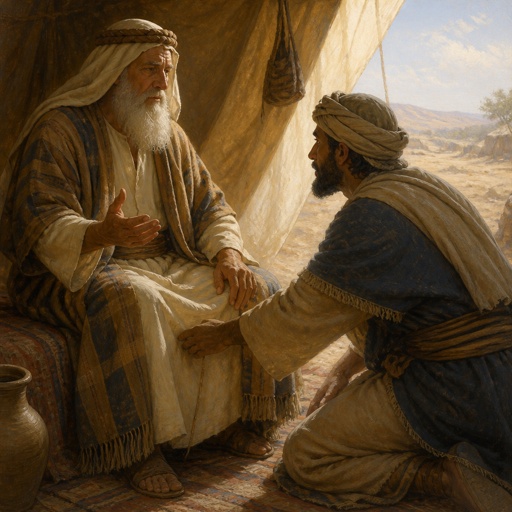
"And Abraham said unto his eldest servant of his house, that ruled over all that he had, Put, I pray thee, thy hand under my thigh:" - Genesis 24:2

Genesis 24:24

Genesis 2:24 - "Therefore shall a man leave his father and his mother, and shall cleave unto his wife: and they shall be one flesh."

Genesis 24-26

Genesis 24-21

Genesis 24-7

Genesis 24-55

Genesis 3:24

Genesis 24-59

Genesis 24:60

Genesis 24-50

Genesis 24-54

Genesis 24:36

Genesis 24-61

Genesis 24-41

Genesis 25-24

Genesis 24-62

Genesis 24-56

Genesis 24-53

Genesis 24-63

Genesis 24-15

Genesis 24-66

Genesis 24-48

Genesis 24-43

Genesis 21-24

Genesis 19:24

Genesis 24:28

Genesis 24-17