Living in Presence: The Legacy of Ishmael
“And they dwelt from Havilah unto Shur, that is before Egypt, as thou goest toward Assyria: and he died in the presence of all his brethren.” — Genesis 25:18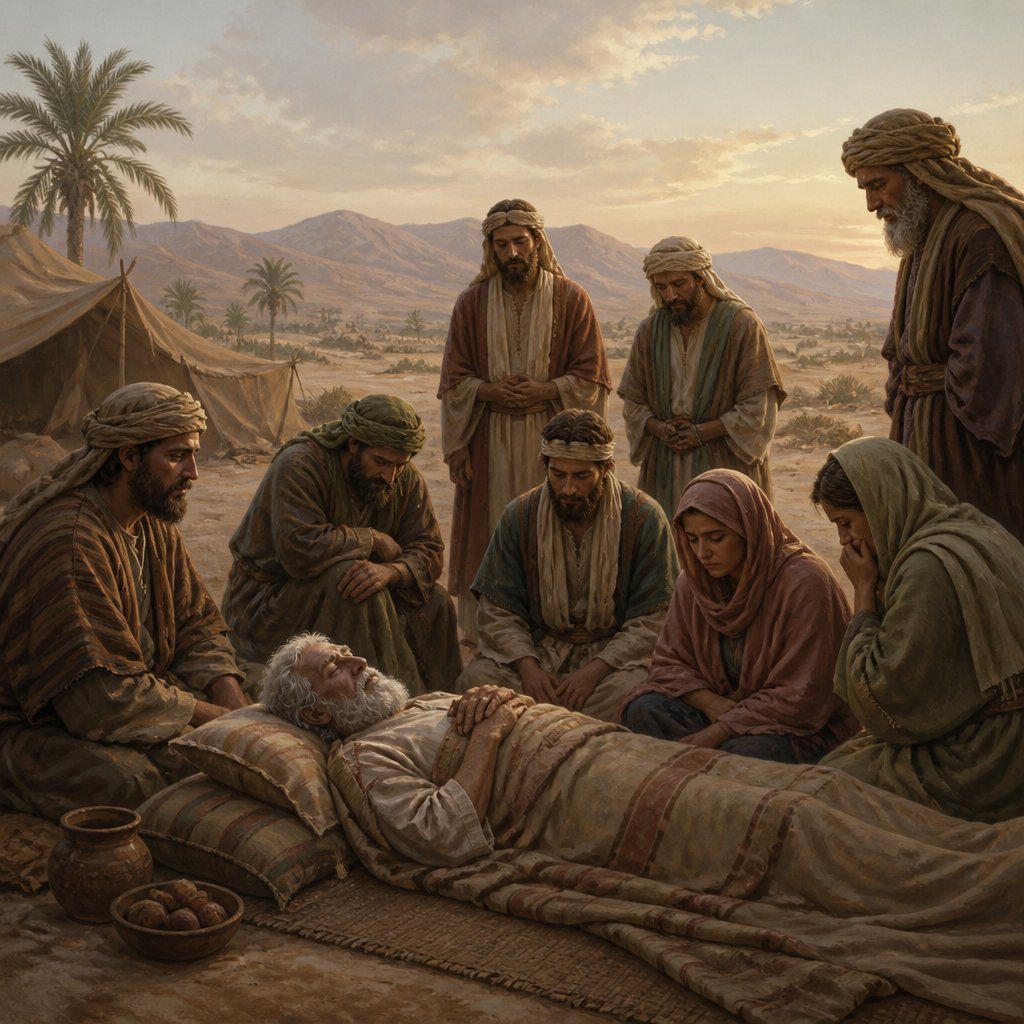
In the book of Genesis, chapter 25, verse 18, the King James Version records, "And they dwelt from Havilah unto Shur, that is before Egypt, as thou goest toward Assyria: and he died in the presence of all his brethren." This passage, while seemingly straightforward, encapsulates profound themes of presence, legacy, and the relationships we forge throughout our lives.
To fully appreciate the weight of this verse, we need to delve into the context surrounding Ishmael, the son of Abraham. Ishmael is a complex figure, often overshadowed by his half-brother Isaac. Born from the union of Abraham and Hagar, Sarah's Egyptian maidservant, Ishmael's life was marked by separation and conflict. When Sarah finally bore Isaac, tensions arose within the family, leading to Hagar and Ishmael being cast out into the wilderness. Yet, despite their hardships, God’s promise and provision remained over Ishmael. It was there in the desert that God assured Hagar that her son would become a great nation (Genesis 21:18), and this prophecy would come to fruition.
This verse speaks to the geographical and relational dwellings of Ishmael's descendants, who lived between significant territories—Havilah and Shur—effectively placing them in a vital crossroads of trade and culture, before the mighty nation of Egypt and the expansive region of Assyria. The choice of words, "dwelled from Havilah unto Shur," symbolizes more than a physical location; it embodies a journey, a place of being, where familial ties extend across generations.
As we reflect upon this verse, it invokes a call to consider our own dwelling places—not just the physical locales we inhabit but the relational landscapes we cultivate with our loved ones. The phrase "died in the presence of all his brethren" is especially poignant. Ishmael's life was marked by moments of isolation and separation from the broader family unit, yet he concludes his earthly journey surrounded by his brothers. There is a powerful testament in the notion of dying in the presence of family. It highlights the restorative nature of relationships even after a life woven with complexity and pain.
This invites us to ponder: how do we navigate our own relationships? Do we seek to mend bridges and create spaces of belonging, or do we allow divisions to fester? The presence of family can be a source of much needed support and love, and despite what life may have dealt us, we can choose to live in a manner that fosters connection and understanding.
Moreover, the geographic context of this verse symbolizes the places where we ‘dwell’ spiritually and emotionally. Just as Ishmael's descendants lived in a land imbued with purpose, so too should we seek out places—both literal and figurative—that nurture our faith and foster community. The presence of God is a constant, a divine companionship that grounds us wherever we find ourselves. Psalms 139:7-10 eloquently remind us of this: "Whither shall I go from thy spirit? Or whither shall I flee from thy presence? If I ascend up into heaven, thou art there: if I make my bed in hell, behold, thou art there. If I take the wings of the morning, and dwell in the uttermost parts of the sea; even there shall thy hand lead me, and thy right hand shall hold me."
To dwell from Havilah unto Shur signifies that our lives too have a pilgrimage where we find our identities and unique paths. The key is that, like Ishmael, we remain open to the Divine presence even in our wanderings. His death in the presence of his brethren can be a reminder not only of the importance of reconciliation with those around us but also an affirmation that we are never truly alone in this journey.
As we meditate upon this verse, let us embrace the call to foster relationships and dwell in Christ's love, remembering that despite the complexities of life, we can leave behind a legacy of presence, compassion, and community—much like Ishmael, who despite his challenges, ended his life surrounded by family.
Get our apps


Artwork for Genesis 25:18

Genesis 25-18

Genesis 25:18 - "And they dwelt from Havilah unto Shur, that is before Egypt, as thou goest toward Assyria: and he died in the presence of all his brethren."
"And they dwelt from Havilah unto Shur, that is before Egypt, as thou goest toward Assyria: and he died in the presence of all his brethren." - Genesis 25:18

Genesis 18:25

Genesis 18-25

Genesis 18:25 - "That be far from thee to do after this manner, to slay the righteous with the wicked: and that the righteous should be as the wicked, that be far from thee: Shall not the Judge of all the earth do right?"

Genesis 25:25
Genesis 18-18

Genesis 1:1-25

Genesis 1:1-25

Genesis 1:1-25

John 18:25

Genesis 25-24

Genesis 25-2

Genesis 25-7

Genesis 25-23

Genesis 25-14

Genesis 50:25

Genesis 25:1

Genesis 26:25

Genesis 25-15

Genesis 21:25

Genesis 25-13

Genesis 25-26

Genesis 50:25

Genesis 25-6

Genesis 2:25

Genesis 25-16

Genesis 25-32

Genesis 25-10