The Stew that Changed a Birthright
"And Jacob sod pottage: and Esau came from the field, and he was faint:" - Genesis 25:29
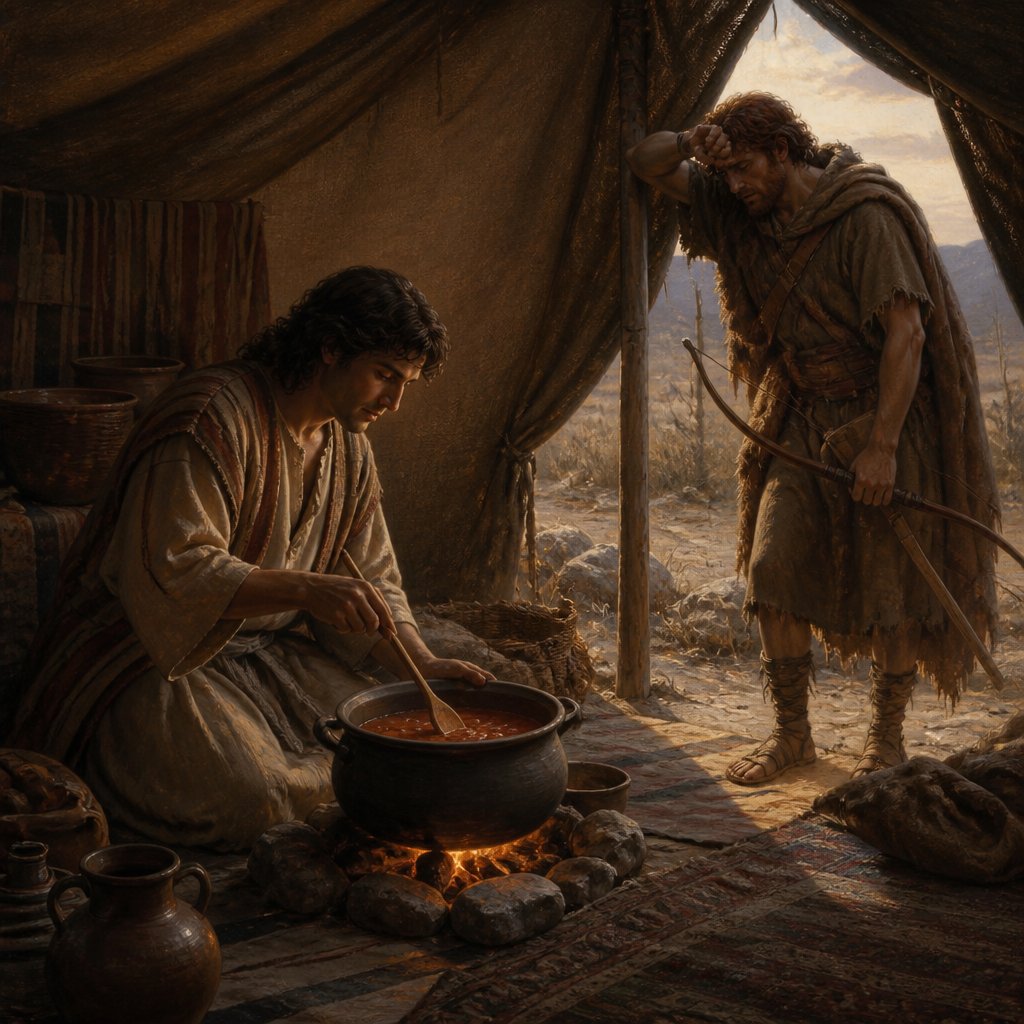
In the vast narrative of the Book of Genesis, the story of Jacob and Esau is a compelling tale that exemplifies the complexities of human desire, the depth of familial relationships, and the weight of choices that echo throughout generations. Genesis 25:29 states, “And Jacob sod pottage: and Esau came from the field, and he was faint.” This single verse encapsulates a profound moment, a seeming trivial act of cooking that carries monumental implications for the future of two brothers and, indeed, the nation of Israel.
As we delve into this verse, we first encounter Jacob, the second-born son of Isaac and Rebekah, engaging in the simple task of cooking pottage—a hearty stew typically made from lentils or grains. The significance of this act goes beyond mere sustenance; it reflects Jacob's shrewdness and awareness of the needs of his brother. The KJV uses the term "sod" which indicates that Jacob was not merely cooking; he was preparing something that could entice and satisfy. This preparation highlights a crucial aspect of Jacob’s character—his ability to provide in moments of need, albeit through manipulation.
Enter Esau, the firstborn, who comes in from the field exhausted and famished. The contrast between the two brothers becomes evident: Esau is the rugged hunter, accustomed to the physical demands of the wilderness, while Jacob is depicted as the quiet individual whose skills lie in the domestic sphere. When Esau approaches Jacob, weakened from his exertions, he is vulnerable—a condition that Jacob exploits. Esau’s physical weakness symbolizes a deeper spiritual and emotional vulnerability that often accompanies unbridled desires and impetuousness.
Esau’s need for immediate gratification contrasts sharply with Jacob’s foresight into the value of the birthright. In a moment of desperation, Esau trades away his birthright for a bowl of stew. This decision, though seemingly trivial at the time, illustrates the profound consequences of impulsive choices. The birthright, a symbol of legacy, privilege, and responsibility, represents the spiritual inheritance associated with being the firstborn in a Hebrew family.
How often do we find ourselves in similar situations? We are faced with choices that seem insignificant, yet they can redirect our destinies. Many succumb to the allure of instant fulfillment—a tempting offer that ignores the long-term implications. Esau’s plight serves as a potent reminder of the dangers of prioritizing immediate needs over eternal matters. In our own lives, how often do we trade our spiritual inheritance and identity for momentary pleasures?
Moreover, we see the providence of God interwoven within this narrative. From the very beginning, God had revealed that the elder would serve the younger (Genesis 25:23). This prophetic word highlights that God’s purposes will prevail, even through flawed human choices. Just as Jacob’s actions appeared deceitful, it underlines that God can use our missteps to fulfill His divine plan. It raises the comforting truth that our past mistakes do not disqualify us from God’s grace and plan.
In conclusion, Genesis 25:29 invites us to reflect on our choices and their consequences. Are we led by immediate desires or guided by faith in God’s promises? As we ponder Esau and Jacob’s encounter, let us examine our lives and ask ourselves, what “pottage” are we trading our birthright for? May we seek to prioritize the eternal over the temporary, holding fast to the promises of God with the understanding that our decisions carry weight in the divine narrative He is weaving through time.
Want to reflect more on Genesis 25:29?
Continue your spiritual journey with Bible Chat — an AI-powered tool for exploring God's Word through conversation. Ask questions, discover connections, and deepen your understanding.
Get Our Apps


Genesis 25:29 Artwork

Genesis 25:29 - "And Jacob sod pottage: and Esau came from the field, and he was faint:"
"And Jacob sod pottage: and Esau came from the field, and he was faint:" - Genesis 25:29

Genesis 29:25 - "And it came to pass, that in the morning, behold, it was Leah: and he said to Laban, What is this thou hast done unto me? did not I serve with thee for Rachel? wherefore then hast thou beguiled me?"

Proverb 29:25

Proverb 29:25

Proverb 29:25

Genesis 25:25

Genesis 29:29 - "And Laban gave to Rachel his daughter Bilhah his handmaid to be her maid."

Genesis 29-2

Genesis 29-6

Genesis 29-5

Genesis 42:29

Genesis 29-7

Genesis 29:1

Genesis 18-29

Genesis 26:29

Genesis 29-3

Genesis 19-29

Genesis 29-8

Genesis 29-4

Genesis 21-29

Genesis 24-29

Genesis 1:1-25

Genesis 1:1-25

Genesis 1:1-25

Genesis 29:16-35

Genesis 29:15-30

Genesis 25-18

Genesis 25-24

Genesis 25-2