The Legacy of Keturah: Embracing Our Spiritual Heritage
"And the sons of Midian; Ephah, and Epher, and Hanoch, and Abida, and Eldaah. All these were the children of Keturah." - Genesis 25:4
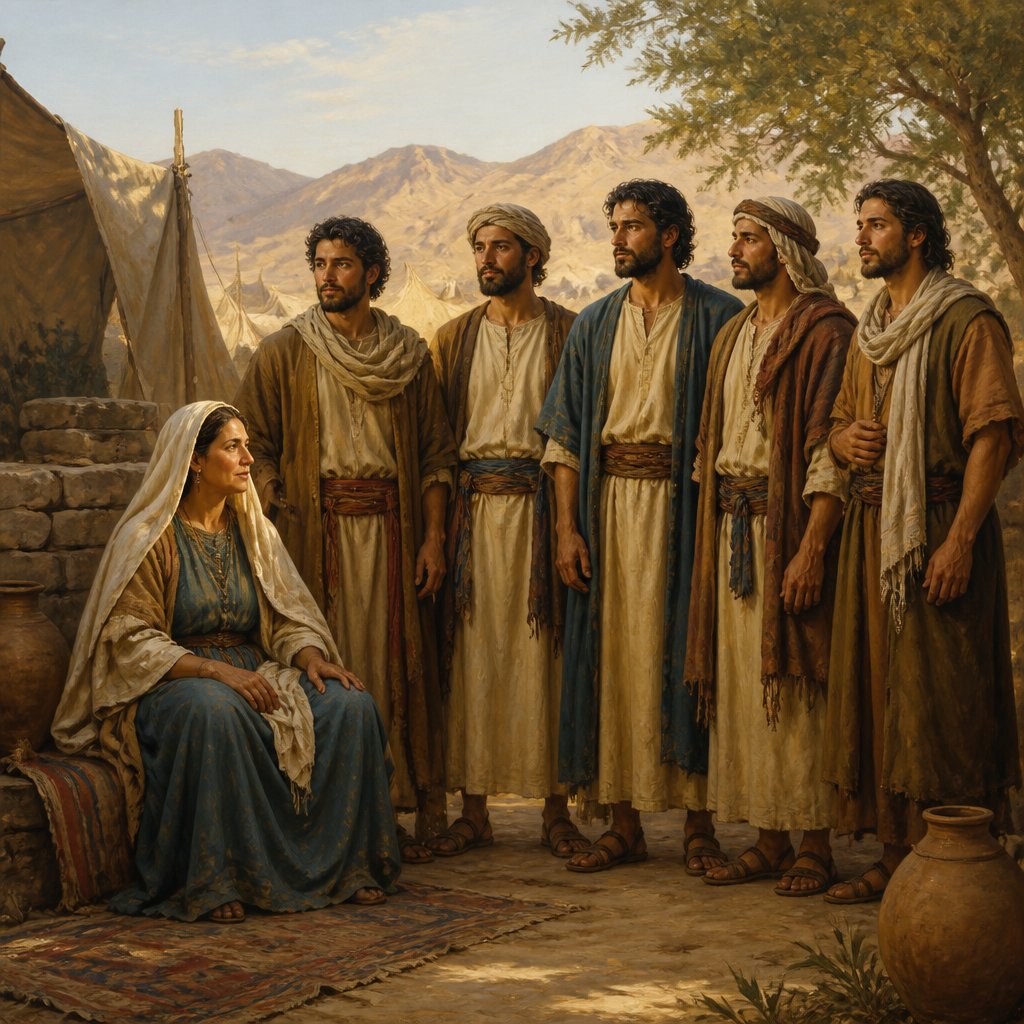
In Genesis 25:4, we see a seemingly simple listing: "And the sons of Midian; Ephah, and Epher, and Hanoch, and Abida, and Eldaah. All these were the children of Keturah." On the surface, this may appear to be merely a genealogical record, yet within these names lies a profound significance that speaks to God's enduring promise of lineage, legacy, and blessing.
Keturah, the wife of Abraham after Sarah's death, represents a second chapter in Abraham's life. Although Sarah bore Isaac, it was through Keturah that Abraham had more sons — the Midianites are often overlooked in narratives dominated by Isaac and Jacob. The inclusion of Keturah's children in the biblical text indicates that God’s promise to Abraham that he would be the father of many nations was being fulfilled. Keturah's sons were not outside of God's plan, but rather part of the vast tapestry of God's creative design.
The names of Keturah's sons—Ephah, Epher, Hanoch, Abida, and Eldaah—each carry their own significance.
- Ephah can mean "to be in a measure," which reminds us that God measures our lives not just by time, but by the depth and breadth of our character.
- Epher, rooted in the meaning of "fawn or young creature," speaks to the potential for youth to become strength in the world.
- Hanoch, meaning "dedicated," invites us to consider our commitment to God and how we dedicate our lives to Him.
- Abida translates to "my father is known," which underscores the importance of identity and the legacy we pass down through generations.
- Eldaah means "God has known," reminding us of His omniscience and the intimate relationship He desires with us.
As we ponder these names, we must also reflect on their relevance to our own lives. Each name represents not only offspring of a patriarch but also a promise fulfilled. They encourage us to explore our own familial and spiritual legacies. We have a choice in how we forge our paths, and like Keturah’s sons, we are called to contribute to the divine narrative — one that transcends generations.
In a world often focused on individualism, the story of Keturah and her sons beckons us to remember the importance of community and the interconnectedness of our lives. Each of us carries the weight of family history; both the joys and the struggles, the victories and the failures. We can leverage these experiences to guide our own spiritual journey.
The existence of Keturah and her sons affirms that God is not limited by one lineage, nor is His promise confined to certain individuals. His favor extends broadly; He sees the faithful wherever they are, whether they are direct descendants of the covenant given to Abraham or embraced later into the fold. This is echoed profoundly in Galatians 3:28, where Paul tells us that in Christ, there is neither Jew nor Greek, highlighting the inclusivity of God's family. We are all children of the Promise, united not by lineage alone but by faith.
As we reflect upon Keturah and the blessings of her children, we are challenged to engage with our own lineage—spiritual and familial. What legacy are we leaving? How are we measuring our lives? As we nurture and grow our faith, we embrace the call to be fruitful and multiply in the spiritual realm. Each interaction, every prayer, and all our acts of service extend God's legacy through us, just like the children of Keturah.
May we step boldly into the roles God has laid before us, remembering that each of us, like Keturah’s sons, plays a critical part in God’s grand story. Let us be dedicated, let us reflect our identities rooted in Him, and let us live in awareness that we are known by the Father who calls us His own.
Want to reflect more on Genesis 25:4?
Continue your spiritual journey with Bible Chat — an AI-powered tool for exploring God's Word through conversation. Ask questions, discover connections, and deepen your understanding.
Get Our Apps


Genesis 25:4 Artwork

Genesis 25-4

Genesis 25:4 - "And the sons of Midian; Ephah, and Epher, and Hanoch, and Abida, and Eldaah. All these were the children of Keturah."
"And the sons of Midian; Ephah, and Epher, and Hanoch, and Abida, and Eldaah. All these were the children of Keturah." - Genesis 25:4

Genesis 25:25

Genesis 4:25 - "¶ And Adam knew his wife again; and she bare a son, and called his name Seth: For God, said she, hath appointed me another seed instead of Abel, whom Cain slew."

Genesis 1:1-25

Genesis 1:1-25

Genesis 1:1-25

Genesis 25-18

Genesis 25-24

Genesis 25-2

Genesis 25-7

Genesis 25-23

Genesis 25-14

Genesis 50:25

Genesis 25:1

Genesis 26:25

Genesis 25-15

Genesis 21:25

Genesis 25-13

Genesis 25-26

Genesis 50:25

Genesis 25-6

Genesis 2:25

Genesis 18:25

Genesis 25-16

Genesis 25-32

Genesis 25-10

Genesis 18-25

Genesis 25-8