The Sacred Protection of God’s Promises
"And Abimelech charged all his people, saying, He that toucheth this man or his wife shall surely be put to death." - Genesis 26:11
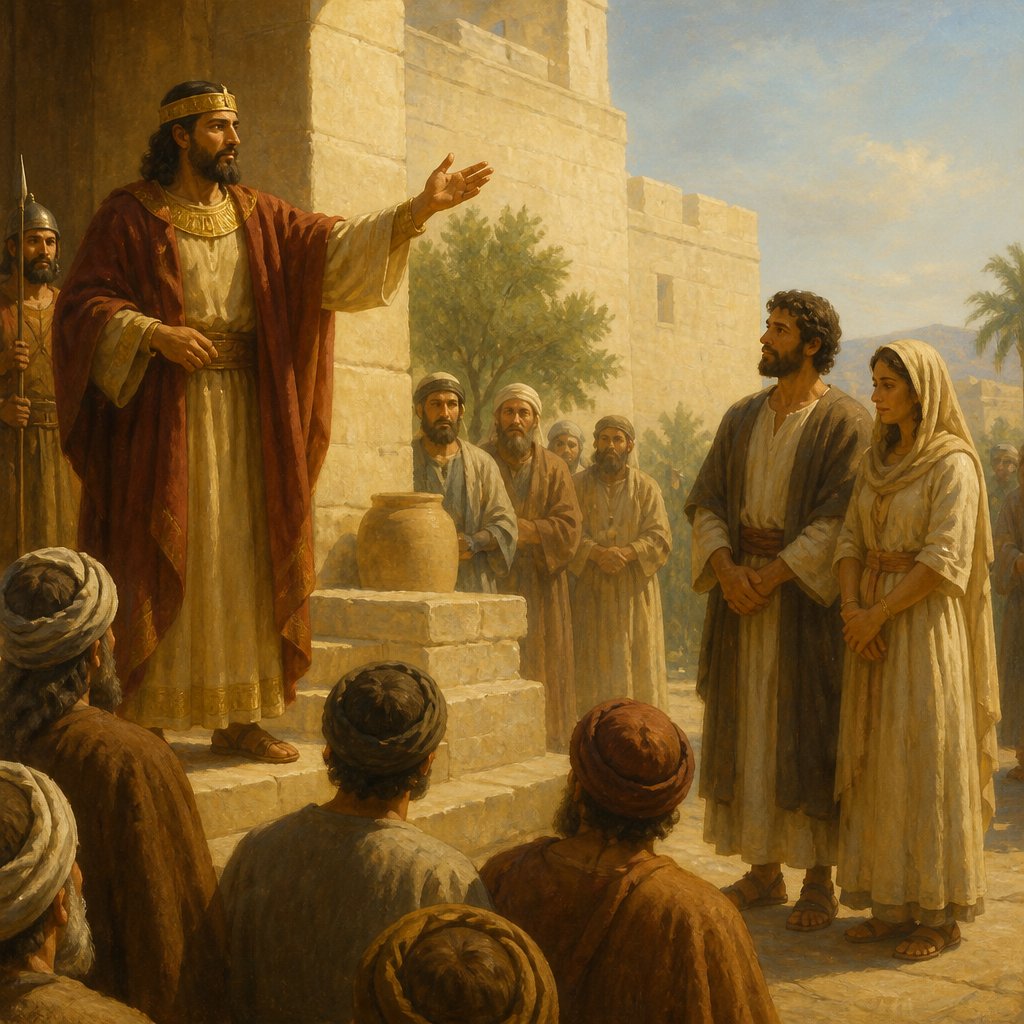
In the intricate tapestry of the Biblical narrative, Genesis 26:11 stands out as a profound declaration of divine protection: "And Abimelech charged all his people, saying, He that toucheth this man or his wife shall surely be put to death." This verse encapsulates not only the gravity of Abimelech’s charge but also the overarching theme of God’s safeguarding presence in the lives of His chosen ones.
To fully appreciate this moment in scripture, we must understand the context. Isaac, the son of Abraham, had settled in Gerar amidst a drought and famine. Fearing for his life, Isaac had deceptively introduced Rebekah as his sister, in a similar fashion to what his father had done before in Egypt. What is critical to note here is the consequence of that deception, which could have led to dire consequences both for Isaac and for Rebekah.
In the ancient Near Eastern context, the purity and safety of one’s household, especially concerning women, was of utmost importance. Abimelech, the king of the Philistines, upon realizing that Rebekah was indeed Isaac's wife, went further than mere condemnation of actions; he issued a strong protective decree. The king’s declaration reveals a remarkable respect for the sanctity of marriage, a concept deeply rooted in God’s design for relationships. More than a mere human law, Abimelech's command illustrates God’s intervention through the structures of power to shield His covenant people.
This incident encourages us to reflect on our own lives, particularly regarding the sanctity of commitments we make. Today, the world is awash with ideas that diminish the values we hold dear. Yet, the narrative of Isaac and Abimelech serves as a poignant reminder that God not only expects us to uphold our marriages but also fiercely protects those vows. As followers of Christ, we are called to hold fast to the truth of our relationships and the promises we make.
Furthermore, God's provision manifests through unexpected channels. Abimelech was not an Israelite but a Philistine king—a stark reminder that God’s goodness is not confined to those who are part of His immediate family. He uses diverse individuals and situations to bring about His purpose. Consider those in your life who may not share your beliefs yet might play a role in God’s plans for your protection or advancement. This invites us to embrace faith in God’s sovereignty, acknowledging that His hand is active in the twists and turns of our stories, guiding us to safety and assurance even amidst uncertainty.
Moreover, we should recognize the profound responsibility that comes with God’s protection. With Abimelech’s decree came an implicit understanding that to harm Isaac or Rebekah would bring severe consequences. Likewise, as believers, we embody a profound witness to those around us. Our lives testify to God’s faithfulness, and as we hold to our commitments, we reflect the love and integrity of Christ. When we act in ways that honor our relationships and uphold God's values, we become conduits of His spirit, influencing others in ways we may not fully understand.
In a world often fraught with challenges to our relationships and integrity, let us take comfort in this verse. Let us remember that God watches over those who are His. He issues protective commands not just through kings but through the Holy Spirit, through His Word, and through one another. We must challenge ourselves to be diligent in safeguarding our commitments and our communities. May we, like Isaac, walk forward in faith, secure in the knowledge that when we trust in God, we are shielded under His mighty hand.
Want to reflect more on Genesis 26:11?
Continue your spiritual journey with Bible Chat — an AI-powered tool for exploring God's Word through conversation. Ask questions, discover connections, and deepen your understanding.
Get Our Apps


Genesis 26:11 Artwork
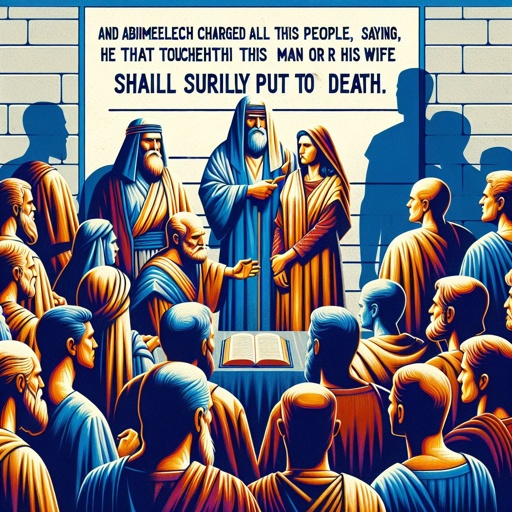
Genesis 26:11 - "And Abimelech charged all his people, saying, He that toucheth this man or his wife shall surely be put to death." respectful, symbolic bible verse art
"And Abimelech charged all his people, saying, He that toucheth this man or his wife shall surely be put to death." - Genesis 26:11

Genesis 11:26 - "And Terah lived seventy years, and begat Abram, Nahor, and Haran."
"And Terah lived seventy years, and begat Abram, Nahor, and Haran." - Genesis 11:26

Genesis 1:26

Genesis 1:26

Genesis 1:26

Genesis 1:26

Genesis 24-26

Genesis 26:35

Genesis 50:26

Genesis 26:25

Genesis 25-26

Genesis 21-26

Genesis 50:26

Genesis 50:26

Genesis 26:29

Genesis 18-26

Genesis 19-26

Genesis 26:18

Genesis 50:26

Genesis 26:9

Genesis 17-26

Genesis 26 1 famine

Genesis 26:6 - "¶ And Isaac dwelt in Gerar:"

genesis 26:1-35

Genesis 26:26 - "¶ Then Abimelech went to him from Gerar, and Ahuzzath one of his friends, and Phichol the chief captain of his army."

Genesis 42:26 - "And they laded their asses with the corn, and departed thence."

Numbers 11:16-26

Genesis 36:26 - "And these are the children of Dishon; Hemdan, and Eshban, and Ithran, and Cheran."