The Sacred Trust: Lessons from Rebekah's Dialogue
"¶ And Rebekah spake unto Jacob her son, saying, Behold, I heard thy father speak unto Esau thy brother, saying," - Genesis 27:6

In the great narrative of Genesis, the story of Rebekah, Jacob, and Esau serves as a powerful illustration of the complexities of family dynamics, divine purpose, and the consequences of our actions. Genesis 27:6 states, "And Rebekah spake unto Jacob her son, saying, Behold, I heard thy father speak unto Esau thy brother, saying,". This verse may seem deceptively simple at glance, but within it lies a rich array of lessons and the nuances of human relationships that challenge our understanding of faith, trust, and divine orchestration.
Rebekah, a woman of great faith and foresight, finds herself in a moment of decisive action driven by the prophetic promise she received before Jacob and Esau were born. The Lord had told her that the elder (Esau) would serve the younger (Jacob) (Genesis 25:23). This divine declaration shaped her actions, but it also led her into a web of deception that would have profound implications for her family.
In the preceding verses, we learn of Isaac’s intention to bless Esau, his firstborn, unaware of God’s plan. Rebekah’s overhearing of this conversation propels her into a voice of intervention. "Behold, I heard thy father speak." These are not merely words to Jacob; they are a call to action, a moment where the intentions of man clash with the sovereign purposes of God.
The first lesson to draw from this passage is the imperative of listening. Rebekah exemplifies the importance of attentive ears, not just to the conversations around us but to the voice of God whispering through the events of our lives. How often do we find ourselves preoccupied with our desires or conflicts that we miss the prompting of the Holy Spirit? Rebekah acted because she was perceptive; she was tuned in to the most pressing need of the moment: the fulfillment of God’s promise.
Moreover, Rebekah's relationship with Jacob reveals the deep bond that can exist between a parent and child when loyalty and belief in God's promises are shared. Yet this trust also brings with it a cautionary tale about manipulation and deceit. Rebekah, acting out of love, devised a plan that would ultimately jeopardize her family’s unity. It raises a poignant question: do we sometimes act in haste, motivated by fear or anxiety over God's promises? Are we willing to resort to unethical means to secure what we believe God has ordained?
This encounter challenges us to evaluate our motivations. While Rebekah may have acted with the right intent, her tactics were far from honorable. Jacob, influenced by his mother, goes along with the deception, leading to a manipulation that shatters family bonds. By the end of this chapter, we see a fractured family with Jacob fleeing, fearing for his life. The consequences of their actions—a common theme throughout Scripture—serve as significant reminders that our choices resonate beyond the immediate moment.
Ultimately, this story evidences the complexity of God’s design for humanity. God’s purposes prevailed despite human faults. He had declared that the older would serve the younger, and He worked through the chaos of human decisions to fulfill His will. Our human failings do not thwart Him. Instead, they can become the very means through which His plans unfold, albeit sometimes through pain and separation.
In conclusion, as we reflect on Genesis 27:6 and the ensuing drama, let us take heed of Rebekah’s attentiveness, pray for the wisdom to discern God's will, and seek to align our actions with His truth rather than taking matters into our own hands. May we, like Rebekah, be vessels of God's plans, but unlike her, let us pursue His purposes with integrity and faithfulness, trusting in His timing and methods.
Want to reflect more on Genesis 27:6?
Continue your spiritual journey with Bible Chat — an AI-powered tool for exploring God's Word through conversation. Ask questions, discover connections, and deepen your understanding.
Get Our Apps


Genesis 27:6 Artwork

Genesis 27:6 - "¶ And Rebekah spake unto Jacob her son, saying, Behold, I heard thy father speak unto Esau thy brother, saying,"

Genesis 27:6 KJV And Rebekah spake unto Jacob her son, saying, Behold, I heard thy father speak unto Esau thy brother, saying,

Genesis 27:6 KJV And Rebekah spake unto Jacob her son, saying, Behold, I heard thy father speak unto Esau thy brother, saying,
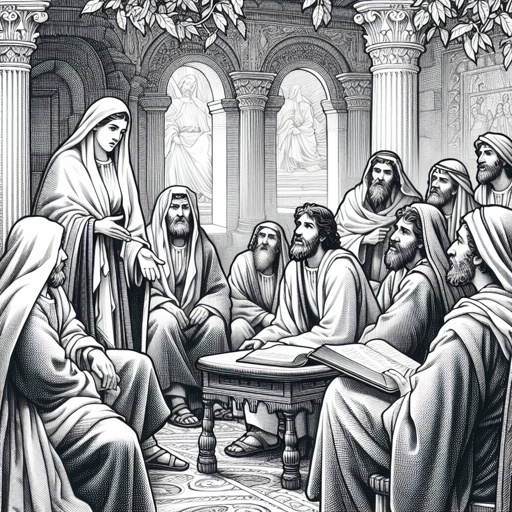
Genesis 27:6 KJV And Rebekah spake unto Jacob her son, saying, Behold, I heard thy father speak unto Esau thy brother, saying,

Genesis 27:6 KJV And Rebekah spake unto Jacob her son, saying, Behold, I heard thy father speak unto Esau thy brother, saying,

"¶ And Rebekah spake unto Jacob her son, saying, Behold, I heard thy father speak unto Esau thy brother, saying," - Genesis 27:6

Genesis 27:5

Genesis 27:32

Genesis 25-27

Genesis 17-27

Genesis 18-27

Genesis 24-27

Genesis 21-27

Genesis 19-27

Genesis 10:27 - "And Hadoram, and Uzal, and Diklah,"

Genesis 27:10 KJV

Genesis 27:18-19

Genesis 27:1-3

Genesis 36:27 - "The children of Ezer are these; Bilhan, and Zaavan, and Akan."

luke 6: 27

Job 27:6

Luke 6: 27-38

"And Hadoram, and Uzal, and Diklah," - Genesis 10:27

Luke 6:27-38

Numbers 27:6 - "¶ And the LORD spake unto Moses, saying,"

Genesis 38:27 - "¶ And it came to pass in the time of her travail, that, behold, twins were in her womb."

Genesis 27:44 - "And tarry with him a few days, until thy brother's fury turn away;"

Genesis 32:27 - "And he said unto him, What is thy name? And he said, Jacob."

Genesis 27:27 - "And he came near, and kissed him: and he smelled the smell of his raiment, and blessed him, and said, See, the smell of my son is as the smell of a field which the LORD hath blessed:"

Proverbs 27:6 - "Faithful are the wounds of a friend; but the kisses of an enemy are deceitful."