The Timing of Divine Providence
"And it came to pass, as soon as Isaac had made an end of blessing Jacob, and Jacob was yet scarce gone out from the presence of Isaac his father, that Esau his brother came in from his hunting." - Genesis 27:30
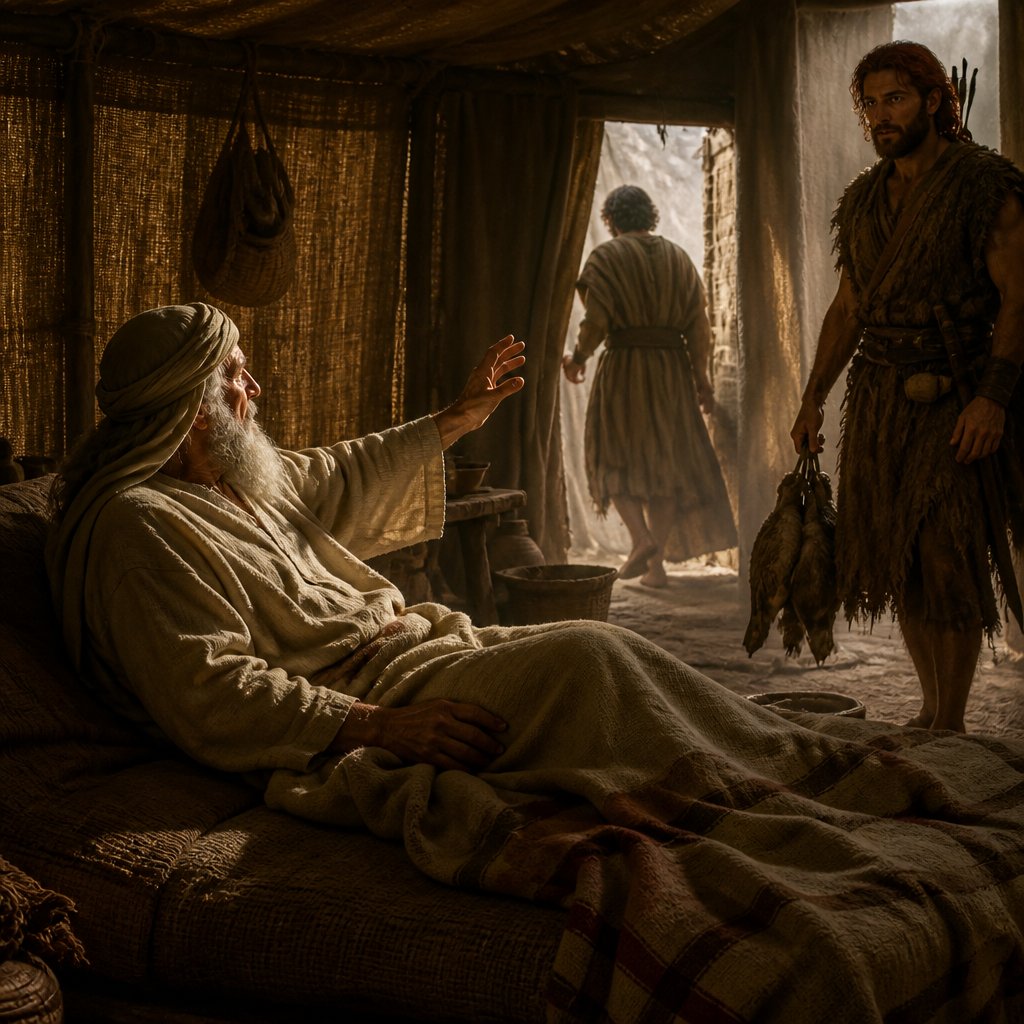
In the narrative found in Genesis 27:30, we witness a pivotal moment in the lives of Isaac, Jacob, and Esau that reverberates across generations. The verse reads, "And it came to pass, as soon as Isaac had made an end of blessing Jacob, and Jacob was yet scarce gone out from the presence of Isaac his father, that Esau his brother came in from his hunting." This verse encapsulates much more than a mere chronological event; it presents us with insights into the complexities of human relationships, the sovereignty of God, and the intricate workings of divine providence.
At first glance, it may appear that Jacob's stealthy acquisition of the blessing from Isaac was simply a tale fraught with deception—the cleverness of a fondling son and the blindness of an aged father. Jacob's name itself means 'supplanter', and throughout the story, we often view him through the lens of a trickster. However, amidst the moral ambiguity stands an overarching truth: God’s will prevails, even through human frailty and flawed schemes.
Isaac had intended to bless his elder son, Esau, the hairy hunter who thrived in the outdoors. However, unbeknownst to Isaac, God had previously declared that the elder would serve the younger (Genesis 25:23). Herein lies a central theme of the text: God's purposes often transcend our understanding and are executed according to His divine timetable. When Jacob stands before his father, clad in Esau's garments and adorned with animal skin, he is less a mere thief and more a participant in fulfilling a prophetic destiny.
The timing of Esau's entrance adds a rich layer of drama to this encounter. He returns from the fields, unaware that the blessing he sought had already been conferred. This moment reflects a profound truth about timing in our own spiritual journeys. Often, we find ourselves working diligently to secure the blessings we believe we deserve, only to discover that God has been orchestrating events in ways that are beyond our comprehension. Esau's arrival post-blessing symbolizes many of our own experiences; we may find ourselves feeling like we have missed out on God’s best, but His plans are still at work, even when we cannot see them.
Moreover, the emotional turmoil that follows illustrates another dimension of this story. Esau's dire lamentation, "Hast thou but one blessing, my father?" (Genesis 27:38) conveys the pain of loss and the brutal reality of broken relationships. In familial conflicts, particularly those revolving around identity, worth, and legacy, we encounter material loss and emotional devastation. Esau’s cries cause us to reflect on our own lives—how often do we give in to envy and bitterness, allowing the seeds of discord to take root in our hearts? We must remember that bitterness not only impacts our relationships with others but can create a chasm between ourselves and God’s purpose for our lives.
As we meditate on this passage, let us recognize that the story of Jacob and Esau is not solely one of deception, but rather a testament to God's sovereignty. God could have chosen to bless Jacob without the subterfuge, yet through their story, He imparts a vital lesson: the means do not always justify the ends, but His ends are always just. Let us pursue righteousness, seeking God earnestly, while trusting His perfect timing and methods.
As we navigate through our struggles with timing, family dynamics, and the quest for affirmation, we can take comfort in knowing that God is at work in every season. We may feel like Jacob, and at times we may echo Esau’s lament; yet, through these experiences, we grow in faith. Let us strive to align ourselves with His will and embrace His timing. May we submit to His plan, trusting that He knows the blessing we truly need—often even more than we do.
Want to reflect more on Genesis 27:30?
Continue your spiritual journey with Bible Chat — an AI-powered tool for exploring God's Word through conversation. Ask questions, discover connections, and deepen your understanding.
Get Our Apps


Genesis 27:30 Artwork

Genesis 27:30 - "¶ And it came to pass, as soon as Isaac had made an end of blessing Jacob, and Jacob was yet scarce gone out from the presence of Isaac his father, that Esau his brother came in from his hunting."

Genesis 27:30 KJV And it came to pass, as soon as Isaac had made an end of blessing Jacob, and Jacob was yet scarce gone out from the presence of Isaac his father, that Esau his brother came in from his hunting.
"¶ And it came to pass, as soon as Isaac had made an end of blessing Jacob, and Jacob was yet scarce gone out from the presence of Isaac his father, that Esau his brother came in from his hunting." - Genesis 27:30

Genesis 30:27 - "And Laban said unto him, I pray thee, if I have found favour in thine eyes, tarry: for I have learned by experience that the LORD hath blessed me for thy sake."
1 Samuel 20:27-30

Genesis 19-30

Genesis 24-30

Genesis 18-30

Genesis 21-30

Job 30:27 - "My bowels boiled, and rested not: the days of affliction prevented me."

Matthew 27:30 - "And they spit upon him, and took the reed, and smote him on the head."

Genesis 30:10-11

Genesis 29:15-30

Genesis 27:32

Genesis 27:5

Genesis 25-27

Exodus 30:27 - "And the table and all his vessels, and the candlestick and his vessels, and the altar of incense,"

Proverbs 30:27 - "The locusts have no king, yet go they forth all of them by bands;"

Genesis 17-27

Genesis 18-27

Genesis 24-27

Genesis 21-27

Genesis 19-27

1 Chronicles 27:30 - "Over the camels also was Obil the Ishmaelite: and over the asses was Jehdeiah the Meronothite:"

Genesis 30:5 - "And Bilhah conceived, and bare Jacob a son."

Genesis 11:30 - "But Sarai was barren; she had no child."

Genesis 10:27 - "And Hadoram, and Uzal, and Diklah,"

Genesis 27:10 KJV

Genesis 27:18-19

Genesis 27:1-3