The Wellspring of Love: Jacob's Encounter with Rachel
“And it came to pass, when Jacob saw Rachel the daughter of Laban his mother’s brother, and the sheep of Laban his mother’s brother, that Jacob went near, and rolled the stone from the well’s mouth, and watered the flock of Laban his mother’s brother.” — Genesis 29:10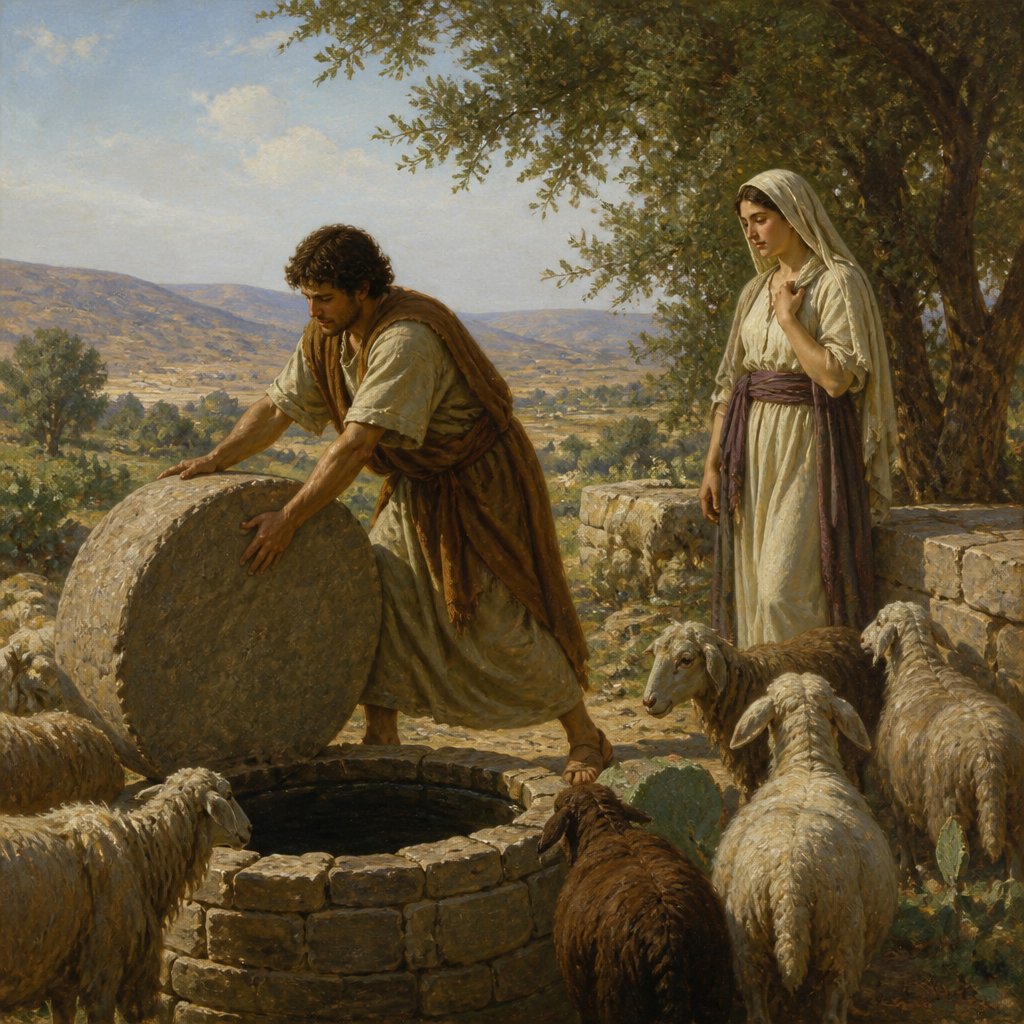
Genesis 29:10 (KJV) states, "And it came to pass, when Jacob saw Rachel the daughter of Laban his mother's brother, and the sheep of Laban his mother's brother, that Jacob went near, and rolled the stone from the well's mouth, and watered the flock of Laban his mother's brother."
In this narrative, we observe a moment that vividly captures both the physical and emotional dimensions of Jacob’s journey. Jacob’s arrival in Haran was not just a geographical relocation; it was a heart quest that would ultimately lead him to love. His first sighting of Rachel marked a pivotal point in his life—a moment brimming with promise, passion, and purpose.
Initially, we must highlight the significance of wells in biblical tradition. Wells represented life, sustenance, and provision. They were also communal spaces where people would gather, connect, and share. By approaching the well, Jacob was not just encountering water; he was stepping into a critical phase of his destiny. The description of Rachel—"the daughter of Laban his mother’s brother"—signifies the intertwining of family bonds and love. Here, Jacob is about to witness the embodiment of hope and the flourishing of his desires.
What stands out in this verse is Jacob’s immediate action upon seeing Rachel. He did not hesitate. He went near and rolled the stone from the well’s mouth. This act serves as a powerful metaphor for overcoming obstacles. The stone was not merely a physical barrier; it represented the challenges and duties that often come with new relationships and commitments. Jacob’s willingness to move the stone signifies his readiness to engage with his future and to invest in loving relationships.
This depicts a profound spiritual principle: Love is a labor of willingness. When we find something or someone precious, the instinct is to act—to roll away the stones that obstruct what we desire. In the same way, we must be prepared to invest effort in relationships that matter to us and in our relationship with God. Are there stones in our lives that keep us from nurturing our relationships? Perhaps it's the stone of disillusionment, disappointment, or even apathy. Just as Jacob was compelled to make a move for Rachel, we too are called to confront these stones. "^2 God’s love often calls us into action, requiring us to engage actively rather than passively observe.
Moreover, the act of watering Laban’s flock sheds light on servitude in love. Jacob did not just come to claim his heart’s desire; he also came to serve. He took the initiative to water the sheep—an essential task that required effort and dedication. In romantic relationships, friends, and even in our walk with God, service plays a critical role. True love seeks to nourish and support. It is not solely about receiving affection; it is also about giving of oneself and showing care through actions.
In contemplating this passage, we may ask ourselves: Are we willing to roll away the stones that stand in our way? Do we actively serve those we hold dear? Moreover, are we directing our lives toward the wells of nourishment that God provides? Just as Jacob found sustenance through his efforts and relationships, we must also seek the living water that quells our thirst for connection, meaning, and love in our lives.
In conclusion, Genesis 29:10 beautifully illustrates the intersection of love, commitment, and action. Jacob’s encounter with Rachel goes beyond a simple meeting; it is a lesson on the power of engagement, service, and the overwhelming force of love that compels us to act. As we walk our own paths, let us remember to face life’s stones, seek the wells, and tend to our relationships with diligence and commitment.
Get our apps


Artwork for Genesis 29:10

Genesis 29:10 - "And it came to pass, when Jacob saw Rachel the daughter of Laban his mother's brother, and the sheep of Laban his mother's brother, that Jacob went near, and rolled the stone from the well's mouth, and watered the flock of Laban his mother's brother."
"And it came to pass, when Jacob saw Rachel the daughter of Laban his mother's brother, and the sheep of Laban his mother's brother, that Jacob went near, and rolled the stone from the well's mouth, and watered the flock of Laban his mother's brother." - Genesis 29:10

Genesis 10:29 - "And Ophir, and Havilah, and Jobab: all these were the sons of Joktan."
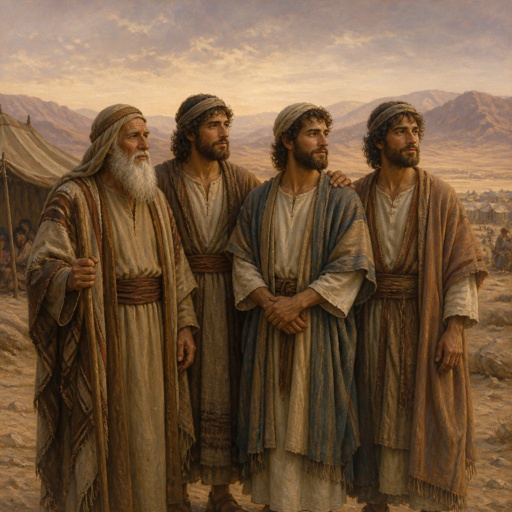
"And Ophir, and Havilah, and Jobab: all these were the sons of Joktan." - Genesis 10:29

Genesis 29:29 - "And Laban gave to Rachel his daughter Bilhah his handmaid to be her maid."

Genesis 29-2

Genesis 29-6

Genesis 29-5

Genesis 42:29

Genesis 29:1

Genesis 29-7

Genesis 18-29

Genesis 26:29

Genesis 19-29

Genesis 29-8

Genesis 29-3

Genesis 29-4

Genesis 21-29

Genesis 24-29

Genesis 29:16-35

Genesis 29:15-30

Genesis 29:17 - "Leah was tender eyed; but Rachel was beautiful and well favoured."

Genesis 29:11 - "And Jacob kissed Rachel, and lifted up his voice, and wept."

Genesis 29:1 - "Then Jacob went on his journey, and came into the land of the people of the east."

Genesis 29:22 - "And Laban gathered together all the men of the place, and made a feast."

Genesis 25:29 - "And Jacob sod pottage: and Esau came from the field, and he was faint:"

"And Laban gave to Rachel his daughter Bilhah his handmaid to be her maid." - Genesis 29:29

Genesis 41:29 - "Behold, there come seven years of great plenty throughout all the land of Egypt:"

Genesis 29:24 - "And Laban gave unto his daughter Leah Zilpah his maid for an handmaid."

Genesis 29:16 - "And Laban had two daughters: the name of the elder was Leah, and the name of the younger was Rachel."