The Tears of Reunion: A Journey of Heart and Hope
“And Jacob kissed Rachel, and lifted up his voice, and wept.” — Genesis 29:11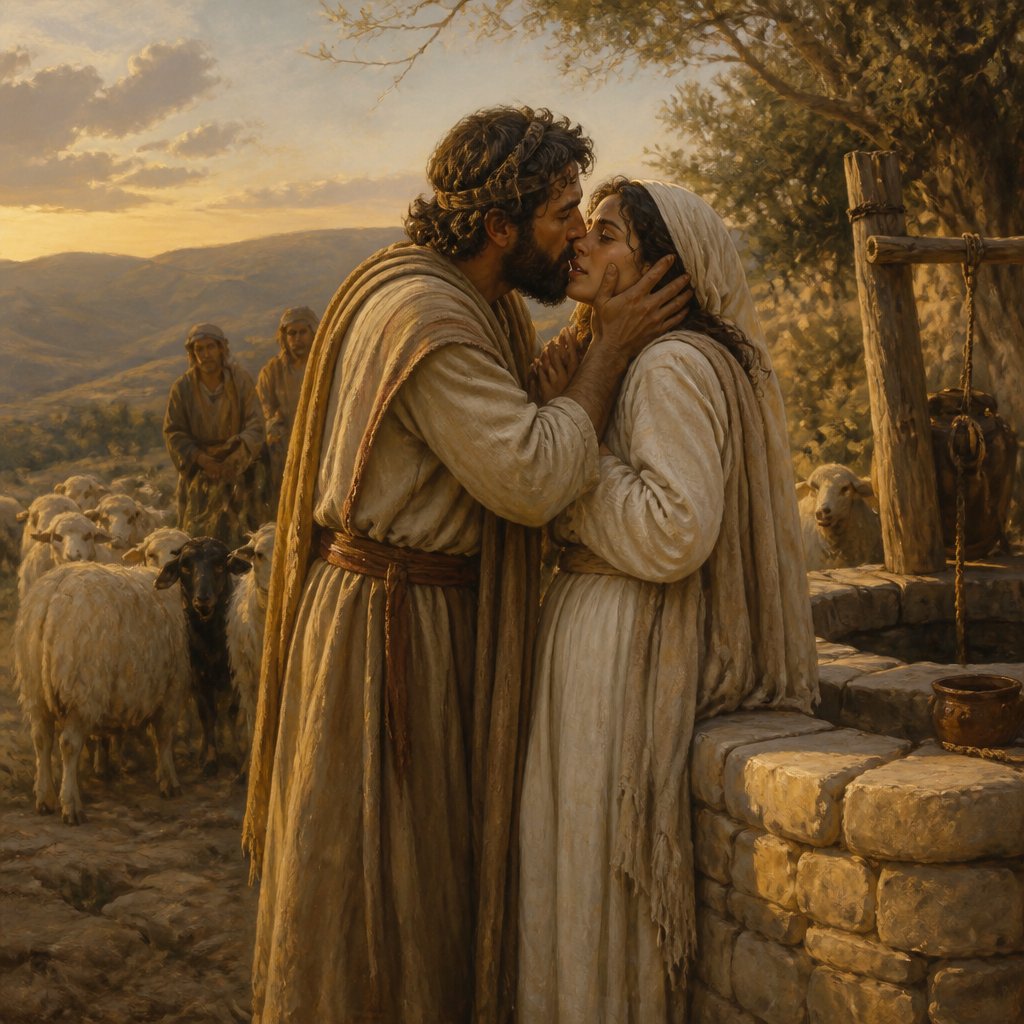
In the story of Jacob and Rachel, we encounter a profound moment that captures the essence of longing, love, and the deep emotional currents that run through human relationships. Genesis 29:11 poignantly states, "And Jacob kissed Rachel, and lifted up his voice, and wept." This single verse, rich in imagery and emotion, reveals the powerful connection between two souls destined to be united, while also reflecting the broader themes of struggle, faithfulness, and divine providence.
To fully grasp the depth of Jacob's emotions, we must first consider the context of his journey. Jacob had fled from his home, leaving behind his family and the familiar comforts of his life. Driven by fear, guilt, and a desire to escape, he ventured into the unknown. His dreams were burdened with uncertainty, and the weight of his past mistakes pressed heavily upon him. Yet it was upon arriving in Haran, a foreign land, that he encountered Rachel—the very person for whom his heart longed.
Upon seeing Rachel, the daughter of Laban, Jacob was overwhelmed. The kiss he bestowed upon her was not merely a greeting; it was a kiss steeped in hope and the realization of God’s plans for his life. In a moment where his heart was both full of joy and heavy with the weight of his past, Jacob wept. His tears flowed not only in response to the overwhelming love and attraction he felt for Rachel but also as a release of the pent-up fears, regrets, and uncertainties that had accompanied him on his journey.
Tears can often signify various emotions—joy, grief, relief, and of course, love. For Jacob, this moment of weeping encapsulated the entirety of his journey. His tears represented a culmination of his struggles, his relentless pursuit for acceptance and connection, and the merciful hand of God guiding him towards his future. In the same way, we may find ourselves in various seasons of our lives, journeying through trials that lead us to unexpected places and people.
What can we learn from this moment of emotional rawness? Firstly, it reminds us of the beauty and power of authentic expression. In today's world, we often feel the need to mask our emotions—societal pressures can lead us to suppress our feelings instead of embracing them. Jacob's weeping was an embrace of vulnerability, a recognition that it is okay to feel deeply and to express those feelings openly. As followers of Christ, we are reminded that our emotional journeys are both valid and valuable. Like Jacob, our tears can be a language of our heart's longing for connection, whether that be with God, others, or even reconciliation with our past.
Secondly, this passage invokes the idea of divine timing. Jacob's journey toward Rachel was not merely about romantic love; it was about fulfillment of God's promises and purpose. God led Jacob to Rachel after he had undergone significant personal changes, demonstrating that sometimes we must endure hardship and growth before we are ready to claim the blessings that lie ahead. Jacob’s weeping is also a reminder that sometimes the greatest joys come after the deepest struggles.
Furthermore, in Jacob's act of placing significance on his feelings, we are drawn to see that love is worth pursuing, and that the bonds we form with others can be threads that connect us to God's greater tapestry. Rachel became a part of God's overarching narrative for Jacob, contributing to his transformation and future generations.
In our lives, we should seek to embrace our authentic emotions and trust in the journey God has set before us. We may encounter moments that cause us to weep—for joy, for sorrow, or perhaps a mixture of both. Yet, like Jacob, we are reminded that tears are not just an end but can serve as a beginning, a prelude to the greater things God has in store for us. As we reflect on Jacob's encounter, let us remember to embrace our emotions, trusting that they can lead us closer to God and His magnificent plans for our lives.
Get our apps


Artwork for Genesis 29:11

Genesis 29:11 - "And Jacob kissed Rachel, and lifted up his voice, and wept."
"And Jacob kissed Rachel, and lifted up his voice, and wept." - Genesis 29:11

Genesis 11:29 - "And Abram and Nahor took them wives: the name of Abram's wife was Sarai; and the name of Nahor's wife, Milcah, the daughter of Haran, the father of Milcah, and the father of Iscah."

Genesis 29:16-35

Jeremiah 29:11

Genesis 29:29 - "And Laban gave to Rachel his daughter Bilhah his handmaid to be her maid."

Genesis 29-2

Genesis 29-6

Genesis 29-5

Genesis 42:29

Genesis 29:1

Genesis 29-7

Genesis 18-29

Genesis 26:29

Genesis 19-29

Genesis 29-8

Genesis 29-3

Genesis 29-4

Genesis 21-29

Genesis 24-29

Jeremiah 29:11-13

Jeremiah 29:11-13

Jeremiah 29:11-13

Jeremiah 29:11-13

Genesis 29:15-30

Jeremiah 29:11

Jeremiah 29:11

Jeremiah 29:11

Haggai 2:9

Matthew 2:9