The Gift of Servanthood: Lessons from Bilhah and Rachel
“And Laban gave to Rachel his daughter Bilhah his handmaid to be her maid.” — Genesis 29:29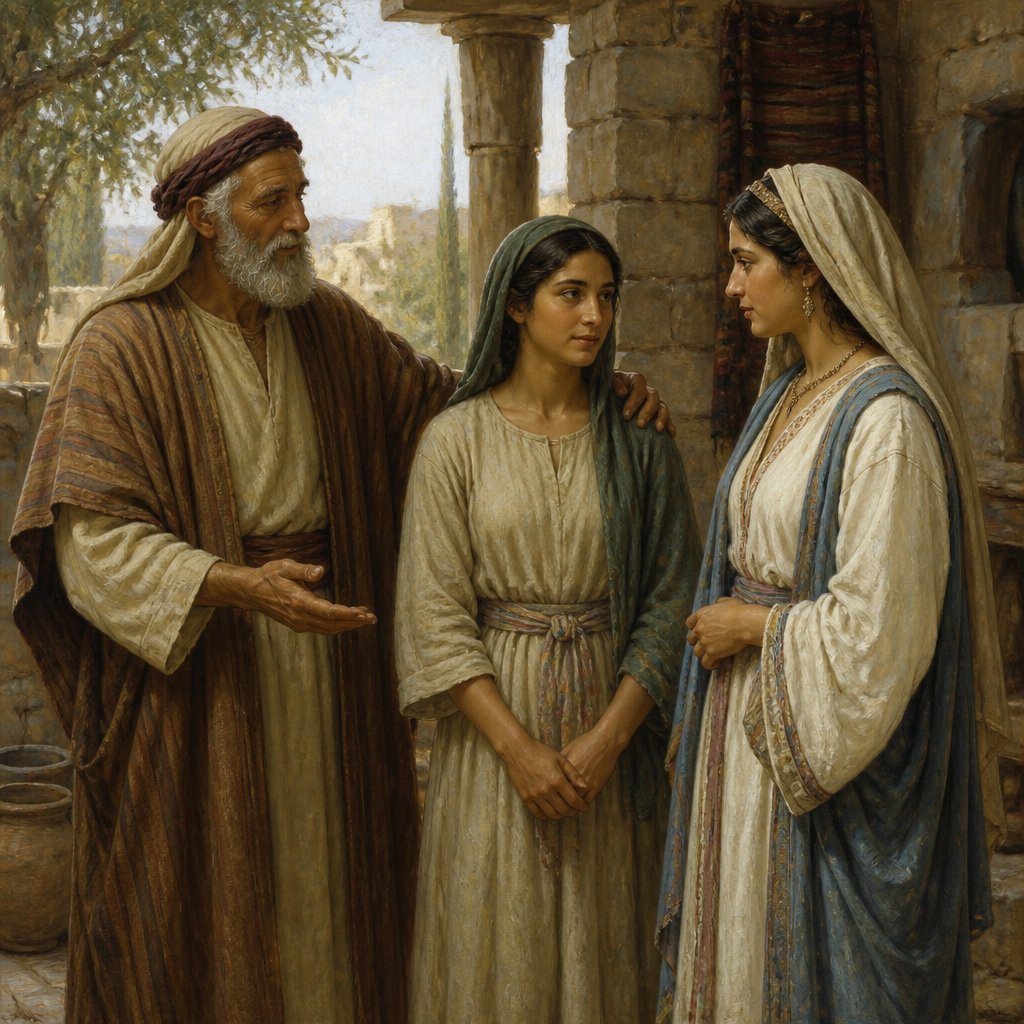
When we read Genesis 29:29, \"And Laban gave to Rachel his daughter Bilhah his handmaid to be her maid,\" we encounter a pivotal moment in the lives of these biblical figures. At first glance, the action of giving a maid to Rachel may seem like merely a cultural practice of the time, a way to provide support and companionship for the daughter of Laban. However, deeper reflection reveals profound lessons about servanthood, relationships, and divine providence.
Rachel, beloved by Jacob yet overshadowed by her sister Leah, enters a world rife with competition and familial strife. The handmaid that her father gives to her signifies more than a mere servant; she embodies the complexities of Rachel's journey and the overarching sovereignty of God in her unfolding story. Bilhah, a seemingly passive character, plays an active role in God's plan for the ancestral lineage that unfolds through Rachel. We must ask ourselves, what does it mean to embrace the role of a servant, both in our relationships with others and in our relationship with God?
### The Nature of Servanthood
In our modern world, the concept of servanthood often carries negative connotations. We may associate it with subservience or lack of agency. Ancient cultures, however, understood servanthood differently. In Genesis, we see that Bilhah serves as a companion and a support to Rachel, a role deeply rooted in loyalty and shared purpose. It is important to recognize that servanthood does not mean losing one’s identity or purpose—it means embracing the chance to uplift and support one another.
In Mark 10:44-45, Jesus teaches us that \"whosoever of you will be the chiefest shall be servant of all. For even the Son of man came not to be ministered unto, but to minister, and to give his life a ransom for many.\" When we render service to others, we emulate Christ’s humility and love. Bilhah serves Rachel, yet indirectly she becomes part of the fulfillment of God's promise: the growth of the tribes of Israel. When we serve others, we also become participants in God’s ongoing narrative.
### Competition and Community
Rachel's life is marked by competition—first with her sister Leah for Jacob's love and affection, and later through the rivalry surrounding their handmaids. The dynamic between Rachel, Leah, and Bilhah could be interpreted as a cautionary tale against the bitter fruits of rivalry. Yet even amidst this tension, the presence of Bilhah offered an opportunity for Rachel to navigate her desires and insecurities in a community that reflects both conflict and support. This duality of competition and community is intrinsic to our own lives. In our workplaces, families, and friendships, we often find ourselves in competition, wrestling against feelings of inadequacy.
Yet in Christ, we learn that our value isn’t measured against others but is intrinsic as we are made in God’s image. Philippians 2:3-4 urges us to \"Do nothing through strife or vainglory; but in lowliness of mind let each esteem other better than themselves. Look not every man on his own things, but every man also on the things of others.\" While Rachel battled with feelings of inadequacy, her handmaid was also instrumental in the larger story of God’s people. When we choose to see and support one another instead of competing, we uplift the communal body of Christ.
### A Divine Providence
Ultimately, the mention of Bilhah highlights God's divine providence at play in even the smallest details of our lives. Bilhah’ story is woven into God’s faithful plan for humanity, reminding us that He can use any situation, no matter how simple or complex, to fulfill His purpose. We may sometimes feel like mere servants in His grand story, but every role carries significance in the Kingdom of God.
As we reflect on Genesis 29:29, let us meditate on how we can serve and support those around us, acknowledging that in doing so, we participate in God’s marvelous plans. Like Bilhah, our roles may evolve, but in every moment, there lies the potential to glorify God through our lives and relationships. Embrace the call to serve and love within your own families, communities, and churches. Let us allow our actions, big and small, to reflect the heart of Christ, leading to a deeper understanding of our worth in His eyes.
With thoughtful prayer and open hearts, may we step into the roles God has for us with grace, knowing that He, too, has provided us with companions and opportunities to support one another in our spiritual journeys.
Get our apps


Artwork for Genesis 29:29

Genesis 29:29 - "And Laban gave to Rachel his daughter Bilhah his handmaid to be her maid."

"And Laban gave to Rachel his daughter Bilhah his handmaid to be her maid." - Genesis 29:29

Genesis 29-2

Genesis 29-6

Genesis 29-5

Genesis 42:29

Genesis 29:1

Genesis 29-7

Genesis 18-29

Genesis 26:29

Genesis 19-29

Genesis 29-8

Genesis 29-3

Genesis 29-4

Genesis 21-29

Genesis 24-29

Genesis 29:16-35

Genesis 29:15-30

Genesis 10:29 - "And Ophir, and Havilah, and Jobab: all these were the sons of Joktan."

Genesis 29:17 - "Leah was tender eyed; but Rachel was beautiful and well favoured."

Genesis 29:11 - "And Jacob kissed Rachel, and lifted up his voice, and wept."

Genesis 29:1 - "Then Jacob went on his journey, and came into the land of the people of the east."

Genesis 29:22 - "And Laban gathered together all the men of the place, and made a feast."

Genesis 25:29 - "And Jacob sod pottage: and Esau came from the field, and he was faint:"

Genesis 41:29 - "Behold, there come seven years of great plenty throughout all the land of Egypt:"

Genesis 29:24 - "And Laban gave unto his daughter Leah Zilpah his maid for an handmaid."

Genesis 29:16 - "And Laban had two daughters: the name of the elder was Leah, and the name of the younger was Rachel."

Genesis 9:29 - "And all the days of Noah were nine hundred and fifty years: and he died."

Genesis 36:29 - "These are the dukes that came of the Horites; duke Lotan, duke Shobal, duke Zibeon, duke Anah,"

Genesis 37:29 - "¶ And Reuben returned unto the pit; and, behold, Joseph was not in the pit; and he rent his clothes."