The Mandrakes of Desire: A Journey Towards Fulfillment
"And Reuben went in the days of wheat harvest, and found mandrakes in the field, and brought them unto his mother Leah. Then Rachel said to Leah, Give me, I pray thee, of thy son’s mandrakes." - Genesis 30:14
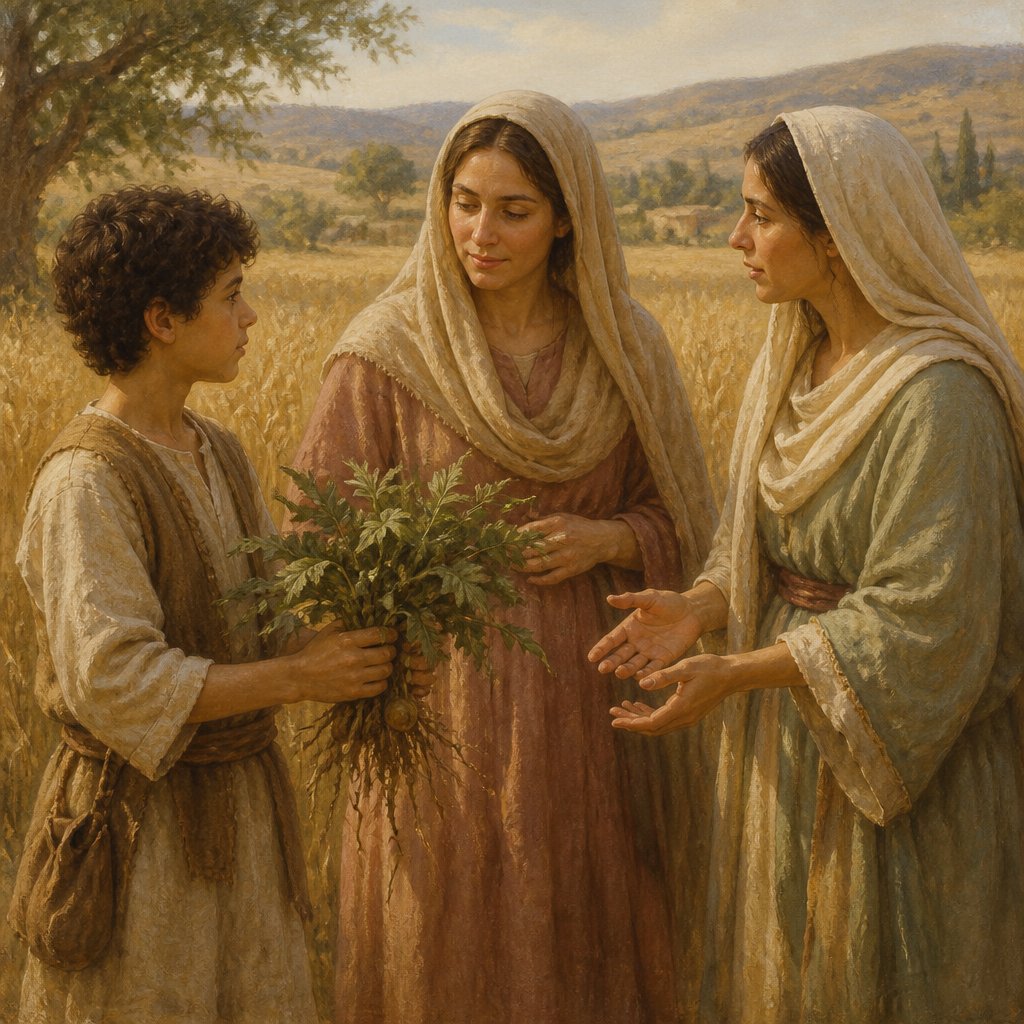
In Genesis 30:14, we read, "And Reuben went in the days of wheat harvest, and found mandrakes in the field, and brought them unto his mother Leah. Then Rachel said to Leah, Give me, I pray thee, of thy son's mandrakes."
To fully appreciate the nuances contained within this moment, we must look beyond the surface to understand the heart and the circumstances surrounding these women’s lives. Leah, the unloved wife of Jacob, finds herself in a struggle against her sister Rachel, who remains his favored wife. Their rivalry, birthed out of desire for love and children, reveals the depth of human emotion and the lengths one will go to for acceptance and fulfillment.
Mandrakes, a plant believed to hold fertility-enhancing properties, represent hope and desire. When Leah's son Reuben collects the mandrakes during the wheat harvest—an abundant time of year—he brings them to Leah, who is in desperate need of validation through motherhood. Rachel, seeing the potential of these mandrakes to aid in her own desire for children, approaches Leah with a plea, reflecting her desperation.
This interaction prompts us to examine our own lives and desires. What are the mandrakes we seek? In our pursuit of fulfillment—be it love, validation, success, or acceptance—do we sometimes overlook the importance of relationships, empathy, and mutual support? Rachel’s plea to Leah signifies a moment where desperation drives competition instead of collaboration, and we are reminded of how easily we can be consumed by our desires, overshadowing those we love.
Leah’s response, though not recorded in that verse, can be imagined within the context of a familial bond tested by competition. Instead of blissfully sharing the found blessings, she makes a remarkable choice that shifts the dynamics. It prompts discussions about how we respond to the needs of others and whether we allow our desires to dictate our actions towards those around us.
The wheat harvest season signifies plenty and prosperity, a metaphorical illustration of the times in our lives when we feel abundant. Yet even in abundance, there can exist an inner hunger—a longing for something deeper, something that goes beyond physical needs. Leah’s act of receiving the mandrakes, potentially used as bargaining chips in the struggle for love, signifies a longing for security, whether through motherhood or recognition. In this context, we observe that true fulfillment often doesn’t come from external items but rather from acknowledging and meeting relational needs.
As we reflect on Rachel's urgent request for Leah's “mandrakes,” we realize how often we find ourselves in similar positions—desiring what others possess while risking relationships with those we truly care about. In our societal rush for achievements and acknowledgments, we may stray from God’s intended design of unity and support in our communities.
God calls us not only to acknowledge our desires but also to seek them in a way that uplifts and empowers those around us. The beauty of community is found in the balance between our individual needs and the collective good of our relationships. Mandrakes may promise earthly fulfillment, but the true richness of life comes from acts of love, selflessness, and shared joy.
Let us consider our own lives: What 'mandrakes' are we pursuing, and at what cost to our relationships? How can we demonstrate the love of Christ in times when we feel our desires go unmet? In lean times and in seasons of abundance, we must express gratitude for community, seek to support one another, and remember that true fulfillment often lies not in receiving but in giving.
As we meditate on Genesis 30:14, may we reflect on how we can nurture our relationships, laying down our competitive desires, honoring each other’s journeys, and together finding true fulfillment in God’s love.
Want to reflect more on Genesis 30:14?
Continue your spiritual journey with Bible Chat — an AI-powered tool for exploring God's Word through conversation. Ask questions, discover connections, and deepen your understanding.
Get Our Apps


Genesis 30:14 Artwork

Genesis 30:14 - "¶ And Reuben went in the days of wheat harvest, and found mandrakes in the field, and brought them unto his mother Leah. Then Rachel said to Leah, Give me, I pray thee, of thy son's mandrakes."
"¶ And Reuben went in the days of wheat harvest, and found mandrakes in the field, and brought them unto his mother Leah. Then Rachel said to Leah, Give me, I pray thee, of thy son's mandrakes." - Genesis 30:14

John 14:30

Genesis 19-30

Genesis 24-30

Genesis 18-30

Genesis 21-30

Genesis 30:10-11

Genesis 29:15-30

Genesis 30:5 - "And Bilhah conceived, and bare Jacob a son."

Genesis 11:30 - "But Sarai was barren; she had no child."

Genesis 30:10 - "And Zilpah Leah's maid bare Jacob a son."

Genesis 30:19 - "And Leah conceived again, and bare Jacob the sixth son."

Genesis 26:30 - "And he made them a feast, and they did eat and drink."

Genesis 30:12 - "And Zilpah Leah's maid bare Jacob a second son."

Luke 14:30 - "Saying, This man began to build, and was not able to finish."

Genesis 30:28 - "And he said, Appoint me thy wages, and I will give it."

Genesis 30:21 - "And afterwards she bare a daughter, and called her name Dinah."

1 Kings 14:30 - "And there was war between Rehoboam and Jeroboam all their days."

Proverbs 14:30 - "A sound heart is the life of the flesh: but envy the rottenness of the bones."

Genesis 30:34 - "And Laban said, Behold, I would it might be according to thy word."

Genesis 30:22 - "¶ And God remembered Rachel, and God hearkened to her, and opened her womb."

Genesis 30:7 - "And Bilhah Rachel's maid conceived again, and bare Jacob a second son."

Genesis 10:30 - "And their dwelling was from Mesha, as thou goest unto Sephar a mount of the east."

Genesis 30:11 - "And Leah said, A troop cometh: and she called his name Gad."

Genesis 30:39 - "And the flocks conceived before the rods, and brought forth cattle ringstraked, speckled, and spotted."

Genesis 30:17 - "And God hearkened unto Leah, and she conceived, and bare Jacob the fifth son."

Genesis 30:43 - "And the man increased exceedingly, and had much cattle, and maidservants, and menservants, and camels, and asses."

Ezekiel 30:14 - "And I will make Pathros desolate, and will set fire in Zoan, and will execute judgments in No."

Genesis 30:23 - "And she conceived, and bare a son; and said, God hath taken away my reproach:"