Captured Hearts: The Battle of Relationships
"And Laban said to Jacob, What hast thou done, that thou hast stolen away unawares to me, and carried away my daughters, as captives taken with the sword?" - Genesis 31:26
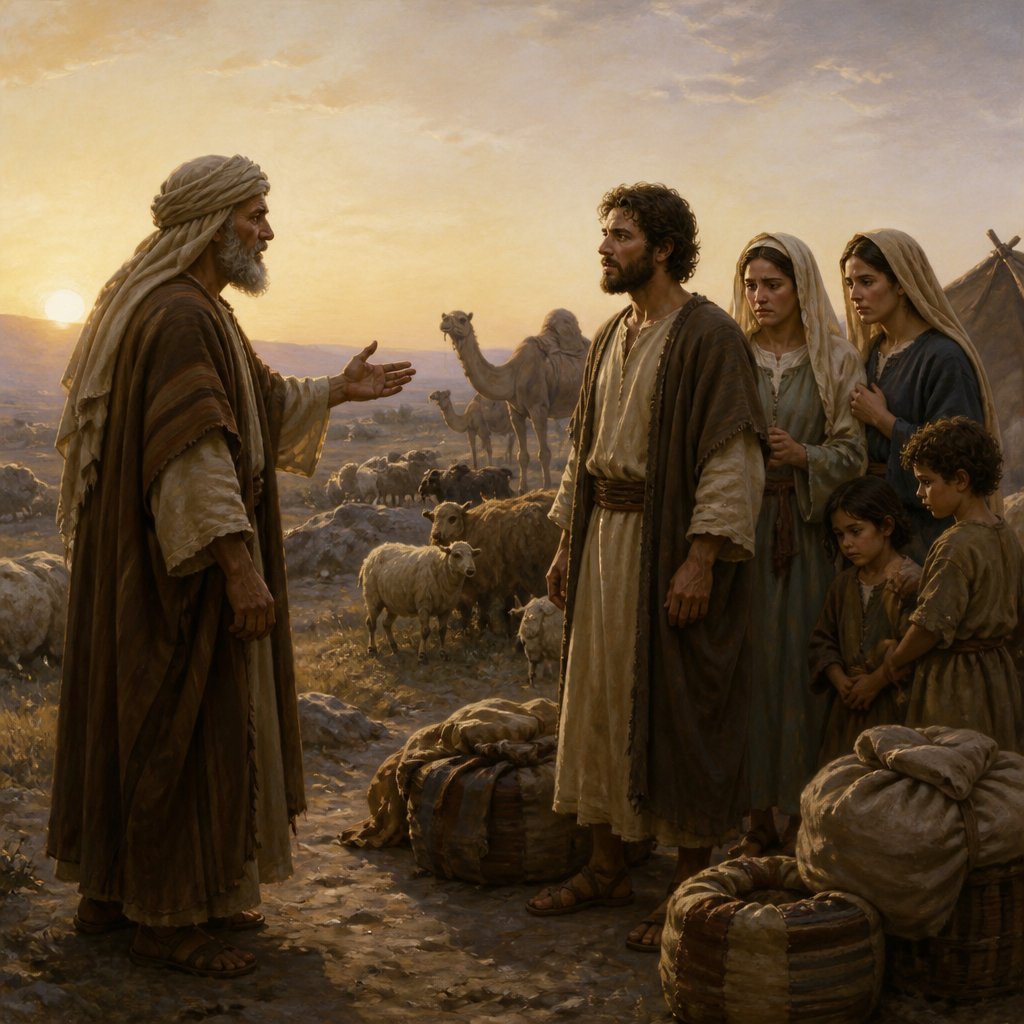
In Genesis 31:26, we find Laban confronting Jacob with a heavy heart filled with feelings of betrayal. "And Laban said to Jacob, What hast thou done, that thou hast stolen away unawares to me, and carried away my daughters, as captives taken with the sword?" This verse echoes the strains of human relationships that can often be fraught with misunderstandings, mistrust, and the desire for control.
Laban’s words reflect a deep sense of loss, not just of belongings, but of family ties. The illustration of his daughters as "captives taken with the sword" paints a vivid picture of how he perceives the situation: as an act of aggression rather than a departure. This moment provokes us to reflect on the nature of our own relationships and the ways we might feel compelled to exercise dominance, often leading to feelings of captivity and distress.
At the heart of Laban’s complaint lies a complex web of familial obligation, loyalty, and sometimes manipulation. Jacob, having endured years of servitude under Laban to marry Rachel and Leah, chose to leave—not only for the sake of his freedom but also to protect his burgeoning family from the tightening grip of Laban’s control. His decision, while painful to Laban, was born from a desire to prioritize God’s plan for his life—a plan that required stepping away from toxic dynamics and toward independence.
As we meditate on this encounter, we are prompted to consider the relationships in our own lives. Are there those we feel tied to out of obligation, perhaps feeling like Laban, unwilling to release control? Or might we find ourselves in the position of Jacob, seeking to establish boundaries for our health and spiritual well-being? The tension between holding on and letting go resonates throughout scripture, encouraging us to navigate these waters with wisdom.
This narrative reveals an important truth: sometimes liberation looks like betrayal to those whom we've left behind. Just as Jacob’s departure from Laban’s household caused upheaval, we too might face backlash when we make decisions to prioritize our spiritual and emotional health. It is vital to understand that loyalty to God may sometimes require difficult choices that others may perceive as harmful or disloyal.
Laban’s accusations also remind us to examine our aspirations: are we seeking to lead and control, or are we genuinely fostering growth in those around us? As stewards of our relationships, we must ensure our motivations align with love and kindness rather than jealousy and fear. It is easy to become blinded by our desires, mistaking the goal of maintaining relationships for the path of controlling them.
Moreover, Laban's sense of injustice reveals how attachment to people and possessions can cloud our perception of truth. When relationships are governed by fear—of losing what one has or of being abandoned—we must ask whether we are truly rooted in love.
As Jacob prepares to speak, we observe the tangible tension between sorrow and freedom. His journey is one of understanding that obedience to divine calling often necessitates stepping away, even when it feels treacherous. Jacob embodies a pivotal realization: God honors our choices that are rooted in faith, even if those choices offend the expectations of others.
The challenge for us, then, is to seek God's guidance in our relationships, to discern when it is time to hold on and when it is wise to let go. In doing so, may we heed the words of Ephesians 4:15, "But speaking the truth in love, may grow up into him in all things, which is the head, even Christ." Let us commit to fostering relationships that reflect mutual respect, growth, and, ultimately, love—always seeking the heart of God amidst the challenges we face.
Today, may we pray not only for wisdom in our decisions but also for the grace to navigate challenging relationships with an open heart, trusting that through every hardship and every tension, God is at work shaping us into His image, one relationship at a time.
Want to reflect more on Genesis 31:26?
Continue your spiritual journey with Bible Chat — an AI-powered tool for exploring God's Word through conversation. Ask questions, discover connections, and deepen your understanding.
Get Our Apps


Genesis 31:26 Artwork

Genesis 31:26 - "And Laban said to Jacob, What hast thou done, that thou hast stolen away unawares to me, and carried away my daughters, as captives taken with the sword?"
"And Laban said to Jacob, What hast thou done, that thou hast stolen away unawares to me, and carried away my daughters, as captives taken with the sword?" - Genesis 31:26

Genesis 26:31 - "And they rose up betimes in the morning, and sware one to another: and Isaac sent them away, and they departed from him in peace."

Exodus 26:31

Exodus 26:31

Exodus 26:31

Exodus 26:31-33
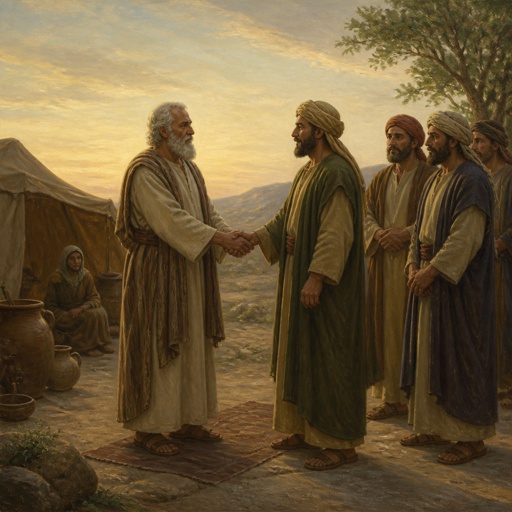
"And they rose up betimes in the morning, and sware one to another: and Isaac sent them away, and they departed from him in peace." - Genesis 26:31

Genesis 21-31

Genesis 18-31

Genesis 31:35

Genesis 19-31

Genesis 24-31

Numbers 26:31 - "And of Asriel, the family of the Asrielites: and of Shechem, the family of the Shechemites:"

Genesis 1:26

Genesis 1:26

Genesis 1:26

Genesis 1:26

Job 31:26 - "If I beheld the sun when it shined, or the moon walking in brightness;"

Jeremiah 31:26 - "Upon this I awaked, and beheld; and my sleep was sweet unto me."

Proverbs 31:26 - "She openeth her mouth with wisdom; and in her tongue is the law of kindness."

Genesis 24-26

Genesis 26:35

Genesis 50:26

Genesis 26:25

Genesis 21-26

Genesis 25-26

Genesis 50:26

Genesis 19-26

Genesis 26:29